
Business & IndustryAnalysis
China's Grain Sector Output Tops 4 Trillion Yuan as Reserves Expand
Official data reveals rapid modernization across processing, storage, and regional branding as national output stays above 700 million tonnes.
Share
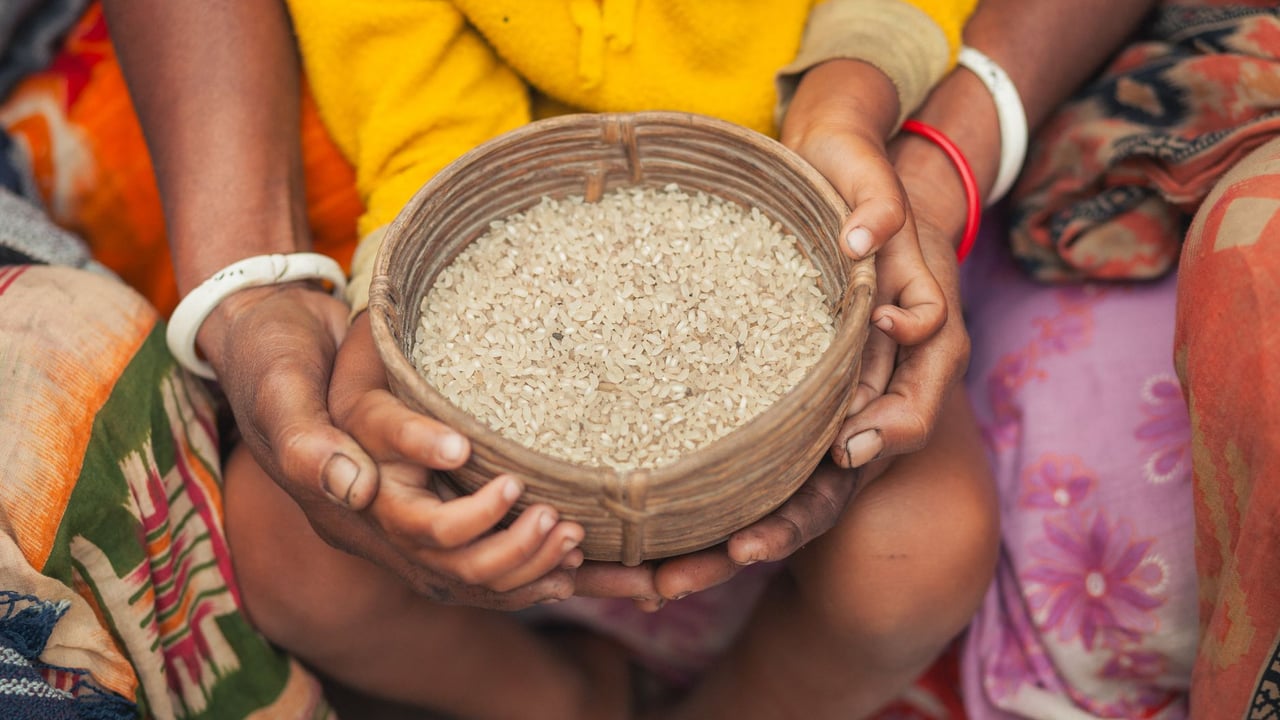
Photo by Ian Taylor on Pexels
The Brief
The annual industrial output value of China's grain enterprises has surpassed 4 trillion yuan ($560 billion), according to data released by the National Food and Strategic Reserves Administration at the 8th China Grain Trade Conference in Changsha. Backed by 24,000 enterprises and consecutive annual grain harvests exceeding 700 million tonnes in 2024 and 2025, the country is increasingly emphasizing downstream processing, regional brand building, and temperature-controlled storage infrastructure to reinforce national food security.
Why it matters
Surpassing the 4 trillion yuan threshold signals that China's food security policy has broadened from farm-level output targets to the entire post-harvest supply chain. Advanced storage capacity and high inventory levels buffer the world's second-largest economy against international commodity market volatility, while expanding processing capabilities support rural industrialization and domestic price stability.
China context
Beijing has consistently treated grain security as a top strategic priority, aiming to keep domestic per capita grain availability comfortably above global averages. In 2025, China's per capita grain availability reached 508.9 kilograms, well above international benchmarks. The expansion of modern warehouse facilities, alongside the rise of dozens of provincial and municipal grain brands, highlights the state-led push to modernize logistics and consolidate regional agricultural advantages under national supply security frameworks.
Editor's View
EDITOR'S VIEW — Analysis and inference, not factual reporting.
While headline grain production figures have long received international attention, the industrialization of China's grain handling system is equally significant. With more than one-third of provincial-level jurisdictions generating over 100 billion yuan each in grain enterprise output, grain processing has become a major regional industrial anchor. The challenge going forward will lie in balancing state-mandated reserve management costs with commercial profitability and technological upgrades across smaller municipal operators.
What to watch
- Final transaction volumes and procurement agreements signed during the 8th China Grain Trade Conference in Changsha.
- Policy support and fiscal incentives for expanding green and low-temperature grain storage across central and western provinces.
- Progress on commercializing municipal and county-level grain brands into nationally recognized consumer labels.
Key Takeaways
- 1China's 24,000 grain enterprises now generate over 4 trillion yuan in annual industrial output, with one-third of provinces topping 100 billion yuan each.
- 2National grain output surpassed 700 million tonnes in both 2024 and 2025, bringing per capita grain availability to 508.9 kilograms in 2025.
- 3Standard grain warehouse capacity exceeds 730 million tonnes, with 220 million tonnes (30 percent) utilizing low-temperature storage technology.
- 4More than 3,100 exhibitors gathered at the 8th China Grain Trade Conference in Changsha to showcase products, smart machinery, and regional brands.
The annual gross industrial output value of China's grain enterprises has exceeded 4 trillion yuan, according to official figures presented at the 8th China Grain Trade Conference in Changsha, Hunan province.
Speaking at the event, Liu Huanxin, head of the National Food and Strategic Reserves Administration, reported that the country now hosts approximately 24,000 grain enterprises. In more than one-third of China's provincial-level jurisdictions, the annual industrial output value of local grain enterprises has topped 100 billion yuan, reflecting significant regional concentration and scale. The sector has also developed 33 provincial-level and 117 municipal- and county-level regional public grain brands as part of efforts to improve quality and consumer recognition.
The industrial milestone comes alongside sustained high production volumes. National grain output has remained consistently above 650 million tonnes in recent years, exceeding 700 million tonnes in both 2024 and 2025. China's per capita grain availability reached 508.9 kilograms in 2025, staying safely above the world average.
Liu noted that national grain inventories remain at a relatively high level, with storage distribution continuously being optimized to guarantee emergency market supply. China's qualified standard grain storage capacity now surpasses 730 million tonnes. Within that total, warehouses equipped with low-temperature or quasi-low-temperature preservation capabilities have reached 220 million tonnes, representing roughly 30 percent of the nation's standard warehouse capacity.
The three-day trade conference, running from September 5 to 7, features more than 3,100 grain and oil enterprises from across the country. In addition to commercial matchmaking, the event showcases high-end grain machinery and smart storage equipment, alongside a dedicated exhibition for agricultural products sourced from regions lifted out of poverty.
Sources
- 我国粮食企业年工业总产值超4万亿元--经济·科技--人民网 — People's Daily · 9/5/2026
- 我国粮食企业年工业总产值超4万亿元 — State Council of China · 9/6/2026