
Business & IndustryAnalysis
China Expands Domestic Output of High-End Specialty Steel Varieties
Breakthroughs in material formulas and smart manufacturing support output for aerospace, offshore wind, and electronics.
Share
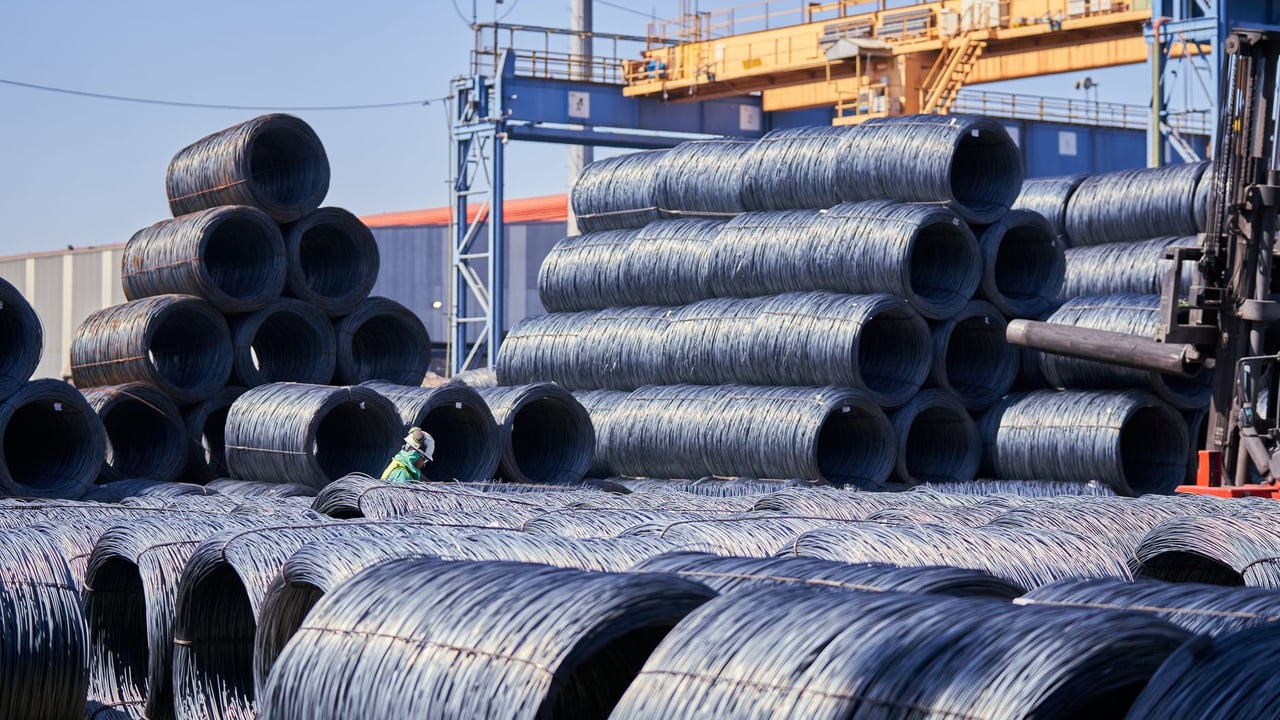
Photo by Willians Huerta on Pexels
The Brief
China has established an autonomous research and mass-production chain for high-end specialty steel across aerospace, maritime engineering, and advanced electronics, state media reported. Backed by national key laboratories and upgraded production lines, domestic steelmakers have achieved technical breakthroughs in seven high-end steel categories this year. New products include 0.07-millimeter ultra-thin steel for chip packaging and 5G equipment, low-expansion alloys for large aircraft tooling, and corrosion-resistant grades for offshore wind power. The sector also features three global Lighthouse Factories and dozens of state-designated smart manufacturing plants.
Why it matters
Specialty steel serves as a foundational material for high-value manufacturing, from aerospace structures to deep-sea installations and microelectronics. Developing domestic capability across formulas, rolling processes, and industrial-scale output reduces reliance on imported niche alloys and reinforces critical supply chains against external trade disruptions.
China context
Facing prolonged overcapacity in conventional crude steel, Chinese industrial planners and steelmakers are pivoting toward high-margin, technologically complex alloys. By pairing national laboratory research with factory-level automation, the industry seeks to reorient production toward strategic emerging sectors, including humanoid robotics, electric vehicles, and renewable power infrastructure.
Editor's View
EDITOR'S VIEW — Analysis and inference, not factual reporting.
While mass-producing seven specialized steel varieties demonstrates tangible progress in microstructural engineering, commercial validation across global markets remains the decisive hurdle. Domestic adoption in strategic programs like large commercial aircraft and offshore wind farms provides reliable baseline demand, but broader competitiveness will depend on whether domestic mills can consistently match foreign benchmarks in cost efficiency, batch consistency, and service life under extreme operating conditions.
What to watch
- Adoption rates of the newly breakthrough steel grades among commercial original equipment manufacturers in electric vehicles and robotics
- Further certification and deployment milestones for specialized alloys in large passenger aircraft tooling and deep-sea exploration vessels
- Subsequent designations by the Ministry of Industry and Information Technology for excellence-level and pilot-level intelligent steel plants
Key Takeaways
- 1Chinese steelmakers achieved breakthroughs across seven categories of high-end specialty steel this year, state media reported.
- 2Engineers in Tangshan modified atomic structures to reduce carbide embrittlement, yielding lighter, corrosion-resistant steel for offshore wind turbines.
- 3Commercialized products include 0.07 mm precision steel for electronics and low-expansion steel for large aircraft composite molds.
- 4China's steel sector now includes three World Economic Forum 'Lighthouse Factories' and 38 state-certified advanced smart plants.
China has built a domestic research, development, and mass-production system for high-end specialty steel covering aerospace, naval engineering, and precision electronics, state broadcaster CCTV reported. The milestone comes as domestic producers seek to transition from volume-driven crude steel output toward high-value advanced materials.
State media highlighted that Chinese steelmakers achieved major breakthroughs in seven high-end steel varieties this year, supported by national key laboratories. In Hebei province, researchers at a Tangshan-based laboratory addressed brittle carbide formation by modifying the atomic structure of steel, wrapping the brittle compounds to produce a high-strength, corrosion-resistant alloy suitable for marine environments. Because a single offshore wind turbine requires several hundred metric tons of steel, researchers noted that utilizing higher-strength plates permits thinner gauges and significantly lowers the consumption of costly alloying elements.
Domestic production capabilities now span several extreme specifications. Chinese mills are mass-producing ultra-thin precision steel measuring just 0.07 millimeters in thickness—known colloquially as "cicada-wing steel"—which combines high tensile strength with elevated ductility. The material is already deployed in integrated circuit packaging substrates and 5G base station signal receivers. In the aerospace sector, newly developed low-expansion specialty steel has entered operational use in composite material forming molds for large transport aircraft.
Beyond marine and aerospace applications, specialized electrical steels and high-strength structural steels have entered batch production for emerging sectors such as electric vehicles, energy storage units, and humanoid robotics. According to official figures, the steel sector's manufacturing infrastructure now includes three facilities recognized by the World Economic Forum as global "Lighthouse Factories," alongside 36 state-certified "excellence-level" smart manufacturing plants and two "pilot-level" facilities.
Sources
- 我国实现多领域高端钢材自主量产 — State Council of China · 8/23/2026