
Technology & AIAnalysis
China's High-Intensity Heavy-Ion Accelerator Enters Trial Operation
The major scientific facility marks a key milestone in the country's push for advanced research infrastructure in nuclear physics.
Share
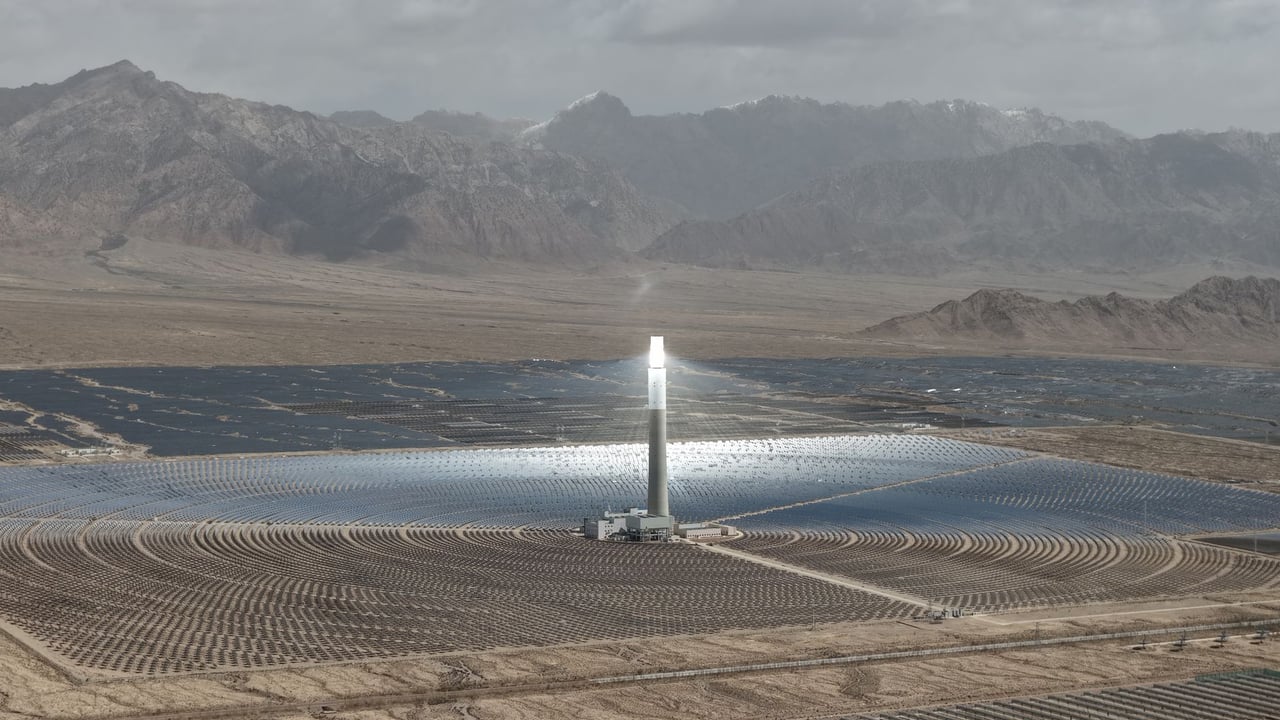
Photo by 左岸MU on Pexels
The Brief
China's major scientific facility, the High-Intensity Heavy-Ion Accelerator, has officially entered its trial operation phase. Announced in July 2026, this milestone represents a significant step forward in the country's development of high-level research platforms. The facility is expected to bolster capabilities in heavy-ion physics and various interdisciplinary fields, aligning with national strategies to enhance basic research and establish robust scientific infrastructure.
Why it matters
The trial operation of the High-Intensity Heavy-Ion Accelerator marks a critical step in establishing high-level research platforms for heavy-ion physics and interdisciplinary fields in China. It is poised to enhance the country's international competitiveness in fundamental scientific research.
China context
This project is a key component of China's broader strategy to strengthen basic research and deploy a national network of major scientific facilities (often referred to as "big science" infrastructure). It reflects Beijing's policy emphasis on achieving self-reliance in science and technology.
Editor's View
EDITOR'S VIEW — Analysis and inference, not factual reporting.
The launch of trial operations for this high-intensity heavy-ion accelerator underscores China's long-term commitment to funding massive, capital-intensive scientific infrastructure. While the immediate announcement lacks granular technical details, the successful commissioning of such a device typically signals that China is closing the gap with Western counterparts in experimental nuclear physics and materials science. We should monitor how quickly this facility transitions from trial status to hosting international research collaborations.
What to watch
- Detailed coverage from state media outlets, such as CCTV, regarding the trial operation site and initial scientific achievements.
- The timeline for the facility to complete its trial phase and officially open for full-scale academic and scientific research.
Key Takeaways
- 1China's major scientific facility, the High-Intensity Heavy-Ion Accelerator, has entered its trial operation phase.
- 2The facility is designed to support advanced research in heavy-ion physics and various interdisciplinary fields.
- 3This milestone represents a key step in China's national strategy to build robust 'big science' infrastructure and enhance basic research capabilities.
China has officially initiated the trial operation of its High-Intensity Heavy-Ion Accelerator, a major national scientific facility. The milestone, reported in July 2026, represents a significant step forward in the country's ongoing efforts to build advanced research infrastructure capable of supporting cutting-edge physical and interdisciplinary sciences.
Major scientific facilities of this scale—often referred to in China as "big science devices" (大科学装置)—are designed to provide the scientific community with unprecedented experimental capabilities. High-intensity heavy-ion accelerators are highly complex systems used to accelerate heavy ions to high energies. These facilities are critical for exploring the fundamental properties of matter, studying nuclear physics under extreme conditions, and driving advancements in materials science, life sciences, and aerospace technology.
The transition of the High-Intensity Heavy-Ion Accelerator into its trial operation phase indicates that the core construction and initial system integration of the facility have been completed. During this trial period, engineers and researchers are expected to test the stability, intensity, and reliability of the particle beams, ensuring that the accelerator meets its design specifications before transitioning to full-scale academic operations.
This development aligns with China's national strategy to prioritize basic research and achieve greater self-reliance in science and technology. By investing heavily in large-scale scientific infrastructure, the country aims to foster domestic innovation and reduce reliance on foreign research facilities. The successful commissioning of this accelerator is expected to provide global and domestic researchers with a powerful platform to conduct high-level experiments.
While initial reports have confirmed the commencement of the trial run, specific technical parameters, the exact location of the facility, and the precise timeline for its transition to full public operation remain to be detailed in subsequent official disclosures. Observers and the scientific community will be closely watching for further updates on the facility's performance during this critical testing phase.
Sources
- 大科学装置强流重离子加速器投入试运行 — NetEase · 7/21/2026
- Cas — Cas
- South China Morning Post — South China Morning Post
- Cas — Cas