
Business & IndustryAnalysis
China’s July Manufacturing PMI Slips on Seasonal Weakness as High-Tech and Summer Travel Boom
Extreme summer weather and off-peak production dragged factory activity into contraction, but high-tech sectors and seasonal tourism provided key growth highlights.
Share
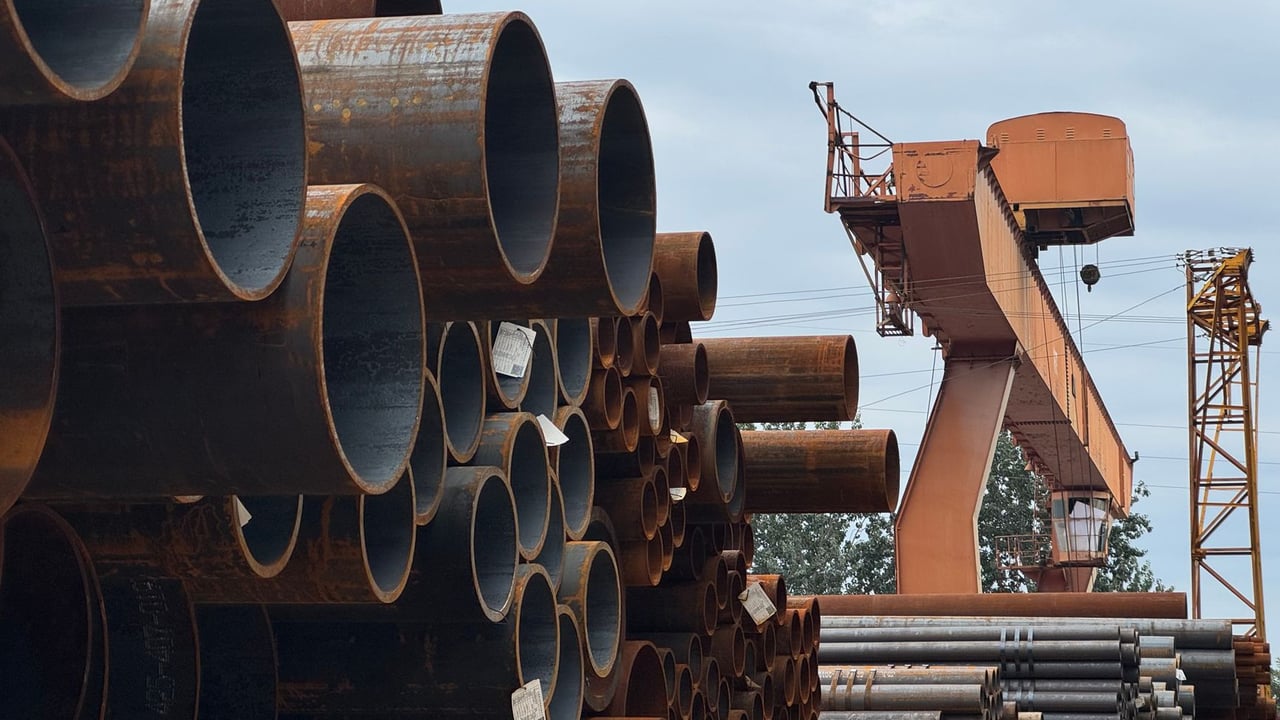
Photo by Shuaizhi Tian on Pexels
The Brief
China's official manufacturing Purchasing Managers' Index (PMI) fell to 49.2% in July 2026, dropping 1.1 percentage points from June to dip below the 50-point mark separating expansion from contraction. Data published by the National Bureau of Statistics (NBS) and the China Federation of Logistics and Purchasing (CFLP) showed that non-manufacturing business activity also declined to 49.0%. Officials and analysts attributed the broader pullback to extreme summer weather, a high comparison base, and a traditional production off-season. However, high-tech manufacturing expanded robustly at 53.3%, while summer tourism significantly boosted civil aviation, accommodation, and entertainment services.
Why it matters
The July PMI data illustrates how severe weather and high temperatures can temporarily slow industrial production and logistics. At the same time, strong performance in high-tech manufacturing and consumer services highlights ongoing structural economic adjustments, demonstrating that advanced industries and domestic travel demand are offering vital buffers against cyclical macroeconomic drags.
China context
China's economic momentum is increasingly relying on high-end manufacturing and service-oriented domestic consumption to offset traditional industrial off-seasons and choppy export demand. The resurgence in summer travel spending demonstrates resilient consumer appetite, providing crucial support as policymakers aim to steer the economy toward high-quality development and domestic demand expansion.
Editor's View
EDITOR'S VIEW — Analysis and inference, not factual reporting.
While headline contraction figures may raise immediate macroeconomic concerns, the underlying component breakdown shows a nuanced structural picture. High-tech manufacturing PMI at 53.3% and equipment manufacturing at 51.4% demonstrate that high-value industrial segments are maintaining growth despite seasonal headwinds. Meanwhile, contact-intensive consumer services are experiencing robust summer gains. The key variable to monitor is how quickly factory production rebounds once August weather conditions normalize.
What to watch
- Resumption of factory production and inventory restocking as extreme weather abates in August.
- Sustained expansion momentum in high-tech and equipment manufacturing sectors.
- Final passenger volume and revenue growth figures for air and rail transport at the close of the summer travel season.
Key Takeaways
- 1China's manufacturing PMI fell 1.1 percentage points to 49.2% in July 2026, while non-manufacturing slipped to 49.0%.
- 2Extreme weather including heatwaves and typhoons, alongside a high comparison base, drove the broader industrial contraction.
- 3High-tech manufacturing (53.3%) and equipment manufacturing (51.4%) continued to expand well above the headline average.
- 4Summer travel and leisure demand drove strong surges in civil aviation (>53%), culture and sports (>60%), and accommodation services.
- 5Manufacturing expectations remained optimistic at 54.1%, with analysts forecasting a rebound in August as weather improves.
China's official purchasing managers' indices contracted in July 2026, weighed down by extreme summer weather and traditional manufacturing off-seasons, according to data released jointly by the National Bureau of Statistics (NBS) and the China Federation of Logistics and Purchasing (CFLP). The manufacturing PMI fell 1.1 percentage points from June to 49.2%, dropping below the 50-mark threshold that separates monthly expansion from contraction. Non-manufacturing business activity slipped 1.2 percentage points to 49.0%, while the composite PMI output index posted 49.3%.
Analyzing the decline, NBS Service Industry Survey Center chief statistician Huo Lihui noted that the contraction was primarily caused by a high comparison base following prior rapid growth and the entry of several manufacturing industries into their traditional summer production lull. China Logistics Information Center analyst Wen Tao further pointed out that seasonal factors—such as severe heat, heavy rainfall, and typhoons—disrupted regional demand, intermediate procurement, and port logistics. Consequently, the manufacturing production index fell 1.5 percentage points to 49.9%, the new orders index slid 2.7 percentage points to 48.5%, and the new export orders index slipped 0.5 percentage points to 49.6%.
Despite the broader industrial deceleration, high-value manufacturing continued to serve as a strong growth engine. The equipment manufacturing PMI reached 51.4%, while high-tech manufacturing PMI expanded at a rapid pace of 53.3%. In specific sub-sectors, general equipment and computer, communication, and electronic equipment manufacturing both reported production and new orders indices above 53.0%, indicating elevated market activity. Business sentiment also remained stable: the manufacturing production and business activity expectation index registered 54.1%, led by optimism in food and beverage as well as railway, shipping, and aerospace equipment manufacturing.
In the non-manufacturing sector, summer vacation spending provided a substantial boost to consumer services. Led by strong demand for long-distance travel and leisure, the business activity index for civil aviation rose above 53.0%, while cultural, sports, and entertainment services surged past 60.0%. Accommodation and catering activities also experienced marked month-on-month rebounds. To accommodate peak summer transport, national railway operators added 480 cross-bureau passenger trains starting July 1. Industry analysts expect both manufacturing and service activities to see an upturn in August as seasonal weather disruptions ease.
Sources
- 7月制造业PMI季节性回落 暑期消费景气度趋升 — Securities Times · 8/1/2026
- 7月份高技术制造业持续扩张--经济·科技--人民网 — People's Daily · 8/1/2026