
Defense & StrategyAnalysis
China and Laos Conduct Full-Process Humanitarian Medical Drill in Vientiane
The 'Peace Train-2026' joint exercise integrated drones, robot dogs, and unmanned evacuation vehicles into disaster relief operations.
Share
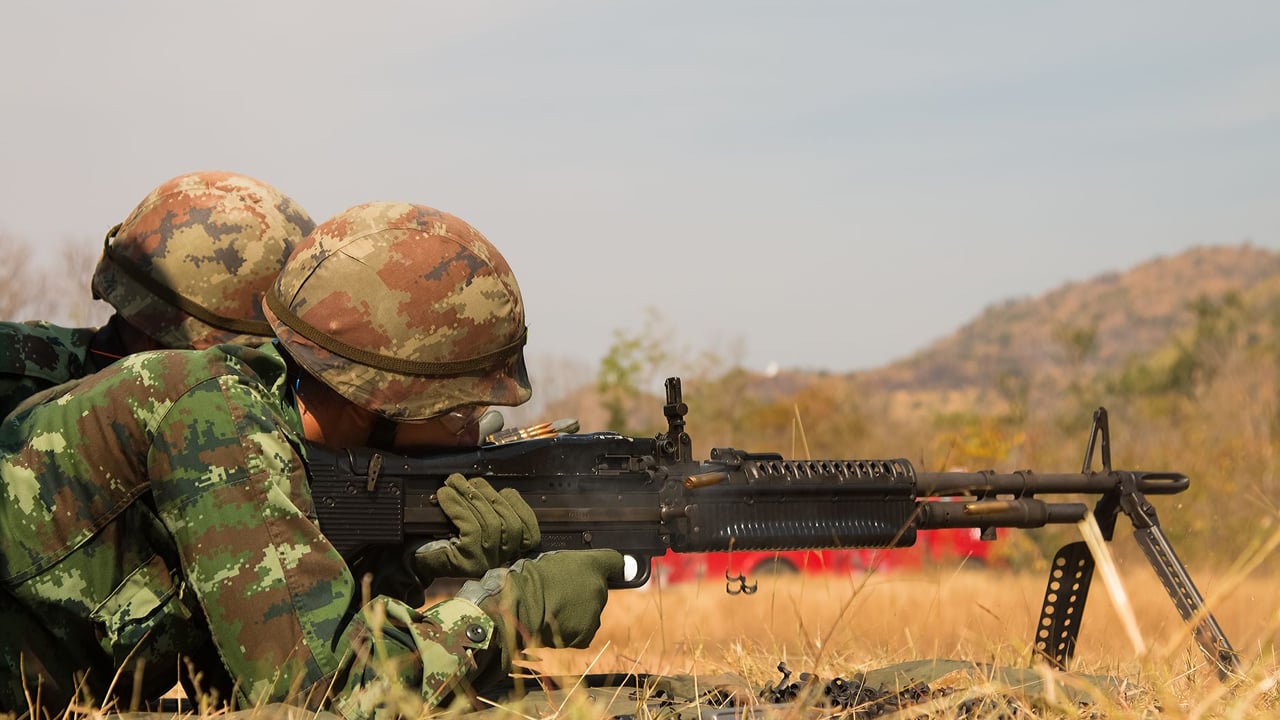
Photo by Somchai Kongkamsri on Pexels
The Brief
Chinese and Lao armed forces advanced their 'Peace Train-2026' humanitarian medical rescue joint exercise into a full-process operational drill in Vientiane on September 12, according to Xinhua. The exercise tested integrated search, triage, and evacuation workflows under simulated disaster conditions, employing unmanned aerial vehicles, quadruped robot dogs, and tracked unmanned transport vehicles alongside conventional field ambulances and a dedicated hospital train. The joint effort focused on bilateral coordination between medical and rescue contingents across mixed forward units.
Why it matters
The drill marks a continuing technological evolution in military humanitarian assistance and disaster relief (HADR), moving beyond basic medical diplomacy to test operational integration of autonomous platforms, unmanned ground vehicles, and sensor feeds under joint command. For regional observers, it illustrates how the People's Liberation Army (PLA) standardizes tactical interoperability and logistics with neighboring Southeast Asian militaries in non-combat domains.
China context
The 'Peace Train' exercise series serves as a flagship bilateral military medical platform between China and Laos, reinforcing defense ties through shared disaster response capabilities. By anchoring casualty evacuation workflows to cross-border logistics and field hospital infrastructure, Beijing demonstrates specialized civil-military assistance capacity along critical regional transport corridors.
Editor's View
EDITOR'S VIEW — Analysis and inference, not factual reporting.
While framed strictly around humanitarian disaster relief, the operational tasks executed in Vientiane closely mirror combat casualty care and frontline medical logistics. Rapid wide-area aerial scanning, unmanned ground transport for casualty extraction under hazardous conditions, and synchronized multi-echelon triage represent capabilities with immediate dual-use relevance to tactical military operations. Beijing's deployment of high-tech unmanned platforms in these exercises highlights an ongoing effort to demonstrate advanced operational support systems to regional partners.
What to watch
- Final evaluation and joint after-action reviews released at the conclusion of the Peace Train-2026 exercise.
- Further integration of autonomous ground and aerial systems into future bilateral and multilateral PLA drills in Southeast Asia.
- Potential expansion of the medical train concept to other cross-border rail and logistics networks in the region.
Key Takeaways
- 1The China-Laos 'Peace Train-2026' joint exercise entered its full-process drill phase in Vientiane on September 12.
- 2The drill utilized unmanned aerial reconnaissance drones, quadruped robot dogs, and tracked unmanned transport vehicles to locate and extract simulated casualties.
- 3Mixed bilateral teams executed mass-casualty triage, field surgical stabilization, and evacuation to a specialized hospital train under a joint command post.
Chinese and Lao military contingents conducted a comprehensive, full-process operational drill in the Lao capital of Vientiane on September 12 as part of the 'Peace Train-2026' humanitarian medical rescue joint exercise, according to Xinhua.
The exercise simulated a rapid response to a mass-casualty disaster scenario, testing the coordination between forward search teams, field triage clinics, and evacuation assets. Search-and-rescue teams launched aerial drones to conduct wide-area surveys of the target area, while tracked unmanned ground vehicles moved forward to extract casualties from difficult terrain.
According to report details from the field, a joint forward command post directed mixed Chinese and Lao search-and-rescue detachments equipped with unmanned reconnaissance platforms and quadruped robot dogs. Directing staff monitored real-time situational feeds on command screens as team members pinpointed wounded personnel trapped in debris. In one scenario, a joint team located 20 injured individuals, including one in critical condition, prompting immediate coordination between search teams and medical personnel.
Evacuation workflows combined unmanned transport vehicles with conventional field ambulances and casualty transport trucks. In field reception areas, medical staff officers verified transfer sheets, recorded vital data, and conducted triage tagging to prioritize patients for immediate surgical stabilization or rearward transfer. Severely injured casualties were stabilized in field medical tents by mixed China-Laos surgical groups before being prepped for rapid transport to a designated hospital train.
The 'Peace Train' series has evolved into an established bilateral framework for medical engagement between the Chinese and Lao militaries. By incorporating uncrewed extraction platforms and digitized command feeds into standard triage and transport routines, the drill demonstrated an ongoing effort to integrate modern autonomous systems into regional humanitarian and medical operations.
Sources
- 中老“和平列车-2026”联合演习展开全流程演练 — China Military Online · 9/12/2026