
Technology & AIAnalysis
China Launches First Commercial Debris-Monitoring Satellite with Onboard AI
The Lijian-1 Y15 rocket deployed five satellites into orbit, launching the 120-satellite Gande constellation for space traffic tracking.
Share
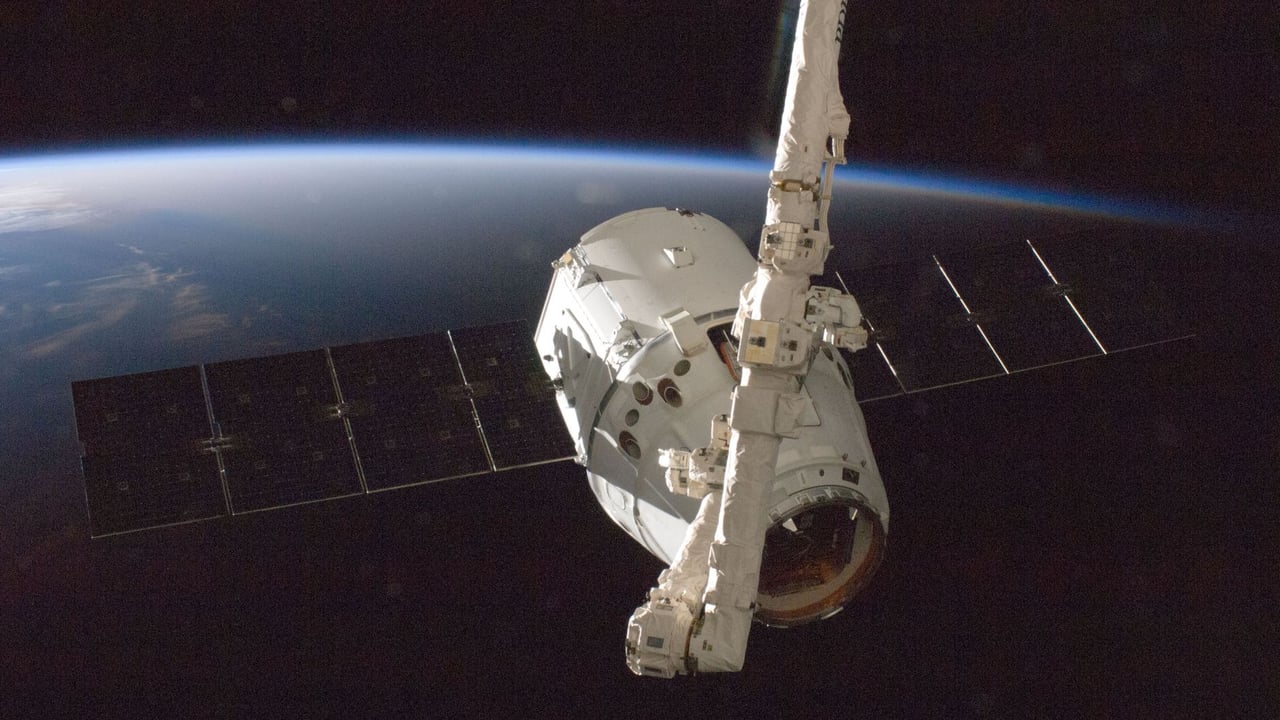
Photo by SpaceX on Pexels
The Brief
On July 24, CAS Space's Lijian-1 Y15 rocket successfully launched five satellites into orbit from the Dongfeng Commercial Aerospace Innovation Pilot Zone. The mission included Gande-1 01, China’s first commercial space debris monitoring satellite and the initial craft of the planned 120-satellite Gande constellation. Equipped with domestic GPU computing hardware and onboard AI algorithms, the satellite is designed to autonomously plan tasks, catalog space debris down to the centimeter level, and conduct multi-orbit maneuvers.
Why it matters
This mission represents a notable expansion in China's commercial space situational awareness capabilities. By deploying onboard AI algorithms and domestic GPU compute directly into orbit, the Gande constellation aims to transition space debris monitoring from traditional ground-bound tracking toward real-time edge processing in space.
China context
As China's commercial space industry expands, domestic aerospace firms are moving beyond basic remote sensing and communication services into high-value infrastructure safety and space domain awareness. Developing space-qualified domestic GPU computing also aligns with national priorities to achieve technological self-reliance in specialized hardware and edge computing.
Editor's View
EDITOR'S VIEW — Analysis and inference, not factual reporting.
Embedding edge AI processing directly onto space situational awareness satellites directly addresses the latency bottleneck in tracking fast-moving orbital debris. If CAS Space and its commercial partners successfully complete the 120-satellite Gande constellation by 2030, the network will serve as both a practical space traffic management system and a key proving ground for China's domestic space computing chips.
What to watch
- Deployment timelines for subsequent satellites in the Gande constellation toward its 2030 target of 120 craft.
- Operational test results of the onboard domestic GPU hardware and AI algorithms during active debris tracking.
Key Takeaways
- 1Lijian-1 Y15 rocket successfully launched five satellites from the Dongfeng Commercial Aerospace Innovation Pilot Zone on July 24.
- 2Gande-1 01 is China's first commercial space debris monitoring satellite and carries domestic GPU computing hardware into orbit.
- 3The satellite features onboard AI algorithms for autonomous mission planning, star extraction, and debris correlation positioning.
- 4The planned 120-satellite Gande constellation aims for full deployment by 2030, targeting over 200,000 daily effective detection arcs.
CAS Space’s Lijian-1 Y15 carrier rocket successfully launched five satellites into designated orbits on July 24 from the Dongfeng Commercial Aerospace Innovation Pilot Zone. Among the payloads was Gande-1 01, identified as China’s first commercial space debris monitoring satellite and the maiden satellite for the planned Gande constellation.
The launch also marked the deployment of domestic GPU computing hardware into orbit. The satellite is equipped with dual optical payloads, including wide-field survey cameras and high-resolution precision measurement cameras, capable of detecting space targets across low, medium, and high orbits. These instruments are designed to track small orbital debris and support a dynamically updated catalog of space fragments down to the centimeter level.
To process optical tracking data directly in space, Gande-1 01 features an onboard AI computer running algorithms for star extraction and object correlation positioning. This onboard processing enables autonomous task planning for routine patrols, rapid tracking, and emergency response missions. Additionally, the satellite incorporates several novel propulsion systems to perform multi-orbit maneuvers and close-range observation tests.
As low-Earth orbit grows increasingly congested with active satellites and debris, space situational awareness has become a critical focus for spacefaring nations. The rising volume of debris poses persistent risks to operational satellites and crewed missions, driving demand for continuous space-based surveillance.
The Gande constellation is projected to comprise 120 satellites, with full deployment planned before 2030. Upon completion, the satellite network will integrate with ground-based detection systems to provide continuous multi-orbit coverage. Project plans indicate the system will process over 200,000 effective detection arcs daily, establishing autonomous target cataloging and real-time anomaly alerting to enhance commercial space situational awareness.
Sources
- 太空多了颗“上海芯”!力箭一号“一箭五星”发射成功,国产GPU算力入轨 — China News Service · 7/25/2026
- 国内首颗商业空间碎片监测卫星发射成功--经济·科技--人民网 — People's Daily · 7/25/2026