
Business & IndustryAnalysis
China's Machinery Exports Reach $664 Billion in First Seven Months of 2026
Outpacing national trade growth, machinery exports expanded 20.8% year-on-year, driven by electric vehicles, transformers, and heavy equipment.
Share
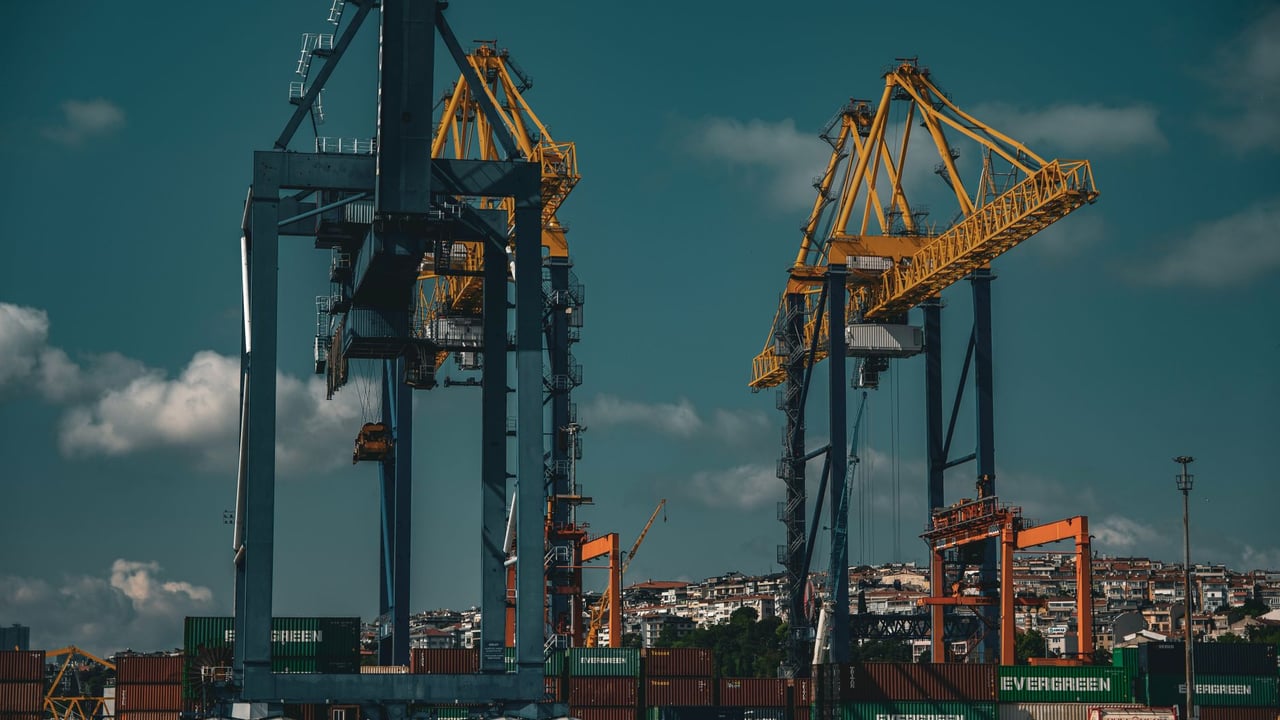
Photo by Alperen Bozkurt on Pexels
The Brief
China's machinery sector generated $664.3 billion in cumulative exports during the first seven months of 2026, rising 20.8% year-on-year, according to figures released by the China Machinery Industry Federation. The sector accounted for 26.3% of the nation's total merchandise exports over the period, growing 2.3 percentage points faster than overall foreign trade. The expansion was propelled by high-value equipment, including electric passenger vehicles, lithium-ion batteries, power transformers, and construction machinery, coinciding with national industrial upgrading goals under the newly inaugurated 15th Five-Year Plan.
Why it matters
Machinery exports account for more than a quarter of China's total goods trade, functioning as a primary stabilizer for the country's export economy. The rapid expansion of high-value equipment—including electric vehicles, grid components, and advanced construction machinery—indicates structural upgrading across Chinese industrial supply chains, providing resilience against broader external economic volatility.
China context
The performance aligns with the opening year of China's 15th Five-Year Plan (2026–2030), which emphasizes high-end, intelligent, and green manufacturing. Central policymakers continue to push the 'Three Transformations'—moving from Chinese manufacturing to Chinese creation, from Chinese speed to Chinese quality, and from Chinese products to recognized Chinese brands—making advanced equipment a focal point of state industrial policy.
Editor's View
EDITOR'S VIEW — Analysis and inference, not factual reporting.
The 20.8% surge highlights sustained global appetite for Chinese capital goods and green hardware, where domestic manufacturers maintain significant cost advantages and integrated domestic supply chains. Rather than relying on low-margin assembly, outbound momentum is increasingly concentrated in technical categories like electrical control gear, heavy mining machinery, and electrified utility vehicles. However, as Chinese equipment deepens its presence in foreign markets, heightened scrutiny and potential trade defenses from Western economies remain a key operational uncertainty.
What to watch
- Monthly customs data releases tracking export volume and price stability for specific machinery categories like transformers and excavators.
- Potential trade remedies or tariff investigations by major overseas partners targeting Chinese green equipment and heavy machinery.
- Implementation directives and financial support measures under the 15th Five-Year Plan focused on intelligent and green manufacturing.
Key Takeaways
- 1Machinery exports reached $664.3 billion in the first seven months of 2026, up 20.8% year-on-year.
- 2The industry accounted for 26.3% of China's total merchandise exports, outpacing broader export growth by 2.3 percentage points.
- 3Export gains were led by high-value segments, including electric passenger vehicles, lithium batteries, transformers, and heavy construction equipment.
- 4Growth aligns with 15th Five-Year Plan targets focusing on high-end, intelligent, and green industrial production.
China's machinery industry recorded $664.3 billion in cumulative exports between January and July 2026, marking a 20.8% increase compared to the same period in the prior year, according to Luo Junjie, vice president of the China Machinery Industry Federation, speaking at a Beijing press briefing reported by People's Daily.
The sector's expansion outpaced China's overall foreign merchandise export growth rate by 2.3 percentage points. Machinery products accounted for 26.3% of the country's total goods exports over the seven-month span, reinforcing the sector's role as a primary pillar of national trade. Value-added industrial output across all five major sub-sectors within the machinery classification maintained year-on-year gains.
According to the federation, export momentum was supported by structural improvements and rising shares of high-value-added goods. Finished equipment in high-end manufacturing and clean energy demonstrated solid performance, with notable growth in overseas sales of automobiles, electric passenger vehicles, and lithium-ion batteries. In electrical engineering, products including power generator sets, transformers, and electrical control devices sustained strong export traction. Similar trends were observed in construction and heavy machinery, including excavators, loaders, electric forklifts, mining equipment, and conveyor systems.
Addressing the industry's trajectory, Luo noted that machinery manufacturers have expanded their international reach and technological capacity despite external economic pressures. The year 2026 represents the inaugural year of China's 15th Five-Year Plan, which outlines national guidelines promoting high-end, intelligent, and low-carbon industrial development. A series of public policy initiatives are intended to accelerate the strategic transition from assembly-focused manufacturing to high-quality domestic engineering and global brand development.
Sources
- Com — People's Daily · 9/5/2026