
Business & IndustryAnalysis
Onshore Sections Complete for World's Longest Undersea Rail Tunnel
Excavation advances on the Ningbo-Zhoushan Railway as engineering focus shifts entirely to undersea shield tunneling.
Share
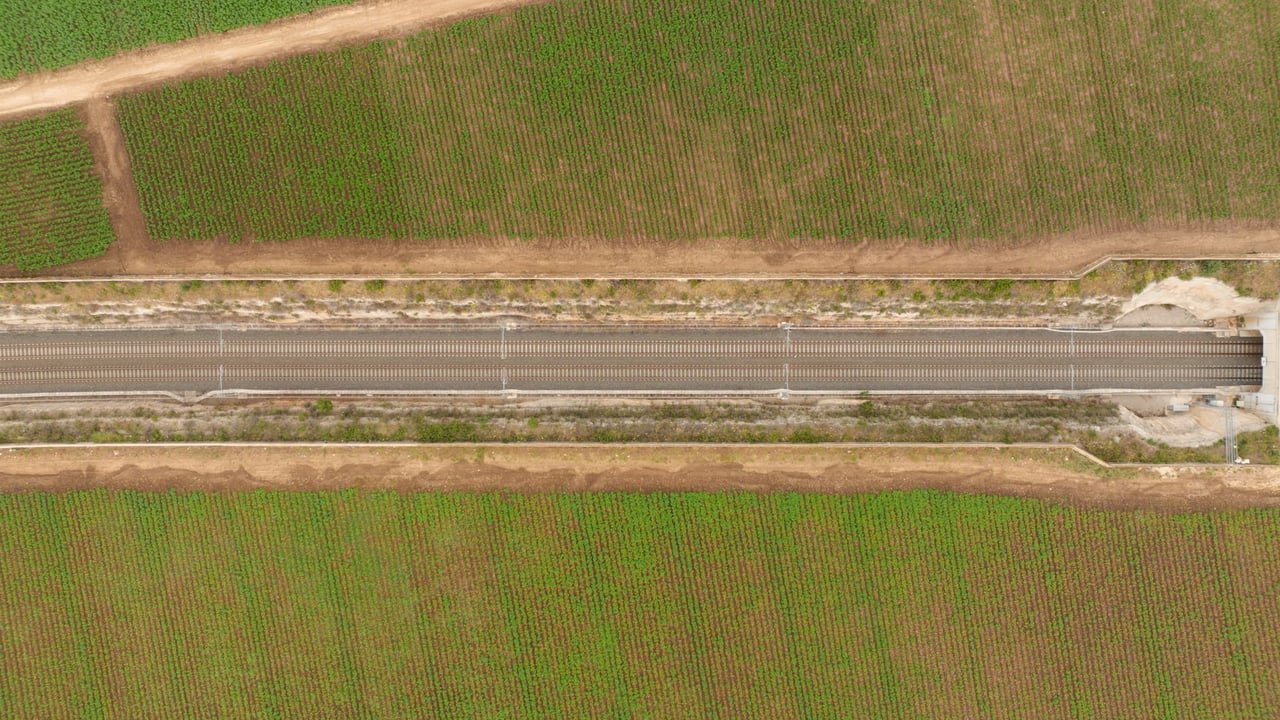
Photo by K on Pexels
The Brief
Construction teams have fully excavated the onshore segments of the 16.18-kilometer Jintang Undersea Tunnel, marking a key milestone for the Ningbo-Zhoushan Railway in eastern China's Zhejiang province. With the breakthrough of a 3,617-meter rock tunnel section in Ningbo, the onshore sections totaling 7.83 kilometers are now finished, according to state media. Overall construction on the 76.4-kilometer high-speed rail project has reached 77 percent, shifting primary operations to complex undersea shield tunneling that will eventually link the island archipelago of Zhoushan to the national rail network.
Why it matters
Completing the land-based excavation removes major onshore geological risks, allowing engineers to concentrate resources on the technical challenges of undersea shield tunneling. When operational, the rail line will eliminate Zhoushan's status as an island without passenger rail, cutting travel time between Ningbo and Zhoushan to roughly 26 minutes and linking Zhoushan to provincial capital Hangzhou in about 90 minutes.
China context
The Ningbo-Zhoushan Railway forms a core pillar of Zhejiang province's initiative to build a one-hour transit circle across key economic centers. Beyond commuter transit, linking Ningbo and Zhoushan strengthens the integrated operation of the Ningbo-Zhoushan Port complex, the world's largest port by cargo throughput, reinforcing coastal industrial transport and regional economic integration.
Editor's View
EDITOR'S VIEW — Analysis and inference, not factual reporting.
The progress on the Jintang Undersea Tunnel highlights China's expanding mastery over high-speed undersea rail engineering, setting technical benchmarks for speed and distance beneath marine straits. The focus now turns to the subsea shield tunneling phase, where dual shield machines must navigate extreme underwater pressure, complex seabed stratigraphy, and high-precision underwater docking. The timeline for that subsea breakthrough will dictate whether the line meets provincial launch targets.
What to watch
- Progress and docking milestones for the shield tunneling machines advancing beneath the Jintang strait.
- Transition to subsequent engineering phases, including ballastless track laying and electrical systems installation.
- Official announcements regarding trial operations and final commissioning dates for the Yongzhou Railway.
Key Takeaways
- 1Onshore excavation for the 16.18-kilometer Jintang Undersea Tunnel is now fully complete, covering 7.83 kilometers of land-based tunneling.
- 2The breakthrough section in Ningbo's Beilun district spans 3,617 meters and traversed multiple fault zones using controlled micro-delay blasting.
- 3Overall progress on the 76.4-kilometer Ningbo-Zhoushan Railway has reached 77 percent, with engineering moving entirely to undersea shield tunneling.
- 4The completed high-speed line will cut travel time between Ningbo and Zhoushan to 26 minutes and Hangzhou to Zhoushan to roughly 1.5 hours.
Excavation crews have completed the onshore sections of the Jintang Undersea Tunnel, a critical engineering component of the Ningbo-Zhoushan high-speed rail line in eastern China's Zhejiang province, state media reported on September 4.
The final onshore breakthrough occurred at the western entrance in Ningbo's Beilun district, clearing the remaining rock barrier along a 3,617-meter section built by China Railway 14th Bureau Group. The Jintang tunnel spans 16.18 kilometers in total, connecting Beilun on the mainland with Jintang Island in Zhoushan. Designed for train speeds of up to 250 kilometers per hour in a single-tube, double-track configuration, the project is recognized as the world's longest undersea high-speed railway tunnel.
The tunnel is divided into onshore and offshore segments. With the latest excavation complete, the entire 7.83 kilometers of onshore tunneling is now finished. According to Qiu Lixu, a site manager for China Railway 14th Bureau, crews contended with multiple fault lines and dense joint zones in Ningbo. Engineers utilized smooth-wall and micro-delay blasting techniques to minimize seismic disruption, supported by advanced geological forecasting and real-time rock monitoring to maintain structural stability throughout excavation.
With onshore excavation complete, construction priorities have pivoted fully toward undersea shield tunneling. The Ningbo-Zhoushan Railway covers a total mainline length of 76.4 kilometers, and overall construction progress has reached 77 percent, according to project updates released via Xinhua.
Once shield operations complete the subsea crossing, subsequent phases will involve laying ballastless tracks and installing power and signaling equipment. Upon completion, high-speed rail travel between Ningbo and Zhoushan will take approximately 26 minutes, while the journey between Hangzhou and Zhoushan will be shortened to about 90 minutes, ending Zhoushan's historic reliance on marine and highway transit.
Sources
- 世界最长海底高铁隧道陆域段贯通--经济·科技--人民网 — People's Daily · 9/4/2026