
Policy & RegulationAnalysis
China Mobilizes Field Technicians and Pest Controls to Secure Autumn Grain Harvest
Agricultural authorities deploy expert teams, machinery, and fiscal funds after typhoon rains and pest threats challenge the annual grain output target.
Share
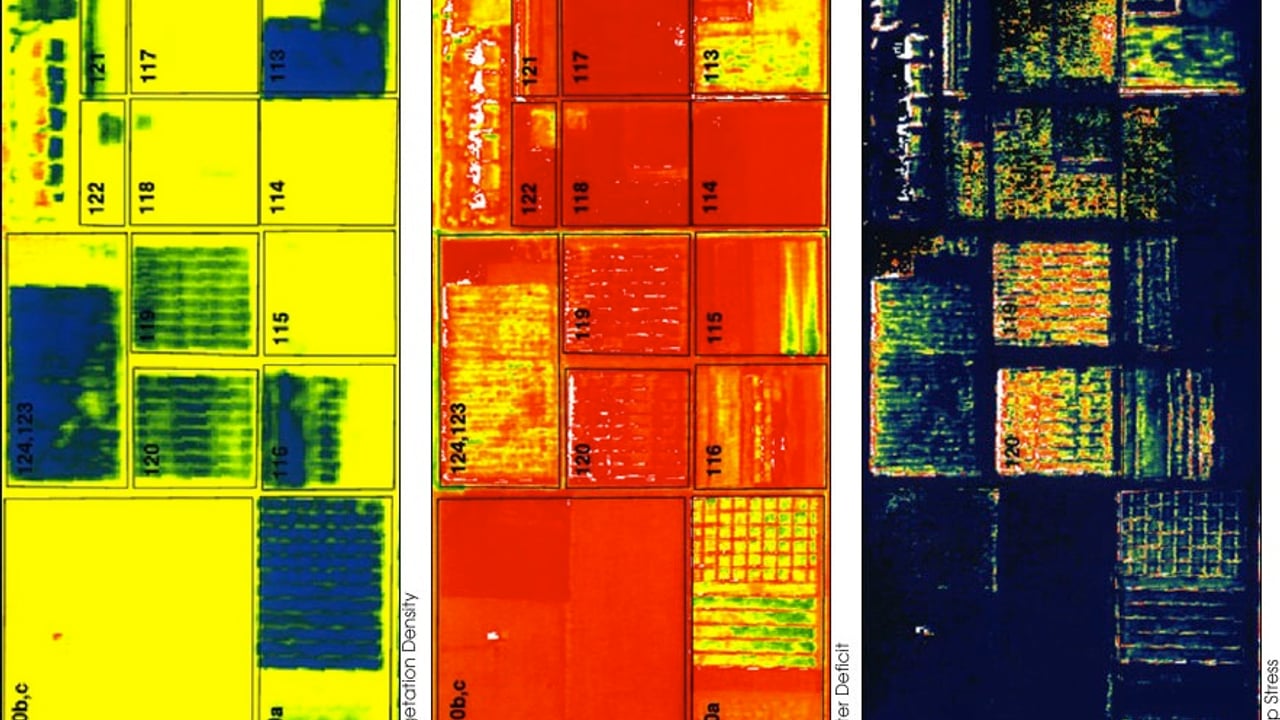
Susan Moran, Landsat 7 Science Team and USDA Agricultural Research Service (U.S. Government work) via Wikimedia Commons, Public domain
The Brief
China is intensifying field management and disaster mitigation efforts to safeguard its autumn crop after heavy rains from Typhoon White Dolphin and escalating rice pest risks in the Yangtze River basin. With summer grain already secured, autumn production remains pivotal for meeting the national annual target of approximately 1.4 trillion jin (700 million metric tons). The Ministry of Agriculture and Rural Affairs reported that autumn grain acreage is expected to remain stable with a slight increase, while local authorities across Henan, Shandong, and Guangxi deploy thousands of technicians and machinery to assist post-flood drainage and pest control.
Why it matters
Autumn grain accounts for approximately three-quarters of China's total annual grain production. Successfully managing weather shocks, waterlogged fields, and migratory pest outbreaks directly determines whether the country can hit its annual output target of 1.4 trillion jin, a key benchmark for domestic food security and price stability.
China context
Under its national strategy of storing grain in land and technology, Beijing pairs disaster relief with large-scale yield-enhancement initiatives. When extreme weather hits major agricultural basins, the central government activates coordinated emergency responses, dispatching mobile technical task forces and unlocking dedicated fiscal reserves for plant protection.
Editor's View
EDITOR'S VIEW — Analysis and inference, not factual reporting.
The swift deployment of agricultural technicians and mechanised recovery operations highlights Beijing's institutional responsiveness to climate volatility in the farm sector. However, the recurring threat of late-season typhoons and Yangtze basin pest pressure means regional execution over the next two months will be the true test of this year's harvest stability.
What to watch
- Effectiveness of unified pest control campaigns targeting brown planthoppers across the middle and lower Yangtze River rice regions.
- Late-season weather patterns in northern grain belts, specifically risks of early frost or persistent autumn rains in the Huang-Huai-Hai plain and Northeast China.
- Official harvest progress and preliminary yield evaluations released by the Ministry of Agriculture and Rural Affairs in the coming months.
Key Takeaways
- 1Autumn grain acreage is projected to remain stable with a slight increase, underpinning China's goal of reaching about 1.4 trillion jin in annual grain output.
- 2Typhoon White Dolphin brought torrential rainfall to Henan and Shandong, prompting the deployment of 12,000 farm technicians in Henan to assist with emergency drainage.
- 3Agricultural authorities in Guangxi deployed nearly 9,000 machinery sets, restoring more than 56,000 mu of damaged farmland.
- 4The Ministry of Agriculture and Rural Affairs issued emergency guidance and disbursed central prevention funds to counter brown planthopper risks in the Yangtze River basin.
China has launched intensive field management and pest control campaigns across major farming provinces to protect autumn grain crops following severe rainfall and typhoon disruptions, according to a report by People's Daily.
With the summer harvest completed, national attention has shifted to the autumn crop, which is crucial for achieving China's annual grain output target of approximately 1.4 trillion jin (700 million metric tons). At a briefing on rural economic performance, Vice Minister of Agriculture and Rural Affairs Zhang Xingwang stated that the overall outlook for autumn grain remains positive, with total planting acreage largely locked in and expected to see a slight, steady increase alongside normal crop growth conditions.
Recent severe weather has nonetheless tested regional production capacity. In Henan province, heavy downpours triggered by Typhoon White Dolphin inundated farmland south of the Yellow River. In response, the provincial agricultural department dispatched 18 expert guidance teams and deployed 12,000 agricultural technicians to frontline areas, including Pingdingshan, Zhoukou, Luohe, Xuchang, Nanyang, and Zhumadian, to oversee drainage, ditch clearing, and disease prevention.
Similar recovery efforts are underway in eastern and southern regions. In Heze, Shandong province, where corn crops are in the critical grain-filling stage, local agronomists are guiding farmers to conduct unified pest control using plant protection drones and promoting delayed harvesting techniques to maximize grain weight. Meanwhile, in Hengzhou, Guangxi, agricultural authorities deployed nearly 9,000 machinery units, helping restore over 56,000 mu (3,733 hectares) of affected cropland and replanting 3.7000 mu (2,467 hectares).
Beyond rainfall management, authorities are addressing heightened biological threats. Repeated typhoon landfalls since July have created conditions conducive to brown planthopper outbreaks in the middle and lower reaches of the Yangtze River rice belt. The Ministry of Agriculture and Rural Affairs has issued early warning advisories, released technical control guidelines, and deployed specialised technical teams to assist major southern rice-producing provinces, while allocating central fiscal funds for major pest and disease prevention.
Sources
- 夏粮已落袋秋粮正接棒 夺取全年粮食丰收基础较好--经济·科技--人民网 — People's Daily · 8/20/2026