
Policy & RegulationAnalysis
China Orders Nationwide Review of Museum Exhibits Over Accuracy and Ideology
The National Cultural Heritage Administration bans outsourcing content reviews and mandates same-day corrections for factual and political errors.
Share
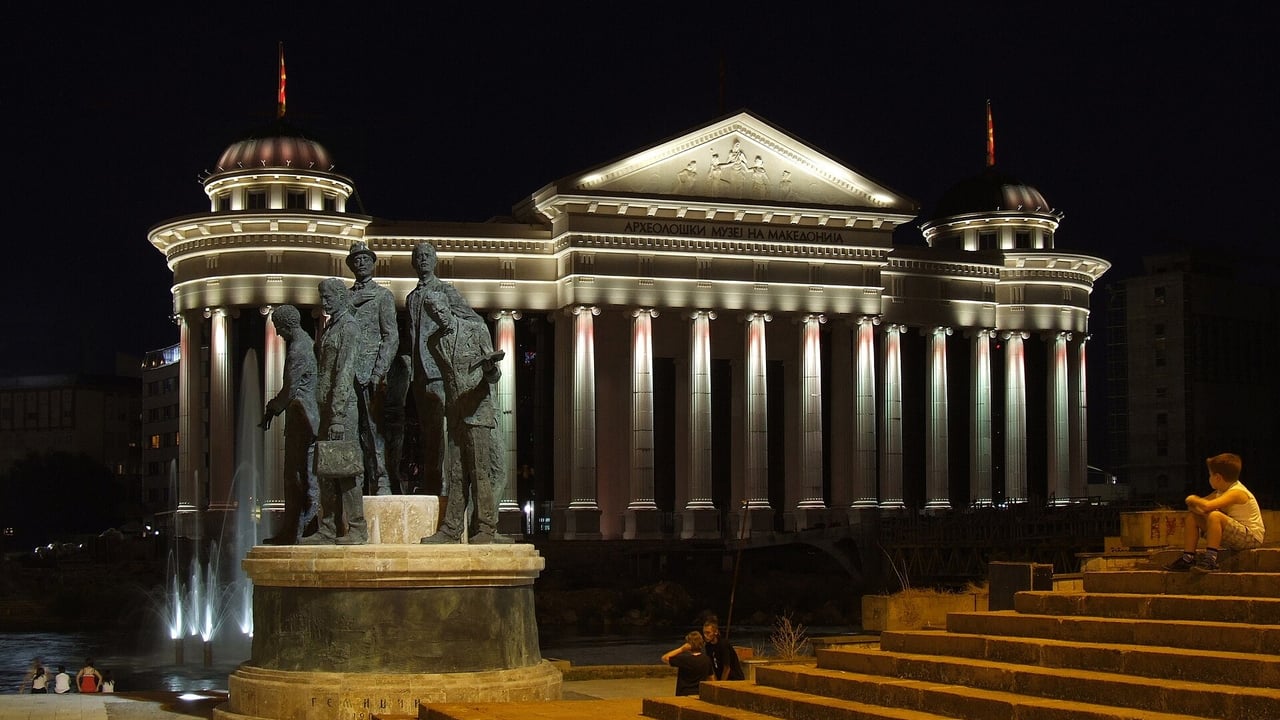
Pudelek (Marcin Szala) via Wikimedia Commons, CC BY-SA 3.0
The Brief
China's National Cultural Heritage Administration has launched an immediate nationwide inspection and rectification campaign targeting museum exhibition content across all registered institutions, according to state news agency Xinhua. The directive comes after several recent incidents involving textual errors and improper phrasing in exhibits drew public scrutiny. Under the new rules, museums are barred from outsourcing exhibition content reviews to third parties, must enforce ideological responsibility, and are required to rectify verified errors within the same day.
Why it matters
The directive firmly establishes museums as the sole responsible entities for exhibition vetting, eliminating third-party outsourcing and setting an aggressive same-day turnaround for verified corrections. This increases institutional accountability and standardizes quality control across China's cultural heritage sector.
China context
As museum attendance surges across China, public scrutiny of exhibition details—including historical chronology, textual precision, and map boundaries—has intensified. By explicitly highlighting sensitive topics such as revolutionary history, ethnic affairs, religion, and frontier geography, the regulator is reinforcing institutional alignment with official historical narratives and ideological standards.
Editor's View
EDITOR'S VIEW — Analysis and inference, not factual reporting.
The campaign reflects a dual priority within Chinese cultural governance: enhancing the technical rigor of public educational spaces while tightening ideological gatekeeping. By prohibiting the outsourcing of content reviews and mandating same-day corrections, authorities are compelling museum leadership to adopt direct, operational oversight over every label, map, and didactic panel. This approach minimizes public relations vulnerabilities arising from viral social media callouts over errant historical facts or improper cartographic boundaries.
What to watch
- Follow-up inspection notices and enforcement reports released by provincial cultural heritage departments.
- Operational adjustments made by major museums to establish internal daily monitoring and rapid-response correction protocols.
Key Takeaways
- 1The National Cultural Heritage Administration ordered an immediate nationwide review of all registered museum exhibits following public attention over factual errors.
- 2The audit covers permanent displays, temporary exhibitions, public signage, historical chronologies, data charts, and map standards.
- 3Museums are strictly prohibited from outsourcing exhibition review responsibilities to third parties.
- 4Exhibition supervisors must inspect galleries regularly and complete verified corrections within the same day.
China's National Cultural Heritage Administration has ordered a nationwide inspection and rectification of museum exhibition content, instructing provincial cultural heritage authorities to launch immediate audits across all registered institutions, according to a report by Xinhua.
The regulatory directive follows public attention surrounding recent instances of textual errors and inappropriate phrasing in museum exhibits. Regulators instructed provincial cultural authorities to act swiftly, adhering to principles of immediate identification and rectification to ensure issues are systematically cleared.
The scope of the review encompasses all basic displays, permanent exhibitions, and temporary showcases at registered museums, as well as public service signage, visitor guides, announcements, and informational notices. Key audit priorities include evaluating the implementation of internal content review systems, checking for grammatical flaws, typographical errors, and punctuation mistakes, and verifying the accuracy of artifact descriptions, historical chronologies, and statistical charts.
The notice also places particular emphasis on cartographic accuracy, requiring that modern maps, historical maps, and regional diagrams strictly adhere to standard drawing, labeling, and legend guidelines. In addition, auditors are instructed to examine presentations of major historical events, revolutionary movements, prominent historical figures, and topics involving ethnic groups, religion, and frontier regions for factual precision and appropriate political orientation.
Under the new guidelines, museums hold the primary institutional responsibility for vetting exhibition content displayed on their premises or under their name. The notice explicitly prohibits museums from outsourcing content review duties to third parties or shifting editorial accountability. Institutions are instructed to enforce ideological work responsibility systems and assign specific tasks to designated personnel.
Exhibition supervisors must conduct regular inspections of gallery spaces and address issues immediately upon discovery. When exhibition content is confirmed to contain errors, supervisors are required to complete corrections and provide formal feedback within the same day. Cultural heritage authorities at all levels were also instructed to strengthen exhibition filing procedures and establish regular supervision mechanisms.
Sources
- 国家文物局部署立即开展博物馆陈列展览内容核查整改 — Xinhua News Agency · 8/20/2026