
Policy & RegulationAnalysis
China Accelerates National Logistics Network Plan to Lower Supply Chain Costs
Beijing rolls out an implementation plan linking inland production hubs directly to coastal ports and international trade corridors.
Share
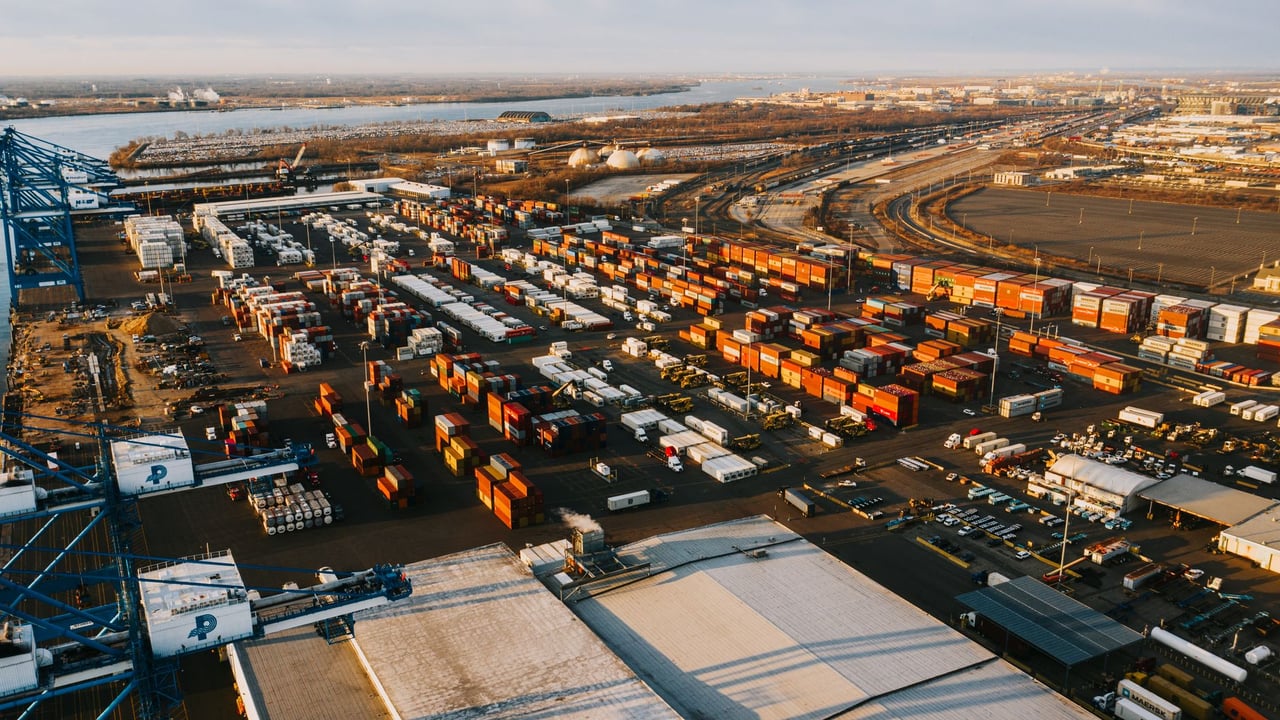
Photo by K on Pexels
The Brief
China's National Development and Reform Commission and the Ministry of Transport have jointly unveiled an implementation plan to systematically construct a unified national logistics network. Positioned as one of Beijing's strategic "six networks," the initiative focuses on reducing systemic logistics expenses across the economy, standardizing multimodal freight, and bridging inland manufacturing with coastal export hubs. The blueprint outlines an integrated system spanning hub nodes, trunk corridors, equipment, digital data, and operating rules to support domestic consumption and industrial efficiency.
Why it matters
As a core pillar of China's infrastructure modernization strategy, the national logistics network directly underpins efforts to build a unified domestic market and insulate supply chains. Reducing overall logistics costs is vital for boosting corporate margins in manufacturing and expanding consumer access in rural areas. Furthermore, dedicated sea-rail freight links provide inland industrial regions with direct, lower-cost access to global shipping lanes.
China context
Chinese leadership has repeatedly characterized logistics as the vital circulatory system of the real economy, connecting production with consumption and domestic commerce with foreign trade. Following directives from the CPC Central Committee Political Bureau to advance "six major networks," central planners are prioritizing supply chain efficiency ahead of the 15th Five-Year Plan cycle. The push seeks to remedy lingering imbalances, such as fragmented intermodal freight standards and high inland transport costs relative to coastal zones.
Editor's View
EDITOR'S VIEW — Analysis and inference, not factual reporting.
While China has developed unmatched physical freight scale—spanning hundreds of national hubs and moving roughly 200 billion express parcels annually—the deeper challenge lies in structural and regulatory integration. Lowering logistics costs as a proportion of economic output will require more than pouring concrete. Success depends on regulatory harmonization, the elimination of local protectionism across provincial freight boundaries, and seamless digital interoperability between state-owned rail systems, road carriers, and commercial port operators.
What to watch
- Subsequent regional policy documents and provincial implementation timetables issued under the joint NDRC-Transport Ministry plan.
- Changes in the ratio of China's total social logistics costs relative to GDP in upcoming statistical releases.
- Expansion of rail-sea multimodal corridors connecting interior industrial bases to major maritime ports.
Key Takeaways
- 1The NDRC and Ministry of Transport jointly issued an implementation plan to systematically construct China's national logistics network.
- 2The logistics system is designated as one of the strategic "six networks" mandated by the CPC Central Committee Political Bureau.
- 3China's physical freight network encompasses 181 national logistics hubs, 105 cold-chain logistics bases, and 427,000 village delivery stations.
- 4New direct intermodal routes, such as the 4,910-kilometer Aksu-to-Ningbo rail corridor, are designed to lower export costs for inland manufacturers.
China has launched a coordinated push to upgrade its national freight and distribution infrastructure, with the National Development and Reform Commission (NDRC) and the Ministry of Transport jointly issuing an implementation plan for building a comprehensive national logistics network, state media reported.
The deployment follows high-level directives from the CPC Central Committee Political Bureau earlier this year, which designated the logistics grid as one of the country's strategic "six networks" alongside energy, water conservancy, and digital infrastructure. Top leadership has emphasized that modern logistics serves as the circulatory backbone of the real economy, linking production to consumption and domestic commerce to foreign trade, with a stated priority to lower aggregate logistics costs across society.
According to NDRC official Li Chao, the logistics network is designed as a composite infrastructure and services framework. It integrates physical hub nodes, trunk transit corridors, specialized transport equipment, regulatory standards, and digital data platforms to support high-efficiency flows of goods and resource inputs.
Official figures highlight significant existing scale in China's distribution sector. The country currently operates 181 national logistics hubs, 105 national backbone cold-chain bases, and more than 2,700 logistics parks of designated scale. In consumer delivery, over 250,000 express routes connect 500,000 business outlets, 427,000 village-level delivery stations, and 1,300 automated sorting hubs, handling approximately 200 billion parcels per year.
A key priority of the new implementation plan is expanding sea-rail intermodal connectivity to integrate remote industrial zones with international sea lanes. As an operational benchmark, a dedicated freight train carrying locally produced cotton fabrics departed Xinjiang's Aksu Textile Industrial City in late July, traveling 4,910 kilometers across six provinces and 68 rail stations directly to Ningbo Zhoushan Port in Zhejiang province. The route marks southern Xinjiang's first direct rail-to-sea export corridor, designed to reduce transit times and anchor manufacturing clusters in the western interior.
Central planners intend to leverage the implementation plan to further align transport corridors with local industrial clusters, enhance automated equipment adoption, and accelerate standard-setting for multimodal transport throughout the upcoming five-year planning cycle.
Sources
- 进一步畅通实体经济的“筋络”——“十五五”开局之年推进物流网建设观察 — Xinhua News Agency · 9/3/2026