
Technology & AIAnalysis
China Expands Nuclear Fusion Push as Hefei BEST Facility Enters Assembly
With construction advancing in Anhui and over 7 billion yuan flowing into commercial startups, China aims for fusion power generation demonstrations by 2030.
Share
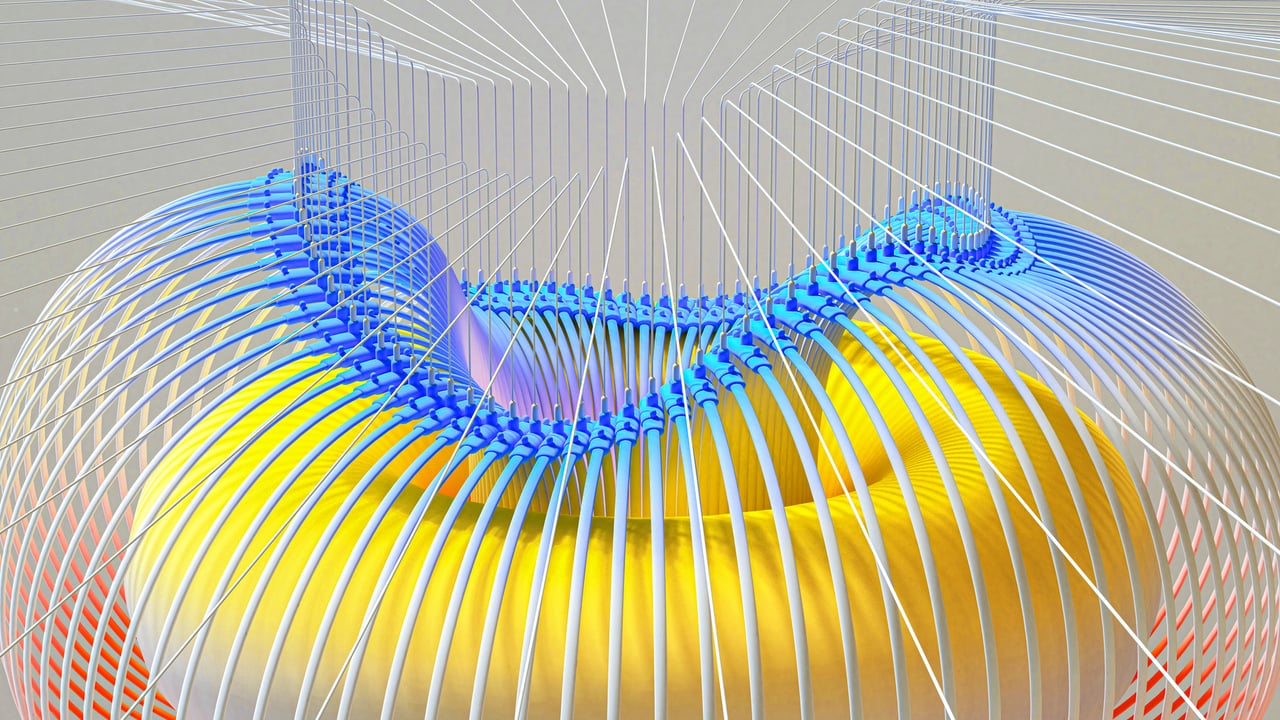
Photo by Google DeepMind on Pexels
The Brief
China is accelerating construction of next-generation controlled nuclear fusion facilities, led by the Burning Experimental Spherical Tokamak (BEST) project in Hefei, Anhui province. Installation of the compact experimental device began in June 2026, targeting full host and peripheral assembly by 2027 and fusion power generation demonstrations around 2030. Alongside state-backed research infrastructure, domestic private capital is expanding rapidly, with fusion startups raising over 7 billion yuan in the first half of 2026 amid policy support for designated future industries.
Why it matters
The transition of the BEST facility into full-scale mechanical assembly marks a shift for China's controlled fusion program from laboratory research toward engineering feasibility and power generation trials. With top-level industrial planning prioritizing nuclear fusion and billions of yuan entering the supply chain, the sector is fostering an emerging industrial ecosystem spanning high-temperature superconductors, specialized materials, and precision equipment.
China context
China pursues a multi-track nuclear fusion strategy combining flagship state scientific infrastructure, university research, and private commercial ventures. Controlled nuclear fusion has been formally integrated into national strategic planning for future industries. Regional hubs such as Hefei and Chengdu are leveraging national laboratories to build localized industrial clusters, aiming to localize critical hardware such as divertors and superconducting magnets.
Editor's View
EDITOR'S VIEW — Analysis and inference, not factual reporting.
While engineering milestones like BEST highlight China's rapid buildout of fusion testbeds, the commercialization curve remains protracted and technologically demanding. The influx of private capital and state encouragement provides critical early momentum, but sustained public-private coordination and resolving extreme physics and materials challenges will determine whether experimental gains translate into scalable grid power.
What to watch
- Completion of the ring assembly at Hefei's BEST facility in early 2027, followed by host machine installation.
- Fundraising momentum and prototype testing schedules among commercial fusion startups in late 2026.
- Specific funding allocations and engineering benchmarks for fusion projects under China's 15th Five-Year Plan.
Key Takeaways
- 1The BEST fusion project in Hefei began installation in June 2026, aiming for complete host assembly in 2027 and power demonstration around 2030.
- 2The experimental device is engineered to pursue fusion power outputs between 20 MW and 200 MW.
- 3Chinese commercial fusion startups raised over 7 billion yuan in the first half of 2026.
- 4Securities brokerages estimate domestic fusion capital expenditure could reach 148.2 billion yuan over the next 3 to 5 years as the sector enters national industrial planning.
China has entered a critical construction phase for its next-generation controlled nuclear fusion infrastructure, according to domestic media reports. The Burning Experimental Spherical Tokamak (BEST) project, located in Hefei, Anhui province, commenced hardware installation in June 2026 and is currently progressing through comprehensive assembly.
According to reports from CCTV Finance and Securities Times, engineers expect to complete the device's ring assembly by early 2027, aiming to finish installing the host machine and peripheral systems later that year. The experimental roadmap targets a fusion power output ranging between 20 megawatts and 200 megawatts, with a broader goal of demonstrating fusion electricity generation around 2030.
The development of fusion energy in China is also expanding beyond traditional state-run research institutes. Commercial fusion enterprises have attracted substantial private and corporate investment. Market data reported by Securities Times indicates that during the first half of 2026, domestic fusion startups—including ENN Fusion, Zeta Fusion, and Energy Singularity—raised a combined total exceeding 7 billion yuan ($970 million), setting new funding records for the sector.
Financial analysts anticipate substantial capital expenditure in the coming years. Securities Times cited a Huachuang Securities research report indicating that controlled nuclear fusion has been officially incorporated into top-level central planning for strategic future industries. The brokerage projects total investments in major domestic fusion projects could reach 148.2 billion yuan over the next three to five years, signaling an active bidding and procurement cycle for advanced industrial components.
Guosen Securities similarly estimated that annual investments in fusion facilities could reach approximately 20 billion yuan during the 15th and 16th Five-Year Plan periods, potentially stimulating an upstream and downstream industrial market worth 50 billion yuan.
Despite rising market enthusiasm and recent share price gains among listed nuclear equipment suppliers, industry participants emphasize that commercial realization will require sustained development. Executives from domestic manufacturers have noted in investor briefings that transitioning magnetic confinement fusion from experimental verification to economically viable commercial power generation remains a prolonged and technically complex undertaking.
Sources
- 新一代“人造太阳”来了 千亿级聚变能产业蓄势待发 — China News Service · 8/14/2026
- “20cm”涨停,万亿巨头入股!新一代“人造太阳”要来了,全面进入攻坚安装阶段(附股) — Securities Times · 8/14/2026