
Business & IndustryAnalysis
China's Offshore Engineering Orders Rise 121.9% as Global Share Tops 80%
First-half figures released by the Ministry of Natural Resources point to rapid expansion in high-end offshore wind and oil equipment.
Share
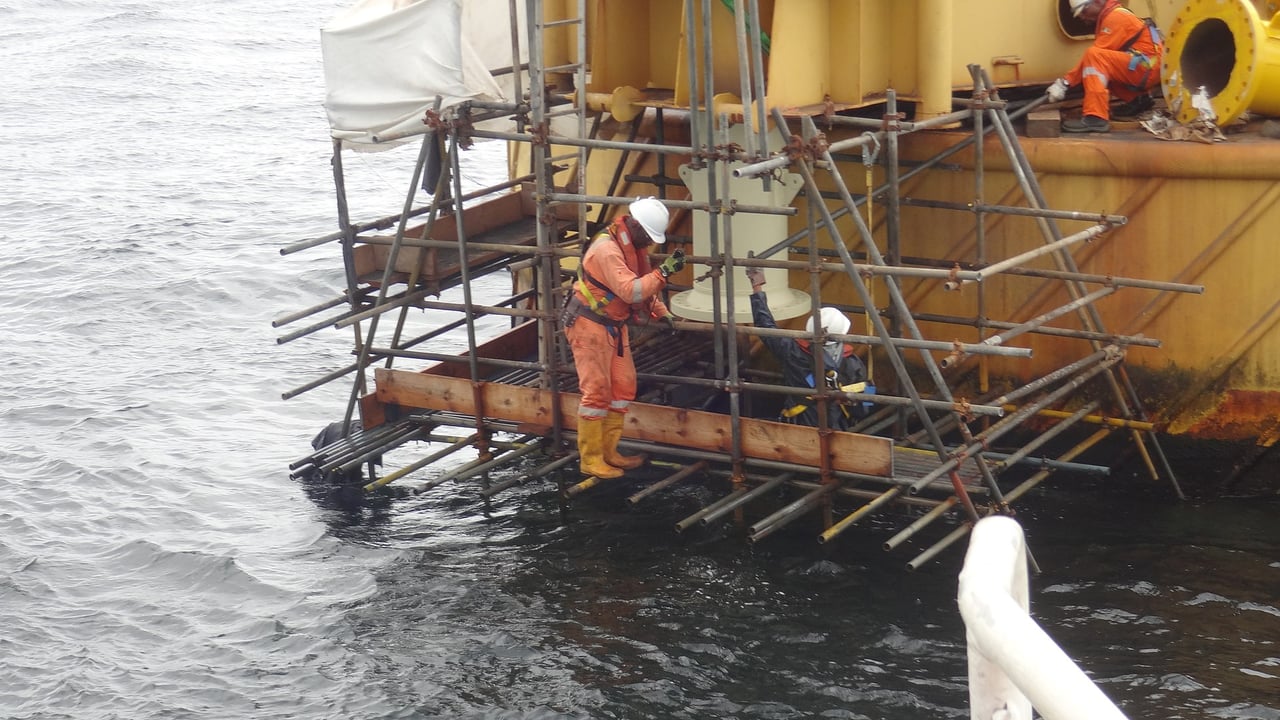
Windfallengprojectsltd via Wikimedia Commons, CC BY-SA 4.0
The Brief
China's offshore engineering equipment sector recorded a 121.9% year-on-year surge in the value of new orders in the first half of the year, capturing more than 80% of the global market, according to data from the Ministry of Natural Resources published by Xinhua. The growth was accompanied by major milestones across deep-sea wind and oil-and-gas infrastructure, including the deployment of ultra-large floating wind platforms, advanced converter stations, and new turnkey engineering contracts for floating production storage and offloading vessels.
Why it matters
The doubling of new orders and an 80% global market share indicate that Chinese shipyards and marine fabricators are moving up the value chain from basic hull fabrication to complex EPCIC (engineering, procurement, construction, installation, and commissioning) contracts. As global investments pivot toward offshore renewable energy and deepwater exploration, Chinese manufacturers are expanding their presence in high-specification offshore segments.
China context
The surge in offshore engineering orders aligns with broader growth across China's maritime economy, where foreign trade via maritime routes expanded by 6.9% year-on-year in the first half of the year. Exports of wind turbine components and vessels rose by 35.6% and 24.9% respectively, reflecting the country's industrial policy push to upgrade traditional shipbuilding capacity into high-value green and deep-sea marine equipment.
Editor's View
EDITOR'S VIEW — Analysis and inference, not factual reporting.
While the 121.9% jump in order value reflects strong commercial momentum and technological maturation in floating wind and FPSO construction, long-term profitability will depend on how effectively Chinese yards manage project risks under full-scope EPCIC arrangements. Executing complex offshore projects under tight global supply chain constraints and geopolitical uncertainties will test whether these order volumes translate into durable operating margins.
What to watch
- Sustained order momentum and delivery schedule reliability for Chinese offshore yards throughout the second half of the year.
- Grid connection and operational performance of pioneer floating wind platforms, including the 16 MW 'Sanxia Linghang Hao' and 'Haiyou Anlan'.
- Profitability and execution progress on domestic contractors' full-scope FPSO EPCIC turnkey projects.
Key Takeaways
- 1New offshore engineering orders grew 121.9% year-on-year in H1, capturing over 80% of the global market share.
- 2Key engineering deliveries included the "Haiyang Shiyou 283" platform and the 16 MW "Sanxia Linghang Hao" floating wind turbine.
- 3Chinese firms secured two full-scope EPCIC turnkey contracts for floating production storage and offloading (FPSO) vessels.
- 4Maritime foreign trade expanded 6.9% in H1, with wind turbine component exports up 35.6% and vessel exports up 24.9%.
China's offshore engineering equipment manufacturing sector experienced significant expansion in the first half of the year, with the value of new orders surging 121.9% year-on-year to account for over 80% of the global market, according to marine economic statistics published by the Ministry of Natural Resources and reported by Xinhua.
The sharp rise in contract value reflects accelerating technological upgrades across high-end marine engineering segments. Chinese yards achieved several major manufacturing and deployment milestones during the six-month period. These include the delivery of China's first mobile multi-functional offshore platform, "Haiyang Shiyou 283," and the commencement of offshore installation for "Sanxia Linghang Hao," a 16-megawatt floating offshore wind platform billed as the world's largest by single-unit capacity.
Additional advances in marine energy infrastructure included the installation of "Haifeng Zhixin," the world's largest offshore converter station, and the port departure of "Haiyou Anlan," the world's first 16-megawatt tension-leg platform floating wind turbine. Domestic engineering enterprises also secured two full-scope EPCIC (engineering, procurement, construction, installation, and commissioning) general contracting agreements for floating production storage and offloading (FPSO) units, marking deeper participation in the highest-value segment of marine oil and gas engineering.
The offshore equipment boom took place against a backdrop of steady expansion in China's overall ocean-related foreign trade despite ongoing restructuring across global supply chains. Total maritime import and export trade value grew 6.9% year-on-year in the first half, driven by a 7.8% increase in exports, while coastal port cargo throughput for foreign trade climbed 4.6%.
High-value marine products showed particularly strong export growth. Exports of wind turbine units and related components increased by 35.6% year-on-year, while total vessel export value grew 24.9%, underlining the increasing global demand for Chinese marine manufacturing capacity.
Sources
- 中国海工装备新订单金额增长121.9% --经济·科技--人民网 — People's Daily · 8/11/2026