
Business & IndustryAnalysis
Western Land-Sea Corridor Train Shipments Surpass 6 Million TEUs
A milestone volume highlights expanding multimodal freight capacity connecting western China to global maritime routes.
Share
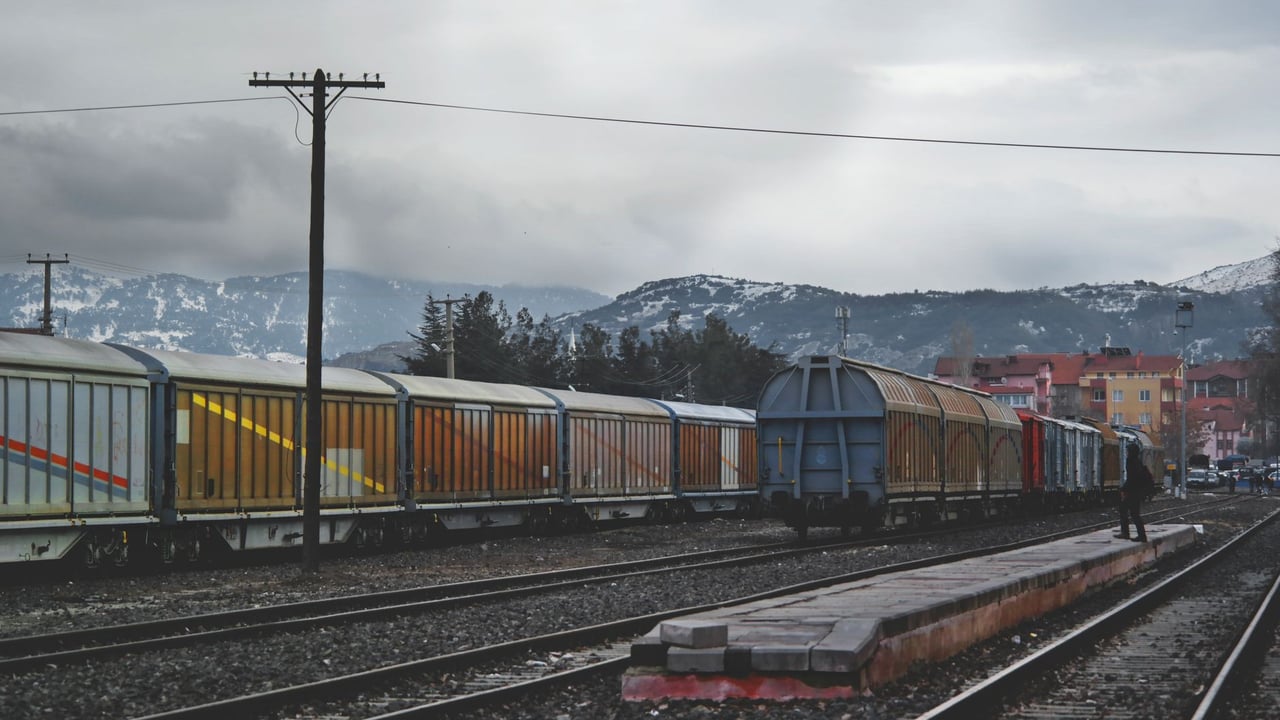
Photo by revac film's&photography on Pexels
The Brief
Freight trains operating along the New International Land-Sea Trade Corridor have dispatched over 6 million twenty-foot equivalent units (TEUs) of cargo, according to a brief dispatch reported by CCTV News and carried by China News Service. The trade channel serves as a vital logistics spine linking interior western provinces with coastal hubs and Southeast Asian trade networks. While detailed figures on cargo types and growth periods were not immediately released, the milestone reflects continued capacity expansion for inland China's multimodal transport system.
Why it matters
Crossing the 6 million TEU threshold underscores the expanding operational scale of the New International Land-Sea Trade Corridor. For international supply chains, the network provides an alternative south-bound route that bypasses congested eastern riverways, offering faster transit between inland Chinese manufacturing hubs and regional trade partners across the Association of Southeast Asian Nations (ASEAN).
China context
The trade corridor is a central element of Beijing's national strategy to advance western regional development and deepen economic opening. By integrating rail, road, and maritime shipping through southern ports such as those in Guangxi, the initiative aims to balance regional growth and bolster logistics resilience in tandem with Regional Comprehensive Economic Partnership (RCEP) commerce.
Editor's View
EDITOR'S VIEW — Analysis and inference, not factual reporting.
The headline figure of 6 million TEUs demonstrates cumulative volume momentum, yet the strategic utility of the corridor hinges on efficiency gains, transit-time reductions, and the balance of two-way trade. Observers should track whether outbound industrial cargo is increasingly met with high-value inbound agricultural and raw material imports from Southeast Asia to ensure balanced freight operations.
What to watch
- Follow-up releases from railway authorities detailing the historical timeline and annual growth trajectory behind the 6 million TEU figure.
- Data releases breaking down cargo categories, particularly automotive, clean energy, and agricultural goods.
- Infrastructure developments at key rail-sea intermodal transshipment points, including Beibu Gulf port facilities.
Key Takeaways
- 1Cargo transported by New International Land-Sea Trade Corridor trains has exceeded 6 million TEUs, according to CCTV News and China News Service.
- 2The corridor connects China's western interior to international maritime routes via southern rail-sea intermodal transit.
- 3Specific data regarding timelines, trade direction balance, and commodity breakdowns were not detailed in the initial report.
Freight trains operating along China's New International Land-Sea Trade Corridor have dispatched more than 6 million twenty-foot equivalent units (TEUs) of cargo, according to a report published by CCTV News and relayed by China News Service.
The volume milestone marks a notable operational point for the strategic logistics network, which was developed to connect China's landlocked western provincial economies with major international maritime shipping lanes. Operating primarily through rail-sea intermodal connections centered around ports in the Guangxi Zhuang Autonomous Region, the corridor offers a direct southward path to Southeast Asian markets and broader overseas destinations.
Historically, industrial output from inland hubs such as Chongqing, Sichuan, and neighboring provinces depended heavily on eastward transport along the Yangtze River to reach coastal export ports. The Land-Sea Corridor provides an alternative multimodal channel that substantially shortens freight transit times to regional trading partners, particularly within the Association of Southeast Asian Nations (ASEAN).
The initial state media dispatch did not furnish a comprehensive breakdown of the cargo compositions, specific annual rates of growth, or the exact distribution between import and export containers comprising the 6 million TEUs. The network typically transports an array of industrial machinery, new energy vehicles, electronic components, and agricultural commodities between inland China and overseas markets.
Developing the corridor remains a priority under China's long-term regional development programs and its broader external trade strategy. As regional supply chain integration deepens under frameworks such as the Regional Comprehensive Economic Partnership (RCEP), Chinese authorities have continued to invest in port handling facilities, inland dry ports, and cross-border rail connections to improve overall corridor throughput and cargo turnaround efficiency.
Sources
- 西部陆海新通道班列发送货物超600万标箱-中新网视频 — China News Service · 9/11/2026