
Business & IndustryAnalysis
China Opens 70-Billion-Yuan Pinglu Canal to Connect Inland South to Sea
The 134-kilometer waterway cuts shipping distances to the Beibu Gulf, aiming to lower bulk logistics costs and expand Southwestern trade routes.
Share
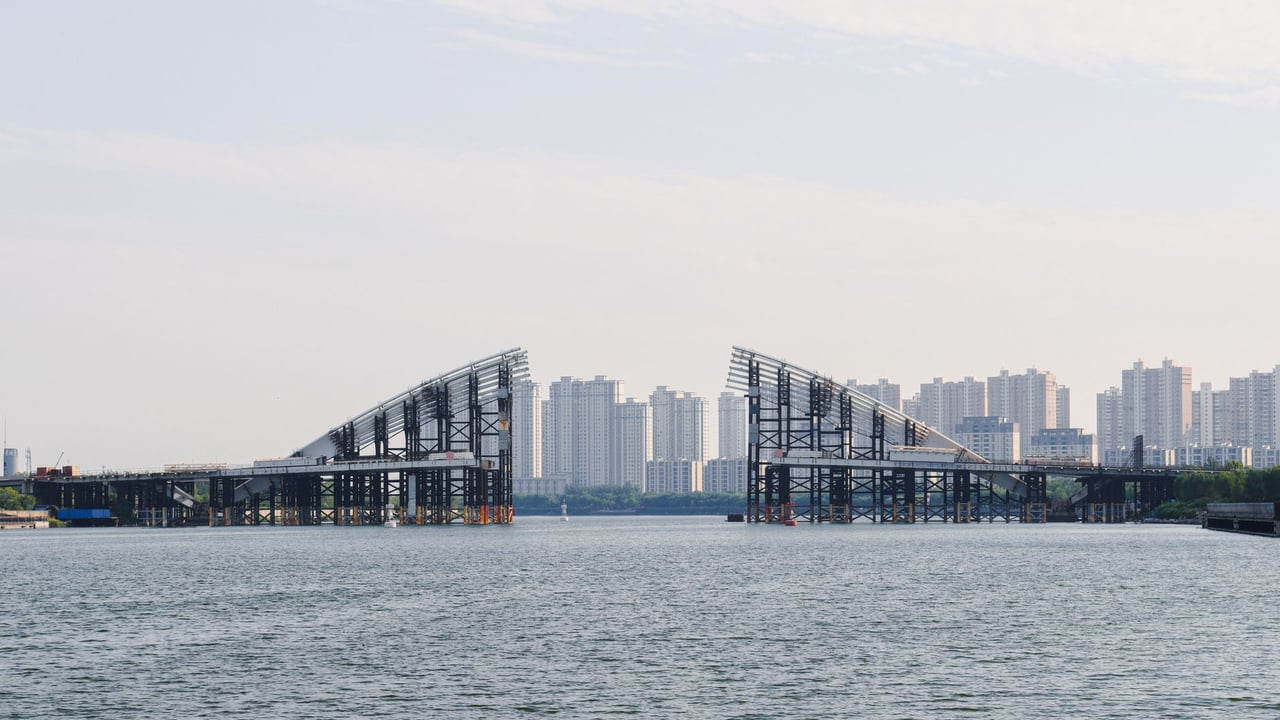
Photo by Suki Lee on Pexels
The Brief
China has formally opened the Pinglu Canal, a 134.2-kilometer waterway in Guangxi with an investment exceeding 70 billion yuan ($9.8 billion). Constructed over roughly 1,400 days since August 2022, the project establishes the country's first direct river-to-sea canal built in the modern era. Designed to Class I inland waterway standards to handle 5,000-ton vessels, the canal bypasses traditional, longer routes through the Pearl River Delta. Officials project the direct maritime access will reduce shipping distances by more than 560 kilometers and save over 5 billion yuan annually in regional logistics costs.
Why it matters
The Pinglu Canal addresses a persistent bottleneck for landlocked southwestern provinces seeking sea access. By providing direct, high-capacity waterborne routing to the Beibu Gulf, the project significantly reduces the cost of shipping bulk industrial inputs and agricultural goods compared to long-haul trucking or rail transfers. In the broader regional picture, it establishes a shorter maritime conduit between China's industrial interior and Southeast Asian trade networks.
China context
The canal fits directly into Beijing's Western Land-Sea New Corridor initiative and its broader 2035 transport plan, which targets 25,000 kilometers of high-grade inland waterways. Rather than relying exclusively on high-speed rail and expressway networks, economic planners are deliberately reviving heavy water transport to reduce supply-chain costs for domestic heavy industry, steel, and manufacturing. The completion of Pinglu also builds momentum for other proposed inter-basin waterways, including links connecting the Yangtze and Pearl River systems.
Editor's View
EDITOR'S VIEW — Analysis and inference, not factual reporting.
While passenger travel and high-value freight have shifted heavily toward high-speed rail and aviation, China's massive manufacturing output creates an enduring requirement for ultra-low-cost bulk transit. Heavy infrastructure investments in canals are long-duration capital allocations aimed at systemic cost reduction rather than immediate commercial returns. The critical test for Pinglu will be whether secondary manufacturing, processing hubs, and clean-energy fleets materialize rapidly enough along the route to translate transport savings into broader regional industrial output.
What to watch
- First-year freight volumes and navigation throughput for 5,000-ton vessels.
- Barge traffic uptake from southwestern cargo hubs such as Yunnan's Funing Port and industrial centers in Guizhou.
- Feasibility and formal approval milestones for adjacent inter-basin canal proposals, including the Hunan-Guangxi and Jiangxi-Guangdong waterways.
Key Takeaways
- 1The 134.2-kilometer Pinglu Canal opened after four years of construction and more than 70 billion yuan in capital investment.
- 2Built to Class I inland navigation standards, the canal accommodates vessels up to 5,000 tons, connecting inland river systems directly to the Beibu Gulf.
- 3The route reduces sea transit distances by over 560 kilometers, yielding an estimated 5 billion yuan in annual logistics savings.
- 4The waterway anchors the Western Land-Sea New Corridor, establishing cheaper export and import conduits for Guangxi, Guizhou, and Yunnan.
China has officially opened the Pinglu Canal, a major inland waterway designed to connect the southwestern interior directly to the sea. Stretching 134.2 kilometers through Guangxi, the canal was built to Class I inland navigation standards, allowing it to accommodate vessels of up to 5,000 metric tons. With total investment exceeding 70 billion yuan, the project represents the first major river-to-sea canal built in China since 1949.
Construction began in August 2022 and took over 1,400 days, involving more than 20,000 workers carving through mountainous terrain. The newly opened route cuts the maritime transit distance for goods departing Guangxi and the broader Xijiang river basin by more than 560 kilometers, eliminating the need for southwestern cargo to travel entirely through downstream Pearl River ports in Guangdong to reach open water. State economic planners estimate the shortcut will reduce regional logistics expenditures by more than 5 billion yuan each year.
Waterborne transport offers significant cost advantages for bulk commodities. According to official figures, moving cargo via an all-water route from Yunnan's inland Funing Port saves 98 yuan per ton compared to combined rail-and-road transit, and 163 yuan per ton compared to direct road trucking. For an industrial economy that processes millions of tons of steel, automobiles, and raw goods daily, these marginal logistics savings are seen as a structural support for manufacturing margins.
The canal serves as a primary maritime outlet for the Western Land-Sea New Corridor, drawing freight from inland regions such as Guizhou toward ports on the Beibu Gulf. Alongside port and navigation operations, local planning envisions clusters for grain and oil processing, river-sea integrated logistics, green-energy shipping, and riverside tourism.
Pinglu's completion also comes amid a broader national effort to upgrade water networks under China's comprehensive transportation plan, which aims to establish 25,000 kilometers of high-grade inland waterways by 2035. With other inter-basin projects—such as the Hunan-Guangxi and Zhejiang-Jiangxi-Guangdong canal proposals—currently undergoing formal technical evaluation, the Guangxi corridor serves as a testing ground for integrating natural river basins into an interconnected national grid.
Sources
- 平陆运河,究竟是条什么河?--经济·科技--人民网 — People's Daily · 9/16/2026
- 平陆运河投资超700亿,这笔账怎么算?--经济·科技--人民网 — People's Daily · 9/16/2026