
Policy & RegulationAnalysis
China Rejects US Drone Tariffs and Blocks EU Subsidies Inquiry Requests
Beijing opposes Section 232 duties on civilian drones and issues an anti-extraterritoriality order against EU regulatory demands in a JD.com probe.
Share
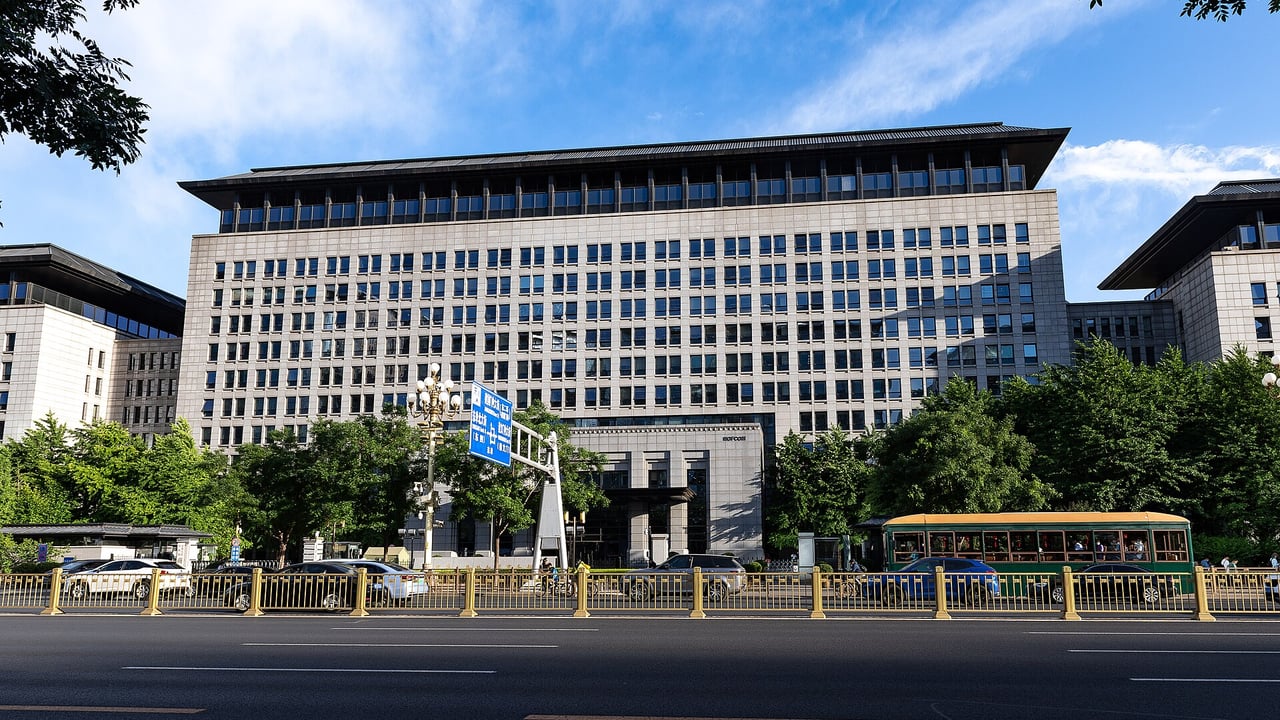
N509FZ via Wikimedia Commons, CC BY-SA 4.0
The Brief
China's Ministry of Commerce has sharply criticized recent trade and regulatory actions by the United States and the European Union. At an August 20 press briefing, spokesperson He Yadong urged Washington to revoke Section 232 tariffs on Chinese drones and components, emphasizing their civilian applications, while rejecting a White House report on transshipment. Meanwhile, Beijing issued a formal prohibition order on August 19 under its anti-extraterritoriality regulations to block European Union regulators from demanding domestic banking information in an ongoing Foreign Subsidies Regulation investigation involving e-commerce group JD.com.
Why it matters
Beijing's responses demonstrate its willingness to actively deploy legal countermeasures against foreign regulatory actions. By issuing its second blocking order against EU Foreign Subsidies Regulation (FSR) inquiries, China is establishing clear operational boundaries to shield domestic financial records and corporate data from foreign administrative scrutiny, while concurrently resisting broadening US trade restrictions aimed at supply chains and civilian technology.
China context
China's *Regulation on Counteracting Unjustified Extra-territorial Application of Foreign Legislation and Other Measures* was introduced to protect Chinese companies and domestic security from foreign extraterritorial overreach. The decision to invoke this framework against EU FSR investigations—first in the Nuctech case in May and now in the JD.com case—indicates that Beijing considers EU cross-border requests for domestic banking data a direct violation of Chinese sovereignty and legal standards.
Editor's View
EDITOR'S VIEW — Analysis and inference, not factual reporting.
The dual pushback highlights how trade frictions have transitioned from standard tariff skirmishes into deep jurisdictional and data sovereignty disputes. While Beijing continues to frame its exports as standard commercial goods, Western regulators are increasing scrutiny over state-linked subsidies and dual-use capabilities. China's growing reliance on formal blocking statutes forces domestic and multinational financial institutions into difficult cross-border compliance dilemmas where complying with one jurisdiction's lawful requests violates another's explicit prohibitions.
What to watch
- Compliance and legal procedures faced by Chinese financial institutions caught between EU FSR disclosure demands and China's blocking orders.
- The European Commission's subsequent enforcement actions or legal responses regarding its investigations into JD.com and Nuctech.
- The formal rollout and timeline of US Section 232 tariff implementation on unmanned aerial vehicles and associated components.
Key Takeaways
- 1MOFCOM spokesperson He Yadong called on the US to immediately revoke Section 232 tariffs on drones and components, emphasizing their civilian uses.
- 2Beijing issued a formal blocking order on August 19 barring domestic entities from complying with EU cross-border data requests directed at banks in an FSR probe into JD.com.
- 3The action represents China's second prohibition order against EU FSR enforcement, following a similar measure in the Nuctech case in May.
- 4MOFCOM rejected a White House report on transshipment, denying the existence of a 'shadow transshipment network' and defending normal trade flows.
China's Ministry of Commerce (MOFCOM) has condemned recent United States trade actions on drones and transshipment while issuing a new prohibition order to block European Union regulatory demands on domestic banks, according to statements made by ministry spokesperson He Yadong during an August 20 press conference.
Addressing Washington's recent decision to impose Section 232 national security tariffs on imported drones and related components, He stated that China firmly opposes the measure. According to He, Chinese drone exports to the US are primarily intended for civilian applications, including agriculture, infrastructure inspection, and film production. He argued that the US measure generalizes national security concepts and applies discriminatory tariff rates to Chinese products, urging Washington to immediately withdraw the tariffs to avoid disrupting global industrial supply chains.
He also pushed back against a recent report released by the White House Office of Trade and Manufacturing Policy regarding transshipment networks. The spokesperson dismissed allegations of a "shadow transshipment network" designed to bypass trade controls, describing the report as an attempt to mischaracterize standard international trade and investment. He asserted that high, differentiated tariffs imposed by the US are the primary source of supply-chain instability.
Concurrently, MOFCOM addressed Beijing's latest countermeasure against the EU's Foreign Subsidies Regulation (FSR). On August 19, Chinese authorities issued a prohibition order under the *Regulation on Counteracting Unjustified Extra-territorial Application of Foreign Legislation and Other Measures* regarding an EU investigation into Chinese e-commerce company JD.com.
According to He, European regulators improperly demanded extensive, unrelated domestic records from Chinese banking institutions in connection with the JD.com inquiry. The Chinese government determined these cross-border investigative practices constituted unjustified extraterritorial jurisdiction and formally prohibited organizations and individuals within China from executing or assisting in the execution of the EU's requests. This marks Beijing's second such blocking action under the FSR, following an initial prohibition order issued in May regarding an investigation into security equipment manufacturer Nuctech. MOFCOM urged the EU to correct its practices and resolve trade issues through bilateral government dialogue.
Sources
- 商务部回应美征收无人机关税等热点问题--经济·科技--人民网 — People's Daily · 8/20/2026
- 商务部:反对欧方滥用单边工具打压中国企业 — NetEase · 8/20/2026