
Defense & StrategyAnalysis
China Reinforces Political Discipline to Anchor Military Modernization
State military media stresses ideological loyalty and Party control amid external containment and technological chokepoints.
Share
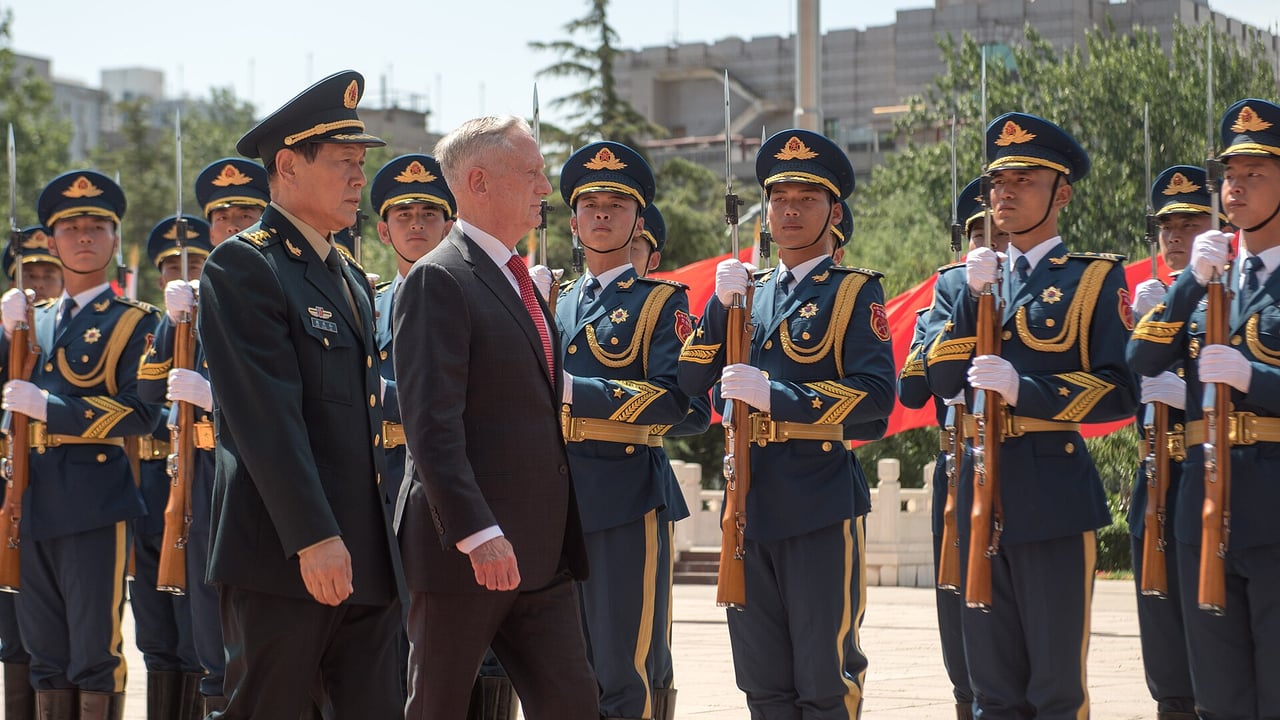
U.S. Secretary of Defense via Wikimedia Commons, CC BY 2.0
The Brief
Official Chinese military commentary has reaffirmed that high-quality political work remains the fundamental anchor for the People's Liberation Army's modernization push. Citing remarks by President Xi Jinping during a collective study session of the CPC Central Committee Political Bureau, the commentary underscored that absolute Party leadership and ongoing ideological rectification are vital to navigating geopolitical pressure, supply chain vulnerabilities, and the integrated development of mechanized, informational, and intelligent capabilities as the military pursues its centenary modernization targets.
Why it matters
The emphasis on political army-building outlines the strategic boundaries and governance priorities for China's defense apparatus. As the PLA shifts its modernization focus from sheer size to qualitative performance, ideological alignment and strict party control are being positioned as the primary shields against external containment, strategic disruption, and high-tech vulnerability.
China context
In China's political and military structure, the principle that the Party commands the gun is the supreme operational tenet. As the PLA enters a decisive stage in fulfilling its centenary goals—set for 2027—military authorities are leveraging ideological rectification and centralized discipline to maintain absolute loyalty, unify operational command, and overcome institutional bottlenecks.
Editor's View
EDITOR'S VIEW — Analysis and inference, not factual reporting.
The framing in Chinese military media directly connects internal political discipline with external strategic resilience. Rather than treating political indoctrination and technological modernization as separate domains, Beijing positions strict ideological adherence as the prerequisite for surviving foreign containment and overcoming technological 'chokepoints.' Observers should view continued ideological rectification not as a retreat from technological warfare, but as leadership's chosen mechanism to enforce execution and prevent organizational fractures under pressure.
What to watch
- Specific directives and campaigns across PLA units aimed at deepening ideological rectification and political discipline.
- Progress in the PLA's integrated development of mechanization, informatization, and intelligentization amid tech supply chain pressures.
- Institutional reforms and organizational adjustments rolled out during the 15th Five-Year Plan period leading up to the 2027 centenary targets.
Key Takeaways
- 1Xi Jinping emphasized at a Politburo study session that political building defines the orientation and bedrock of PLA modernization.
- 2The military is prioritizing ideological rectification and absolute Party control during the critical phase of the 15th Five-Year Plan and centenary targets.
- 3State military media explicitly links political loyalty to overcoming external containment and critical technology chokepoints.
China's defense apparatus has reiterated that maintaining absolute Party leadership over the armed forces is essential to sustaining the momentum and direction of military modernization, according to a commentary published by China Military Online.
The commentary highlighted directives delivered by President Xi Jinping during the 27th collective study session of the 20th CPC Central Committee Political Bureau on July 30. Xi stressed that political army-building forms the bedrock of the People's Liberation Army, dictating both the orientation and core character of defense modernization. He called for strengthening theoretical education and deepening ideological rectification to guarantee that the armed forces consistently follow the Party's centralized command.
According to the publication, the PLA is navigating a pivotal phase as it embarks on the opening year of the 15th Five-Year Plan and works to achieve its centenary building goals. The modernization agenda is shifting from expanding quantitative scale to enhancing qualitative capability, focusing on accelerating the integration of mechanization, informatization, and intelligentization across all services.
State media framed high-quality political building as an indispensable asset for countering rising external risks. The analysis noted that China faces mounting security uncertainties, including containment, encirclement, and suppression from external powers that could threaten to disrupt defense modernization. Furthermore, the rapid evolution of modern warfare and military technology has created vulnerabilities where critical core technologies face chokepoints, supply chain disruptions, and technological containment.
The commentary concluded that political discipline, strategic resolve, and heightened fighting spirit are necessary to ensure sound decision-making under overlapping security threats, enabling the military to seize developmental windows and fulfill modernization targets on schedule.
Sources
- 以政治建军高质量保证国防和军队现代化建设高质量 - 中国军网 — China Military Online · 8/19/2026