
Policy & RegulationAnalysis
China's Premier Orders Stricter Workplace Safety Ahead of Holidays
Li Qiang calls for cracking down on illegal subcontracting and enforcing mine safety rules following recent major industrial accidents.
Share
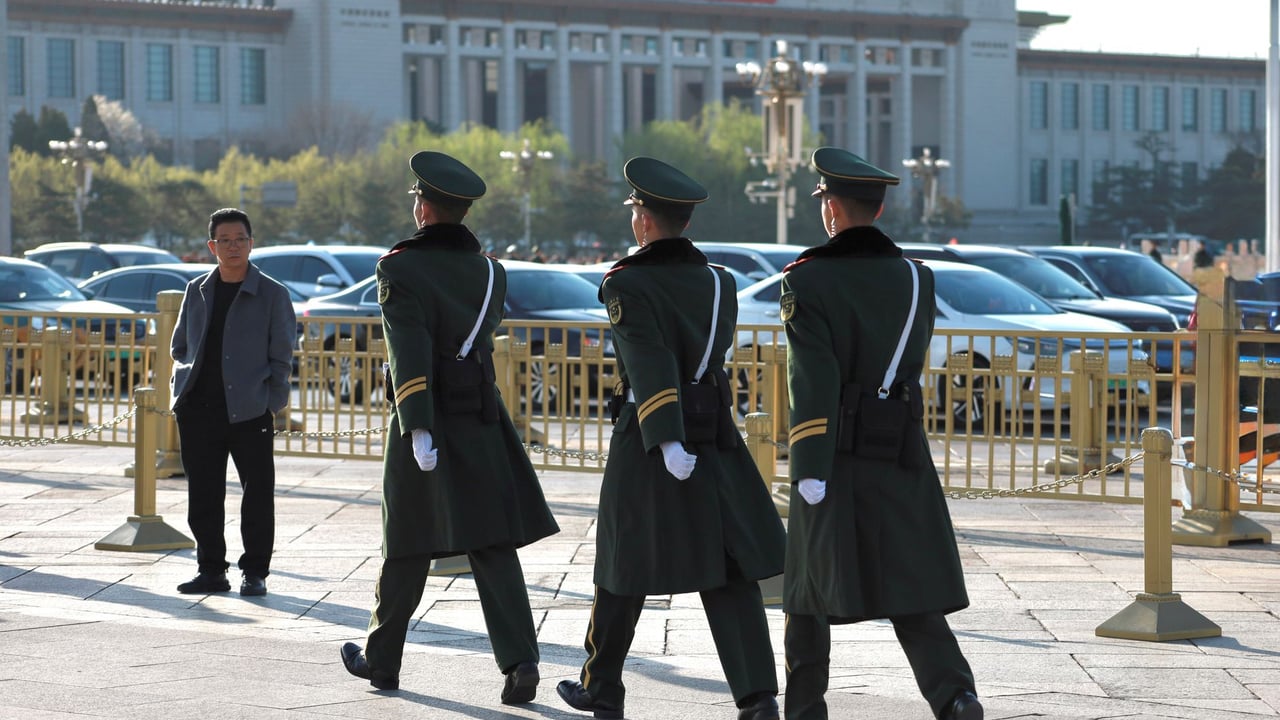
Photo by Flávia Vicentini on Pexels
The Brief
Chinese Premier Li Qiang addressed a national State Council video conference on workplace safety, directing officials to resolve persistent regulatory vulnerabilities and halt a series of major industrial accidents. Citing recent deadly incidents, Li ordered strict crackdowns on chaotic outsourcing and illegal subcontracting, full implementation of mandatory mine safety measures, and heightened oversight across fireworks, maritime shipping, and hazardous chemicals. The nationwide campaign comes ahead of the National Day travel period, placing heightened scrutiny on tourism and transit safety.
Why it matters
The high-level conference directly addresses administrative and operational failures exposed by recent industrial accidents across China. By spotlighting illegal subcontracting, enforcing strict mine safety requirements, and targeting holiday transport networks, the central leadership is signaling immediate compliance pressure on both local regulatory bodies and commercial operators.
China context
In Chinese governance, workplace safety adheres to the principles of shared responsibility between Party and government officials, alongside strict operational accountability. A nationwide video conference led directly by the Premier ahead of a major public holiday demonstrates Beijing's heightened urgency to arrest accident rates and deploy supervision mechanisms that enforce a closed-loop resolution of safety hazards across regional jurisdictions and state-backed enterprises.
Editor's View
EDITOR'S VIEW — Analysis and inference, not factual reporting.
The explicit focus on curbing illegal subcontracting targets a longstanding structural vulnerability in industrial safety. While lead project contractors often demonstrate formal adherence to safety standards, higher-risk tasks are frequently outsourced to less-regulated third-party crews. Premier Li's directive to crack down on multi-tier subcontracting while encouraging enterprises to cultivate direct, in-house technical workforces highlights a recognition that long-term safety gains require addressing labor casualization in hazardous sectors.
What to watch
- Implementation of targeted safety inspections across transit hubs, tourist attractions, and active construction sites during the National Day holiday.
- Enforcement of the 'eight hard measures' for mine safety and targeted inspection campaigns of coastal and river shipping firms.
- Follow-up provincial directives and administrative penalties addressing illegal subcontracting and outsourcing irregularities.
Key Takeaways
- 1Premier Li Qiang convened a national State Council video conference on workplace safety on September 28.
- 2The meeting addressed recent severe industrial accidents and cited poor rule enforcement, chaotic outsourcing, and weak oversight as critical problems.
- 3Directives ordered an immediate crackdown on illegal subcontracting and urged companies to build direct technical workforces.
- 4Regulators were instructed to enforce mine safety rules, supervise fireworks and chemical operations, and inspect water transport enterprises.
- 5Heightened controls were placed on transportation and tourism safety in anticipation of the National Day holiday.
Chinese Premier Li Qiang has ordered nationwide efforts to tighten workplace safety and prevent major accidents, addressing a State Council national video conference on September 28, according to state media reports.
Li called on authorities across all tiers of government to implement directives from President Xi Jinping, prioritize human life, and consolidate responsibility to safeguard public well-being and overall social stability. Pointing to several deadly workplace accidents that occurred in various localities in recent periods, Li warned that authorities must confront an arduous and complex safety situation with heightened urgency.
The Premier identified three recurring structural problems that require immediate remediation: the lax implementation of safety rules and regulations, chaotic and poorly regulated outsourcing practices, and inconsistent or weak regulatory enforcement. High-quality economic development, Li emphasized, must be anchored by high-level safety standards.
To curb persistent hazards, Li instructed regulatory authorities to focus on high-risk scenarios. He called for stringent fire prevention, improved management of mixed-use production and business venues, and a decisive crackdown on illegal or unauthorized subcontracting. Li also urged enterprises to strengthen the development of their own permanent, skilled technical workforces rather than relying on uncontrolled layers of outsourced labor.
The directives singled out several high-risk sectors for intensified scrutiny. Li instructed officials to advance the implementation of the "eight hard measures" governing mine safety, enforce end-to-end supervision over the fireworks supply chain, conduct special safety inspections targeting coastal and river shipping enterprises, and prevent accidents across hazardous chemicals, manufacturing, and construction.
With the upcoming National Day holiday expected to drive surging mobility, Li specifically emphasized the need to reinforce safety management across transport networks and tourist destinations. He ordered regulators to align local operations with national criteria for identifying major accident hazards and maintain a strict closed-loop rectification system to ensure risks are discovered and neutralized promptly.
Sources
- 李强在全国安全生产视频会议上强调 抓实抓细安全生产各项工作 坚决防范遏制重特大事故发生 — State Council of China · 9/28/2026
- 李强在全国安全生产视频会议上强调 抓实抓细安全生产各项工作 坚决防范遏制重特大事故发生 — China News Service · 9/28/2026