
Policy & RegulationAnalysis
China Reaffirms Domestic Demand as Core Growth Driver Amid Headwinds
Beijing reiterates domestic consumption and investment as top economic priorities following mid-year leadership reviews.
Share
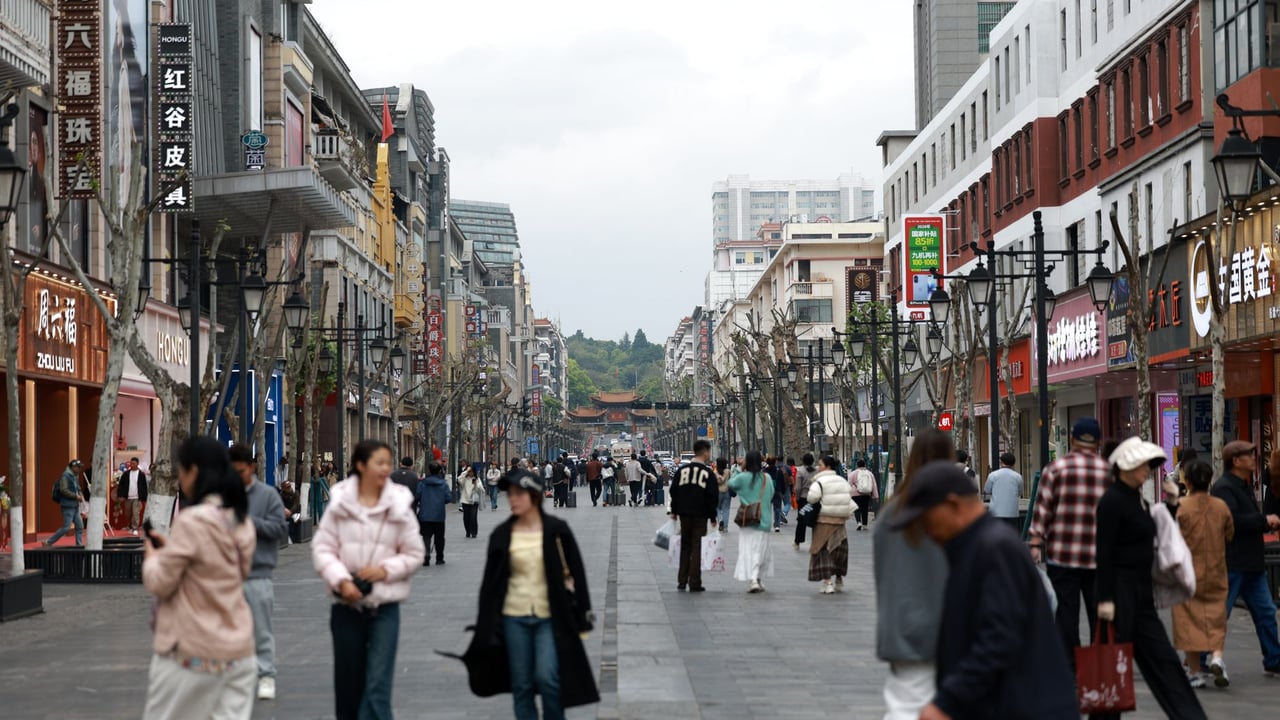
Photo by Andy Lee on Pexels
The Brief
Chinese leadership has reiterated that expanding domestic demand and revitalizing consumer spending remain the country's foremost economic priority. State media highlighted official directives positioning domestic demand as the primary driver of growth, supported by data showing that final consumption expenditure contributed 2.1 percentage points to GDP growth in the first half of the year, while gross capital formation added 1.7 percentage points. The strategic focus aligns with Beijing's ongoing push to build a resilient internal market in response to shifting global trade conditions.
Why it matters
Strengthening domestic demand is critical for stabilizing China's economic trajectory in the face of volatile global trade conditions. As external demand faces structural uncertainties, policymakers are relying heavily on domestic consumption and capital formation to support employment, safeguard industrial supply chains, and sustain steady GDP growth.
China context
Since the introduction of the 'dual circulation' framework in 2020, Chinese economic planning has elevated domestic demand from a counter-cyclical tool to a long-term strategic foundation. The Politburo reiterated this stance at its late July meeting, placing the cultivation of a robust domestic market at the top of eight key economic tasks for the year.
Editor's View
EDITOR'S VIEW — Analysis and inference, not factual reporting.
The renewed emphasis on domestic demand reflects Beijing's recognition that export-driven expansion faces structural ceilings abroad. While consumption contributed 2.1 percentage points to first-half growth, sustaining this momentum will require structural income reforms and enhanced consumer confidence alongside capital investment programs.
What to watch
- Implementation details of fiscal and consumer subsidy initiatives across provincial governments.
- Contribution rates of final consumption expenditure in third- and fourth-quarter GDP data.
- Follow-up policy guidelines tied to medium- and long-term consumption expansion frameworks.
Key Takeaways
- 1Expanding domestic demand is ranked first among China's eight key economic tasks for the year.
- 2In the first half of the year, final consumption expenditure drove GDP growth by 2.1 percentage points, and capital formation contributed 1.7 percentage points.
- 3The July 30 Politburo meeting emphasized strengthening domestic demand and optimizing supply as core objectives.
- 4Ningbo Zhoushan Port achieved annual cargo throughput of over 1.4 billion tons in 2025, reflecting major domestic and foreign trade handling capacity.
Chinese policymakers have reaffirmed the expansion of domestic demand as the central pillar of national economic strategy, framing consumer spending and investment as the primary engine for sustainable growth.
According to an official commentary carried by the People's Daily and republished by the central government portal, 'adhering to domestic demand leadership and building a strong domestic market' was designated as the primary task among eight key economic priorities set for the year. The direction follows a meeting of the Communist Party of China Central Committee Political Bureau on July 30, which explicitly called for intensifying efforts to expand domestic demand and optimize supply.
State media noted that economic indicators from the first half of the year demonstrate the growing weight of domestic activity. Final consumption expenditure contributed 2.1 percentage points to gross domestic product growth during the period, while gross capital formation contributed 1.7 percentage points.
The policy continuity traces back to strategic adjustments initiated during the spring of 2020, when Chinese leadership proposed the 'new development paradigm' centered on domestic circulation. Officials emphasized that relying more heavily on the domestic market for production, allocation, circulation, and consumption has become essential as global trade patterns evolve. Illustrating China's logistical capacity, state media highlighted that Ningbo Zhoushan Port in Zhejiang province achieved an annual cargo throughput exceeding 1.4 billion metric tons in 2025, becoming the first port worldwide to reach that milestone.
President Xi Jinping has repeatedly underscored the need to manage the relationships between consumption and investment, as well as demand and supply, describing domestic demand as both a growth driver and a stability anchor. Official reports maintain that strengthening the internal economic cycle remains a long-term strategic priority rather than a short-term expediency, aimed at bolstering economic security and resilience against external volatility.
Sources
- 总书记的人民情怀 | “让内需成为经济发展的主动力” — State Council of China · 8/7/2026