
Technology & AIAnalysis
China's Legacy Industrial Suppliers Power Rapid Scale-Up in Humanoid Robotics
Traditional manufacturers specializing in precision components, ultra-thin steel, and custom wiring are driving down costs and accelerating mass production for embodied AI.
Share
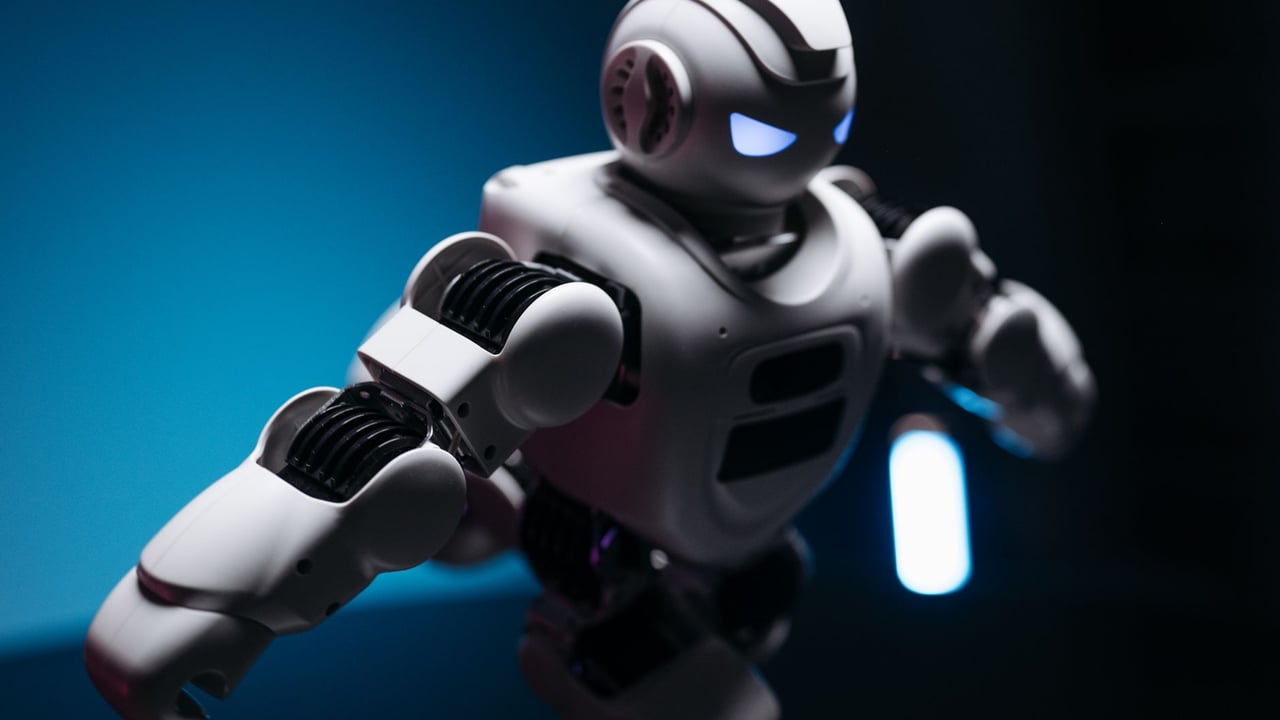
Photo by Pavel Danilyuk on Pexels
The Brief
China’s humanoid robot industry is rapidly shifting from technical validation to large-scale mass production, supported by a dense ecosystem of established industrial suppliers. According to data reported by People's Daily, Chinese humanoid robot output surpassed 40,000 units in the first half of 2026, with full-year production projected to top 100,000 units. Research firm Omdia reported that China accounted for 90% of the 13,000 global humanoid robot shipments in 2025. This surge relies heavily on traditional manufacturers repurposing decades of expertise in precision tooling, specialized cables, and advanced materials to lower production costs.
Why it matters
China's ability to leverage deep, pre-existing industrial supply chains allows its robotics industry to rapidly transition from technical validation to large-scale mass production. Lowering the hardware cost threshold through precision tooling and novel materials is key to bringing humanoid robots into commercial and consumer applications.
China context
Supported by national strategic planning like the 15th Five-Year Plan and oversight from the Ministry of Industry and Information Technology, established state-owned and private manufacturers across China are upgrading their core capabilities. This synergy between traditional heavy manufacturing and embodied AI creates a highly localized, cost-effective ecosystem.
Editor's View
EDITOR'S VIEW — Analysis and inference, not factual reporting.
The rapid scaling of China’s humanoid robot output illustrates how traditional industrial capabilities can serve as a foundation for next-generation hardware. While software algorithms and embodied AI attract significant attention, the commercial viability of robotics depends heavily on manufacturing bottlenecks like component grinding speed, structural material weight, and specialized cabling. By integrating established machine tool operators and steelmakers directly into the robotics supply chain, Chinese manufacturers are drastically lowering component costs. However, long-term global adoption will depend on whether hardware efficiency gains can be paired with sophisticated autonomous control and international technical standardization.
What to watch
- Whether total Chinese humanoid robot production hits the predicted 100,000-unit threshold by the end of 2026.
- Official rollout of national and industry standards for embodied intelligence and humanoid robot components.
- Commercial adoption and performance benchmarks of specialized components like planetary roller screws and ultra-thin motor silicon steel in mass-produced models.
Key Takeaways
- 1China produced over 40,000 humanoid robots in H1 2026, with full-year output expected to exceed 100,000 units.
- 2Research firm Omdia reported China accounted for 90% of the 13,000 global humanoid robot shipments in 2025.
- 3Traditional manufacturers like Baosteel, Qinchuan Machine Tool, and Kunshan Zhoushi Cable are adapting established industrial technologies for robotics components.
- 4Embodied AI is formally included in state planning under the 15th Five-Year Plan, with official standards under development.
China’s humanoid robotics sector is accelerating its transition toward mass production, driven by deep integration with legacy manufacturing supply chains. According to data published by People’s Daily, China produced over 40,000 humanoid robots in the first half of 2026, with annual output expected to exceed 100,000 units. More than 400 complete humanoid robot models have been developed in China, accounting for over half of the global total. Data from market research firm Omdia shows that China represented 90% of the 13,000 global humanoid robot shipments recorded in 2025.
Industry officials and analysts attribute this expansion to domestic manufacturing capacity. Rather than relying entirely on new supply chains, established Chinese industrial companies are adapting their specialized expertise to meet the demands of embodied intelligence. At the Chain Expo in June, Kunshan Zhoushi Cable—a firm with nearly 50 years of experience—presented customized wiring harnesses specifically designed for humanoid robots, highlighting growing demand for highly tailored internal connections.
Similarly, material innovations from heavy industry are improving energy efficiency in robot actuation. Baosteel has produced a 0.1-millimeter non-oriented silicon steel, termed "cicada-wing silicon steel," which has seen strong demand since its introduction. The material is being integrated into high-efficiency motors for humanoid robots and low-altitude aircraft to reduce power consumption during movement.
Cost reduction remains a crucial hurdle for widespread commercial deployment. To address precision hardware bottlenecks, machine tool maker Qinchuan Machine Tool released the HJ110 CNC external thread grinding machine. The equipment reduces the single-piece grinding cycle time for planetary roller screw rollers—a critical component in robotic linear actuators—to under two minutes, substantially lowering production expenses.
Policy frameworks are aligning with this industrial push. Embodied intelligence has been incorporated into future industry planning under the upcoming 15th Five-Year Plan, alongside efforts to establish standardized industry guidelines. In July, Ke Jixin, Vice Minister of Industry and Information Technology, noted that the next two to three years represent a key window and potentially a new starting point for the development of the humanoid robot industry.
Sources
- “老兵”站上新赛道丨人形机器人背后的“熟面孔”--经济·科技--人民网 — People's Daily · 8/6/2026