
Business & IndustryAnalysis
Chinese Automakers Capture 77% Domestic Market Share via Smart EV Integration
Rapid manufacturing automation, self-developed powertrains, and AI software reshape China's passenger vehicle sector.
Share
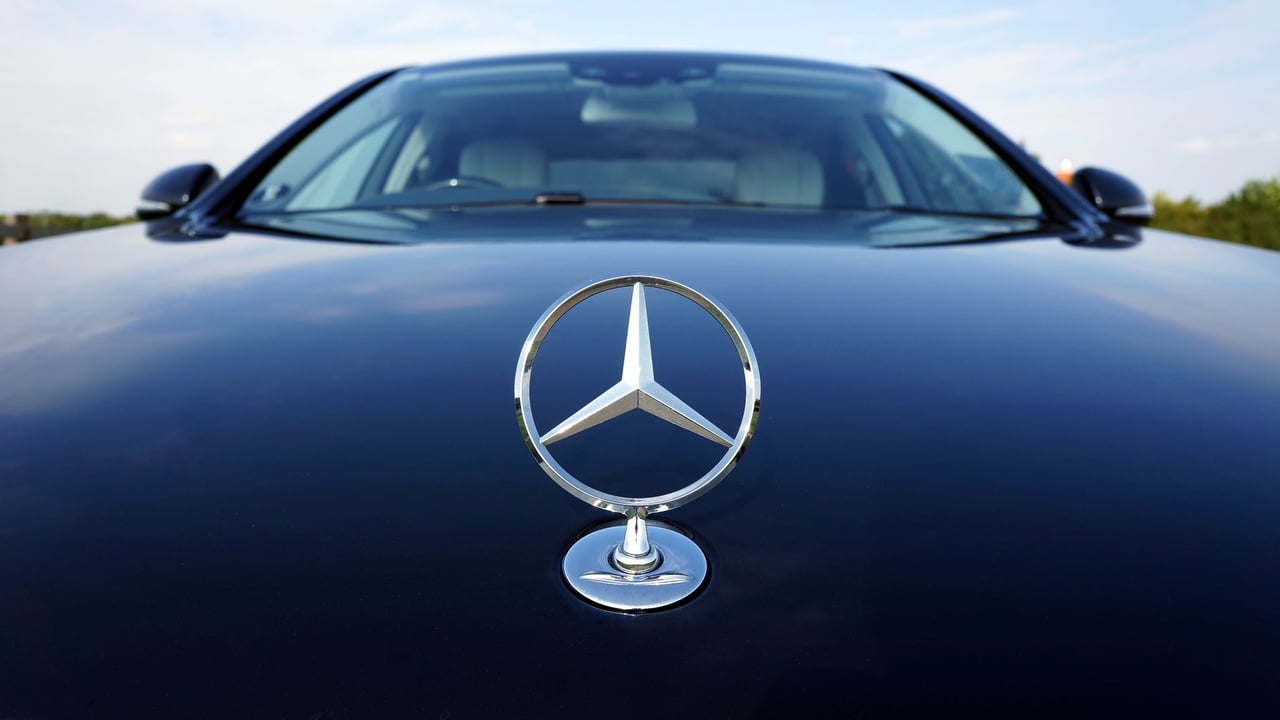
Photo by Mike Bird on Pexels
The Brief
Chinese domestic passenger vehicle brands reached a 77.4% domestic market share in July 2026, rising from 40.3% in 2013, according to state media reports. This expansion reflects an industry-wide pivot from traditional internal combustion powertrains to a tech stack centered on batteries, domestic silicon, and intelligent driving systems. Backed by ultra-automated mega-factories and vertically integrated supply chains, domestic automakers across legacy and startup categories are establishing new manufacturing and software standards.
Why it matters
The capture of more than three-quarters of the world's largest auto market demonstrates the deepening structural advantage of China's localized electric vehicle (EV) supply chain. By replacing mechanical systems with proprietary electronics and software, Chinese automakers are reshaping global auto manufacturing benchmarks and accelerating competitive pressures on foreign legacy brands.
China context
New energy vehicles serve as a central integration platform for Chinese industrial policy, bringing together advanced battery chemistry, domestic semiconductor design, and generative artificial intelligence. State-backed smart factory standards, such as the Ministry of Industry and Information Technology's excellence-level classifications, have further incentivized flexible, highly automated gigafactories to support on-demand vehicle production.
Editor's View
EDITOR'S VIEW — Analysis and inference, not factual reporting.
The shift in domestic market dominance from foreign joint ventures to Chinese OEMs reflects more than consumer preference for electrification; it represents a fundamental transition in how cars are engineered and built. By consolidating component design—from battery cells and high-tonnage die-casting to generative AI models and in-house chips—Chinese automakers have drastically compressed product iteration cycles. The challenge ahead lies in sustaining profitability as heavy capital investments in automation and localized component research meet domestic price competition.
What to watch
- Adoption and commercial deployment timelines for ultra-fast charging battery architectures such as 15C cells
- Market penetration of mapless urban autonomous driving solutions across standard passenger vehicles
- Supply chain resilience and yields for fully domestically designed automotive-grade semiconductor sets
Key Takeaways
- 1Chinese brand domestic passenger car market share increased from 40.3% in 2013 to 77.4% in July 2026.
- 2Automakers are localizing core hardware and software stacks, including GAC deploying 1,004 domestically designed chips and Leapmotor producing 65% of vehicle component value in-house.
- 3Battery and autonomous driving advancements feature CATL peak 15C charging tech and mapless urban navigation systems.
- 4Smart manufacturing sites, such as Seres' Chongqing plant, utilize 9,800-ton die-casting and digital twin quality systems to run flexible, build-to-order production lines.
Chinese domestic passenger car brands captured a 77.4% share of the domestic market in July 2026, marking a substantial expansion from the 40.3% market share recorded in 2013, according to reports published by People's Daily.
The structural shift has elevated established state and private automakers alongside electric vehicle startups, including SAIC, BYD, Geely, Chery, Changan, Leapmotor, Li Auto, Nio, XPeng, Seres, and Xiaomi. Industry executives point to a fundamental redefinition of automotive value: traditional engines, transmissions, and mechanical chassis components have been superseded by modular systems spanning electric batteries, motors, electronic controls, computing chips, sensor fusion, and intelligent driving software.
Technological integration is advancing across several domains. Battery manufacturer CATL has developed battery cells reaching peak 15C charge rates, capable of recharging from 10% to 80% in just over three minutes. In autonomous driving, systems such as Huawei's Qiankun smart driving platform have transitioned from high-definition map reliance to mapless nationwide navigation, while FAW Hongqi's Jiuzhang platform utilizes inertial navigation and tri-focal vision to achieve over 90% pass rates at urban intersections. Automakers are also localizing foundational electronics and artificial intelligence; GAC's Hyper GT Climbing Edition incorporates 1,004 fully domestically designed chips, and Changan has deployed its Tianshu generative AI model following official regulatory filings.
Manufacturing processes are evolving in parallel with product architectures. At the Seres Super Factory in Chongqing—designated an "Excellence-level Smart Factory" by China's Ministry of Industry and Information Technology—over 3,000 industrial robots operate alongside automated guided vehicles. The facility employs a 9,800-ton integrated die-casting machine to form 87 individual rear-body components into a single unit, supported by continuous AI-driven visual inspection and digital twin telemetry tracking bolt-tightening parameters. The Seres-manufactured AITO brand achieved 1 million cumulative unit rollouts within 46 months of its debut, operating on a build-to-order, flexible production line accommodating multiple vehicle series simultaneously.
By functioning as an innovation hub spanning semiconductors, synthetic materials, and battery chemistry, China's automotive sector continues to reinforce its self-developed component ecosystems and high-volume smart manufacturing capacity.
Sources
- 品牌整体进化,创造汽车产业新模式 --经济·科技--人民网 — People's Daily · 8/27/2026
- 品牌整体进化,创造汽车产业新模式 — China News Service · 8/27/2026