
Business & IndustryAnalysis
Chinese Clean Energy Suppliers See Surge in Middle East Infrastructure Demand
Modular construction speeds and robust supply chains accelerate Middle Eastern procurement of Chinese solar, wind, and grid equipment.
Share
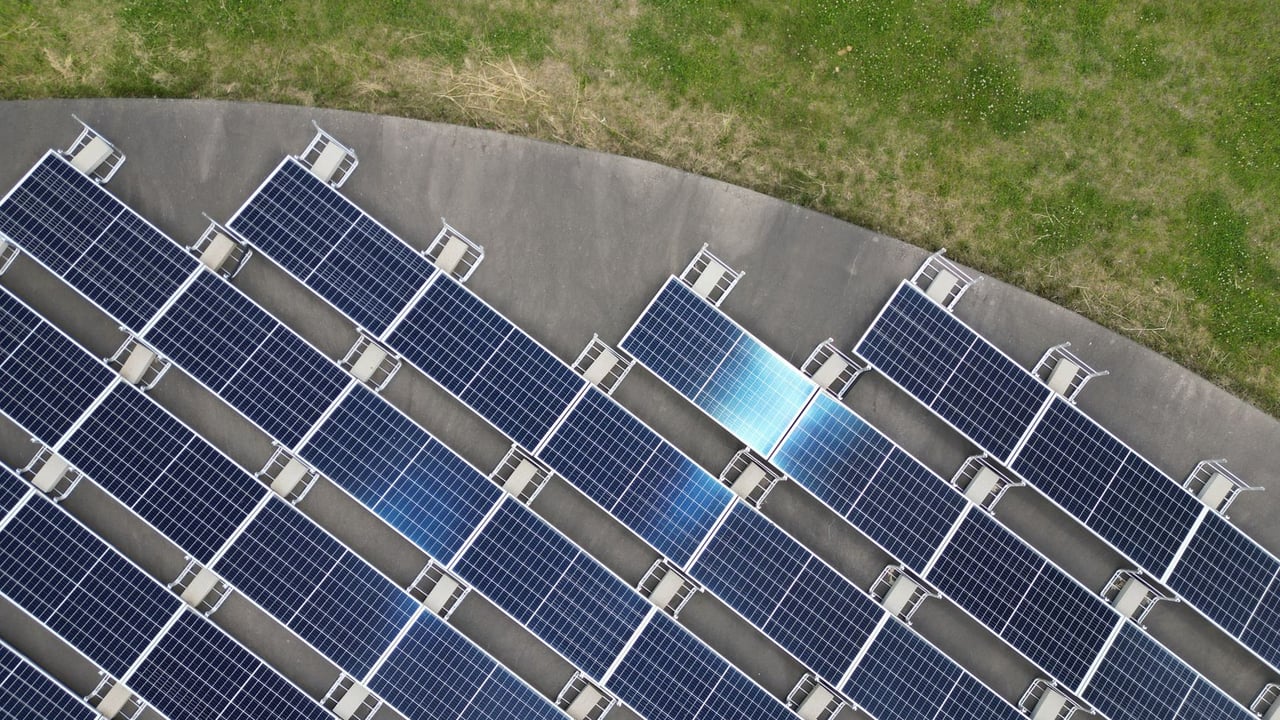
Photo by Giant Asparagus on Pexels
The Brief
Middle Eastern nations are rapidly expanding renewable energy installations to diversify domestic power generation away from fossil fuels, driving significant demand for Chinese equipment and infrastructure systems. Chinese manufacturers are securing large contracts across the region, from the UAE's hybrid solar installations and Saudi Arabia's off-grid clean energy systems to Egyptian wind farms. Regional developers are increasingly prioritizing rapid project delivery and integrated modular designs, where Chinese manufacturing ecosystems provide substantial execution speed and cost efficiencies.
Why it matters
The rapid deployment of Chinese renewable energy hardware across the Middle East highlights shifting trade and energy transition dynamics. As Gulf economies invest heavily in national decarbonization visions and industrial diversification, Chinese manufacturers of solar panels, wind turbines, substations, and energy storage systems have become central suppliers for large-scale utility infrastructure across the region.
China context
Facing saturated domestic markets and strong manufacturing capacity at home, Chinese renewable energy firms are actively looking overseas under Beijing's Green Silk Road initiative. China currently accounts for more than 80 percent of global output across key solar supply chains, six of the top ten global wind turbine manufacturers, and over 60 percent of power battery production, giving its export sector substantial scale advantages in fast-track international tenders.
Editor's View
EDITOR'S VIEW — Analysis and inference, not factual reporting.
The commercial appeal of Chinese renewable suppliers in the Middle East is no longer driven purely by lower component pricing, but by rapid engineering and modular delivery schedules. Modular hardware, such as prefabricated substations that reduce civil engineering timelines from nearly two years to under six months, directly addresses the urgent installation deadlines set by regional sovereign programs. However, as Gulf governments increasingly emphasize domestic value creation, Chinese exporters may soon face pressure to transition from direct hardware shipments to localized assembly and technology-sharing arrangements.
What to watch
- Further contract awards and operational milestones for major utility-scale solar, wind, and storage projects across Saudi Arabia, the UAE, and Egypt.
- Potential localization policies and domestic manufacturing quotas introduced by Gulf governments for renewable energy procurement.
- The integration of Chinese prefabricated modular substations and high-capacity battery storage into Middle Eastern grid modernization programs.
Key Takeaways
- 1Middle Eastern clean energy projects, including Dubai's hybrid solar park and Saudi Arabia's Red Sea off-grid system, rely heavily on Chinese technology and engineering.
- 2Chinese prefabricated substations have reduced power infrastructure deployment timelines from up to two years to less than six months.
- 3China produces over 80 percent of global solar components and more than 60 percent of power batteries, offering substantial supply chain certainty.
- 4Regional demand is driven by Middle Eastern efforts to preserve valuable hydrocarbon resources and diversify domestic power generation.
Renewable energy cooperation between China and Middle Eastern economies is expanding rapidly as regional governments accelerate clean energy transitions to safeguard domestic power supplies and diversify their economies. According to a report by People's Daily, Chinese equipment manufacturers and engineering firms are delivering major clean energy landmarks across the Gulf and North Africa.
Key installations highlighted in the region include the fourth phase of the Mohammed bin Rashid Al Maktoum Solar Park in Dubai, a hybrid concentrated solar power and photovoltaic complex recognized as one of the largest of its kind. In Egypt, a Red Sea wind farm powered by 77 Chinese smart wind turbines set regional capacity benchmarks, while in Saudi Arabia, Chinese contractors completed one of the world's largest clean-energy off-grid systems for the Red Sea development project.
Beyond mega-generation sites, demand is surging for specialized grid infrastructure. Chinese equipment maker TGOOD reported strong Middle Eastern demand for its prefabricated modular substations, with regional clients prioritizing immediate delivery schedules. By pre-assembling substation units in Chinese factories before shipping, construction timelines that historically required 18 to 24 months of on-site civil works can be compressed into operational readiness in under six months.
This delivery advantage is backed by China's extensive manufacturing scale. Chinese producers account for more than 80 percent of global output for polysilicon, wafers, cells, and finished solar modules, while six of the world's top ten wind turbine manufacturers are based in China. Furthermore, Chinese manufacturers produce over 60 percent of the world's power batteries, with utility-scale energy storage system costs dropping nearly 90 percent compared to 2010 levels.
Middle Eastern states are pursuing clean energy development to mitigate vulnerabilities associated with domestic oil and gas consumption for power generation and international hydrocarbon market volatility. As regional electricity consumption climbs, turnkey renewable systems from China provide the scale and deployment speed required to meet national energy diversification targets.
Sources
- 零时差 | “不还价,只要尽快发货”,中国新能源在中东的“幸福烦恼”--经济·科技--人民网 — People's Daily · 8/11/2026