
Technology & AIAnalysis
Peking University Alumni Win Fields Medals Amid China Basic Science Push
Graduates Wang Hong and Deng Yu receive the Fields Medal at the 2026 International Congress of Mathematicians in Philadelphia.
Share
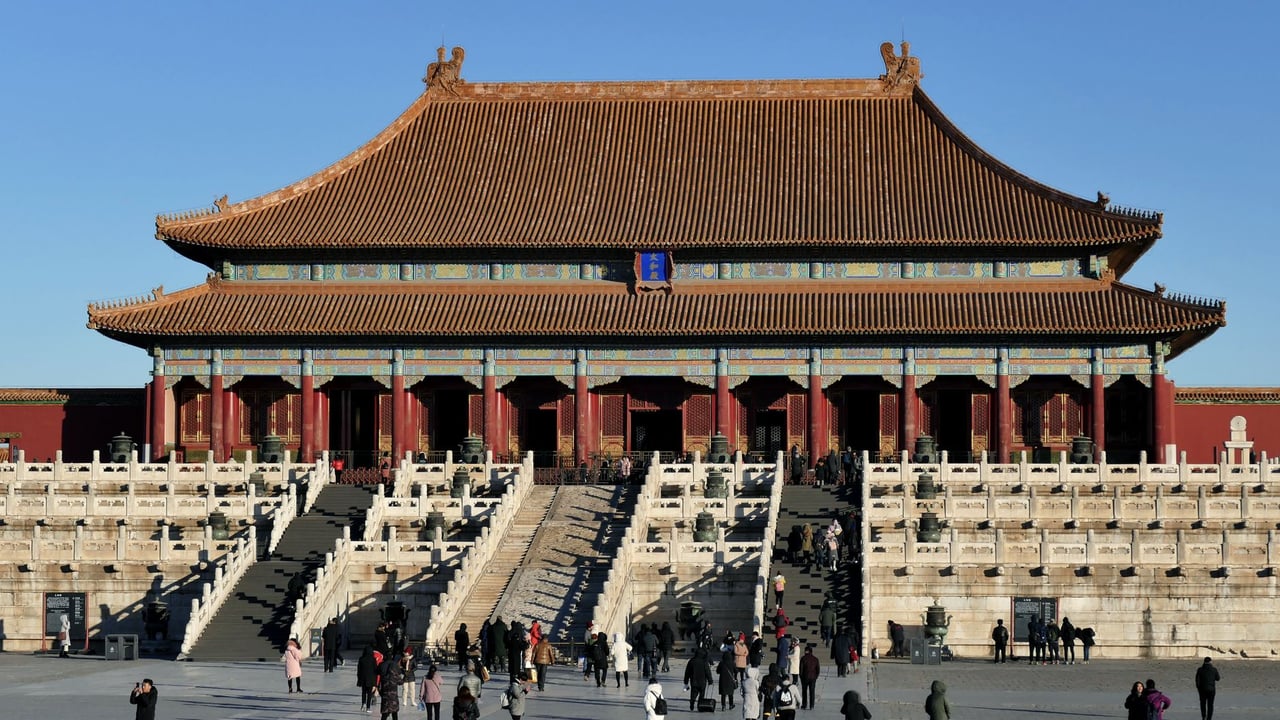
Photo by Zbigniew Bielecki on Pexels
The Brief
Two Chinese mathematicians, Wang Hong and Deng Yu, have been awarded the Fields Medal at the 2026 International Congress of Mathematicians in Philadelphia. Both scholars were classmates at Peking University’s School of Mathematical Sciences after entering in 2007. The awards come as China's investment in basic research reached nearly 280 billion RMB in 2025, exceeding 7% of total R&D spending for the first time. Chinese academic leaders noted both the strengths of domestic undergraduate training and ongoing gaps in graduate education and evaluation systems.
Why it matters
The awards mark the first time Chinese-national mathematicians have received the Fields Medal, highlighting the growing strength of China's domestic undergraduate talent pool alongside rising state investment in foundational science.
China context
China's expenditure on basic research grew from 61.3 billion RMB in 2014 to nearly 280 billion RMB in 2025, representing 7.08% of total R&D spending. While this proportion remains below the 12% to 23% typical in developed economies, Chinese research metrics—such as SCI paper citations and STEM graduate output—have shown rapid growth.
Editor's View
EDITOR'S VIEW — Analysis and inference, not factual reporting.
The recognition of Chinese-born mathematicians underlines the success of China's elite undergraduate mathematics pipelines. However, because much of the winners' high-level research was completed overseas, Chinese academic leaders are placing renewed focus on reforming domestic graduate programs and evaluation systems to foster breakthrough research entirely within home institutions.
What to watch
- Whether the award recipients eventually return to full-time academic positions in China.
- Policy adjustments in Chinese university talent recruitment and mathematics evaluation frameworks.
Key Takeaways
- 1Wang Hong and Deng Yu, both 2007 Peking University undergraduate alumni, became the first Chinese nationals to win the Fields Medal.
- 2China's basic research expenditure reached nearly 280 billion RMB in 2025, exceeding 7% of total R&D spending.
- 3Academic leaders note that while domestic undergraduate training is strong, graduate education and evaluation systems still lag behind developed nations.
At the 2026 International Congress of Mathematicians in Philadelphia, Chinese mathematicians Wang Hong and Deng Yu were awarded the Fields Medal, marking the first time citizens of China have received the prestigious honor. Both researchers completed their undergraduate studies in the School of Mathematical Sciences at Peking University after entering the institution in 2007.
Deng Yu, born in Shenzhen in 1989, secured an International Mathematical Olympiad gold medal before joining Peking University. Wang Hong, born in Guilin, Guangxi in 1991, entered Peking University the same year before transferring into the mathematics department, where she and Deng became classmates. Scholar Efim Zelmanov, a fellow Fields medalist, noted that both awardees completed their foundational education in China, demonstrating the country's growing importance in global mathematics.
The achievements coincide with a sustained expansion of China's financial commitment to foundational science. Domestic spending on basic research increased from 61.3 billion RMB in 2014 to 249.7 billion RMB in 2024. By 2025, basic research funding approached 280 billion RMB, accounting for 7.08% of total R&D expenditure—surpassing the 7% threshold for the first time. In 2025, China also ranked first globally in SCI paper volume, total citations, and STEM graduates as a share of total graduates.
Despite this funding surge, Chinese academic leaders emphasize that structural gaps persist. While basic research funding in developed countries typically ranges between 12% and 23% of total R&D spending, China's ratio remains comparatively low. Xi Nanhua, president of the Chinese Mathematical Society and academician at the Chinese Academy of Sciences, pointed out that China's academic culture, evaluation mechanisms, and graduate education still lag behind those of leading Western nations. Tsinghua University professor Shing-Tung Yau similarly expressed hope that future generations of young Chinese mathematicians will accomplish their most critical research breakthroughs at home.
Sources
- 丘成桐邀王虹邓煜回国任教,清北斗了20年竟发现对手不是彼此 — NetEase · 7/25/2026
- 两枚菲尔兹奖章,照见中国基础研究的“静水深流”--经济·科技--人民网 — People's Daily · 7/25/2026