
Business & IndustryAnalysis
Gansu's Longnan Expands Olive Oil Industry Across 1.2 Million Mu
Scientific acclimatization, mountain monorails, and cold-press infrastructure turn dry-hot river valleys into a major olive hub.
Share
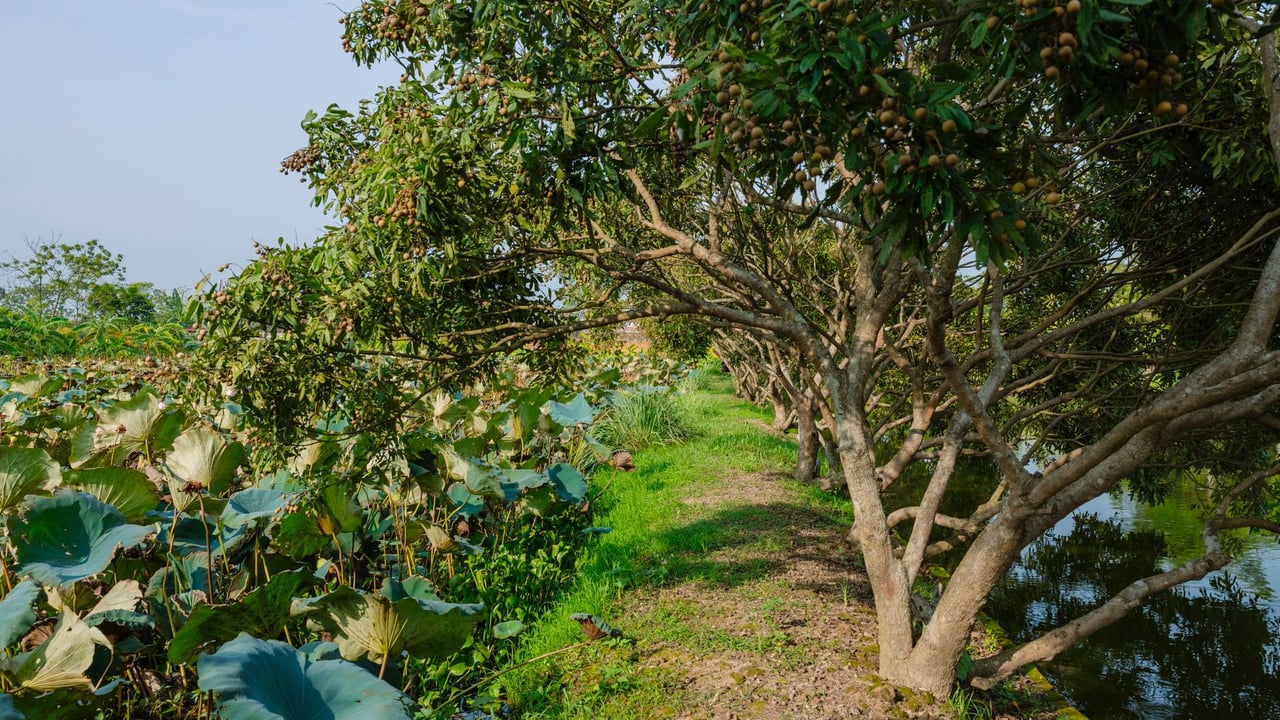
Photo by HONG SON on Pexels
The Brief
Longnan in northwestern China's Gansu Province has developed an olive oil industry covering 1.2 million mu (about 80,000 hectares), producing 65,000 tonnes of fresh olives annually with an output value of 5 billion yuan, according to People's Daily. By adapting Mediterranean olive varieties to local dry-hot river valleys, breeding space-flown seeds, and deploying 169 mountain monorail lines in Wudu District, local authorities have connected smallholder plots to modern cold-press processing lines that represent over half of China's advanced capacity.
Why it matters
Longnan's olive sector provides a model for converting ecologically fragile mountain slopes into high-value agricultural supply chains. By overcoming mismatched seasonal rainfall and steep terrain through targeted agronomy and mechanized transport, the region shows how specialized local cash crops can drive rural income growth in China's interior.
China context
China has promoted domestic production of edible oils and specialty agricultural products to bolster supply security and rural development. Longnan's dry-hot valleys, situated around 33 degrees north latitude, share climatic characteristics with Mediterranean regions. The area's multi-decade transition from barren slopes to China's primary olive oil base aligns with national efforts to upgrade local produce into scaled industrial clusters.
Editor's View
EDITOR'S VIEW — Analysis and inference, not factual reporting.
The long cycle of perennial tree crops requires sustained institutional support, which Longnan achieved by linking municipal forestry research directly with smallholder scheduling. While the current processing capacity and cold-press infrastructure are well developed, long-term commercial returns will depend on consumer adoption of domestic extra virgin olive oil versus established European imports.
What to watch
- Selection, testing, and eventual commercial planting performance of the Shenzhou-14 space-bred olive varieties.
- Market expansion and brand recognition of Longnan-produced cold-pressed extra virgin olive oil against imported competitors.
- Further integration of tourism and downstream by-product processing in Wudu District.
Key Takeaways
- 1Longnan's olive orchards cover 1.2 million mu, yielding 65,000 tonnes of fruit and 5 billion yuan in output value annually.
- 2Acclimatization has pushed the viable planting altitude up to 1,600 meters, while space breeding tests 3,800 seedlings from the Shenzhou-14 mission.
- 3Wudu District deployed 169 mountain monorail lines to transport fresh olives from steep slopes to processing facilities.
- 4Wudu operates 25 cold-press lines representing 53% of China's advanced virgin olive oil processing capacity, handling 1,400 tonnes of fruit daily.
- 5The industry supports more than 200,000 residents across 28 townships and 320 villages in Wudu District.
Longnan, located in northwestern China's Gansu Province, has built a specialized olive oil supply chain spanning 1.2 million mu (80,000 hectares) of mountain orchards, generating an annual harvest of 65,000 tonnes of fresh olives and 5 billion yuan ($695 million) in output value, according to state media outlet People's Daily.
Situated near 33 degrees north latitude, Longnan features dry-hot river valleys with soil and climate conditions resembling the Mediterranean basin. Local authorities began promoting olive cultivation on barren hillsides in the 1990s as part of farmland-to-forest ecological initiatives. Adapting the imported species to the region required sustained research and varietal selection by institutions including the Longnan Academy of Economic Forestry. Through selective breeding and acclimatization, researchers expanded the viable planting altitude from 900 meters to 1,600 meters above sea level. Top-performing cultivars now include 'Leccino' for high-end virgin oil and 'Ezhi' for cold resistance and high extraction yields. In addition, local research facilities are cultivating over 3,800 saplings across six varieties developed from seeds sent into space aboard the Shenzhou-14 mission in 2022.
To overcome climatic differences—such as Longnan's rainy summer and autumn contrasted with Mediterranean winter precipitation—agronomists introduced custom orchard drainage systems to preserve fruit quality and targeted winter-spring irrigation. In Wudu District, where steep mountain terrain previously hindered transport, local authorities built 169 monorail transit lines across 80 administrative villages and 20 cooperatives to move harvested olives directly down slopes.
To prevent price collapses and post-harvest spoilage across fragmented mountain plots, Wudu District established township-by-township harvest schedules based on elevation, variety, and ripening cycles. Fresh fruit reaches processing workshops in as little as four hours. Wudu now hosts 25 cold-press production lines operating below 27 degrees Celsius, accounting for 53 percent of China's advanced virgin olive oil processing lines, with a daily processing capacity of 1,400 tonnes. The sector currently supports over 200,000 residents across 320 administrative villages in Wudu District, with mountain orchards yielding at least 500 kilograms per mu.
Sources
- 种下一片林 长成一条“链”(高质量发展在一线·小城宝藏) --经济·科技--人民网 — People's Daily · 8/12/2026