
Technology & AIAnalysis
Guizhou Deploys Beidou Satellite Links to Monitor Mountain Hydropower
Dual-channel terminals combining 4G and Beidou messaging bring automated dam monitoring to remote karst river valleys.
Share
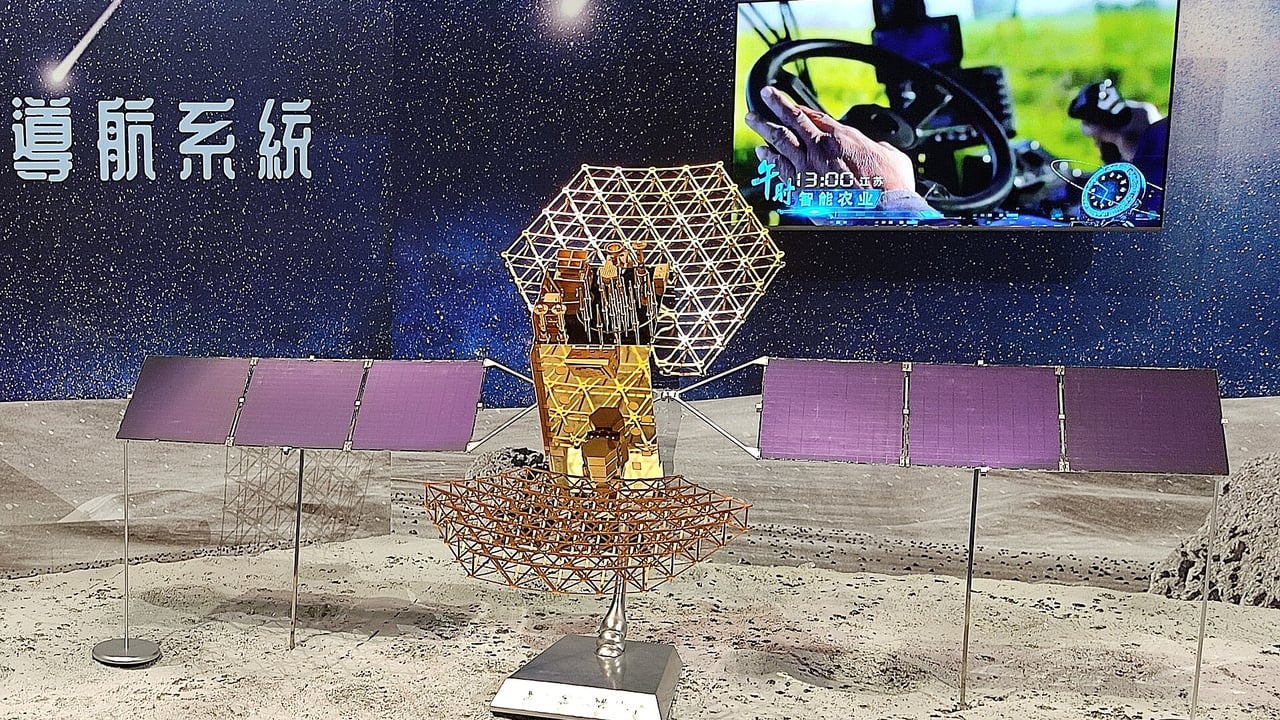
AKAMGO yalms via Wikimedia Commons, CC BY-SA 4.0
The Brief
Engineers in southwest China's Guizhou province have deployed Beidou satellite messaging and positioning systems to monitor small remote hydropower stations, ending decades of reliance on manual dam inspections. Developed by the Electric Power Research Institute under China Southern Power Grid, the dual-channel system defaults to standard cellular networks but automatically switches to Beidou-3 satellite short messages whenever public coverage fails. The pilot at three stations in Tongren has improved grid reliability, prevented unscheduled outages, and catalyzed a forthcoming national standard for satellite-based landslide monitoring along power transmission corridors.
Why it matters
Small hydropower stations in rugged karst terrain often lack reliable cellular coverage, leaving operators blind to reservoir conditions and dam deformation during flash floods or landslides. Utilizing Beidou's two-way short message capability provides an autonomous emergency communication fallback when terrestrial networks wash out. Beyond safeguarding generation assets, the rollout demonstrates how space infrastructure can harden distributed energy resources and feed into national technical standards for geological hazard monitoring.
China context
China operates tens of thousands of small hydropower stations that supply regional grids and regulate local watersheds, yet their distributed nature presents persistent safety challenges. The Guizhou initiative reflects Beijing's broader drive to commercialize and scale Beidou-3 across domestic critical infrastructure, reducing reliance on foreign GPS systems and standardizing specialized telemetry across challenging topography in the disaster-prone southwest.
Editor's View
EDITOR'S VIEW — Analysis and inference, not factual reporting.
The Guizhou deployment highlights a pragmatic shift in how China is utilizing its satellite infrastructure: moving beyond basic positioning into integrated emergency telemetry. For remote utility assets, cellular networks remain vulnerable to terrain shadowing and severe weather disruptions. By coupling high-precision Beidou positioning with inertial sensors and satellite short messaging, grid operators have established an autonomous fail-safe. If this model scales across southwest China's river basins, it could set a reproducible benchmark for managing remote distributed energy assets in complex topographies.
What to watch
- The drafting and formal approval of the national technical specification for Beidou-based tower landslide monitoring led by Guizhou Power Grid.
- Expansion of dual-channel Beidou terminals to additional small hydropower facilities across Guizhou and neighboring karst provinces.
- Operational telemetry and fallback performance during peak southwest monsoon seasons and acute geological events.
Key Takeaways
- 1Guizhou Power Grid developed dual-channel terminals pairing 4G and Beidou-3 short messaging to monitor remote mountain hydropower dams.
- 2The system automatically switches to satellite messaging during ground network outages, backed by ad-hoc local sensor networks.
- 3Demonstrated across three stations in Tongren, the setup reduced unscheduled outages and replaced manual dam inspections.
- 4Research fusing Beidou positioning with inertial sensing led to an approved national standard project for transmission tower landslide monitoring.
Operators in mountainous Guizhou province have integrated Beidou satellite communications and positioning to address longstanding monitoring gaps across remote small hydropower plants, according to state media reports.
Known for its extensive karst topography, Guizhou relies heavily on small hydroelectric facilities tucked into deep river valleys to balance regional electricity supply and support flood control. However, rugged terrain has historically blocked terrestrial telecommunications, forcing station operators to rely on periodic manual inspections to detect dam shifting or water level anomalies.
To bridge these communication blind spots, the Electric Power Research Institute under China Southern Power Grid developed a dual-channel terminal uniting standard 4G connectivity with Beidou-3 short message communications. Under normal operating conditions, station telemetry transmits over public cellular networks; should ground infrastructure fail, the terminal automatically diverts data streams through Beidou's satellite messaging link. The team also built an ad-hoc regional network module to collect multi-source sensor data across reservoir areas.
The integrated hardware has completed demonstration trials across three remote facilities in Tongren—the Dongfanghong, Yangxi, and Ganjingqiao hydropower stations. Station operators reported moving from irregular on-site surveying to continuous, real-time tracking of dam integrity indicators. Lin Xiankan, general manager of the dispatch control center at Tongren Power Supply Bureau, stated that continuous online monitoring has curbed unscheduled shutdowns and stabilized feed-in generation across the regional grid.
Building on the hydropower deployment, Guizhou researchers expanded Beidou integration in 2023 to monitor high-voltage transmission lines. By fusing Beidou high-precision positioning with inertial measurement units, engineers enabled the system to self-correct cumulative drift while compensating for satellite tracking limitations in dynamic conditions.
The field trials are also shaping broader industry rules. In December 2024, the Standardization Administration of China formally approved a standard-setting project spearheaded by Guizhou Power Grid to establish technical specifications for Beidou-based landslide monitoring along power transmission corridors. Utility engineers noted that the standard incorporates observational data gathered from dams in Tongren and transmission towers across Duyun.
Sources
- 北斗技术赋能中国西南山区破解小水电“信息孤岛”--经济·科技--人民网 — People's Daily · 9/12/2026