
Technology & AIAnalysis
Huawei Expands HarmonyOS PC Ecosystem with Full-Stack In-House Tech
Huawei relies on native microkernels, Kirin chips, and AI agent integration as it targets both consumer and enterprise markets.
Share
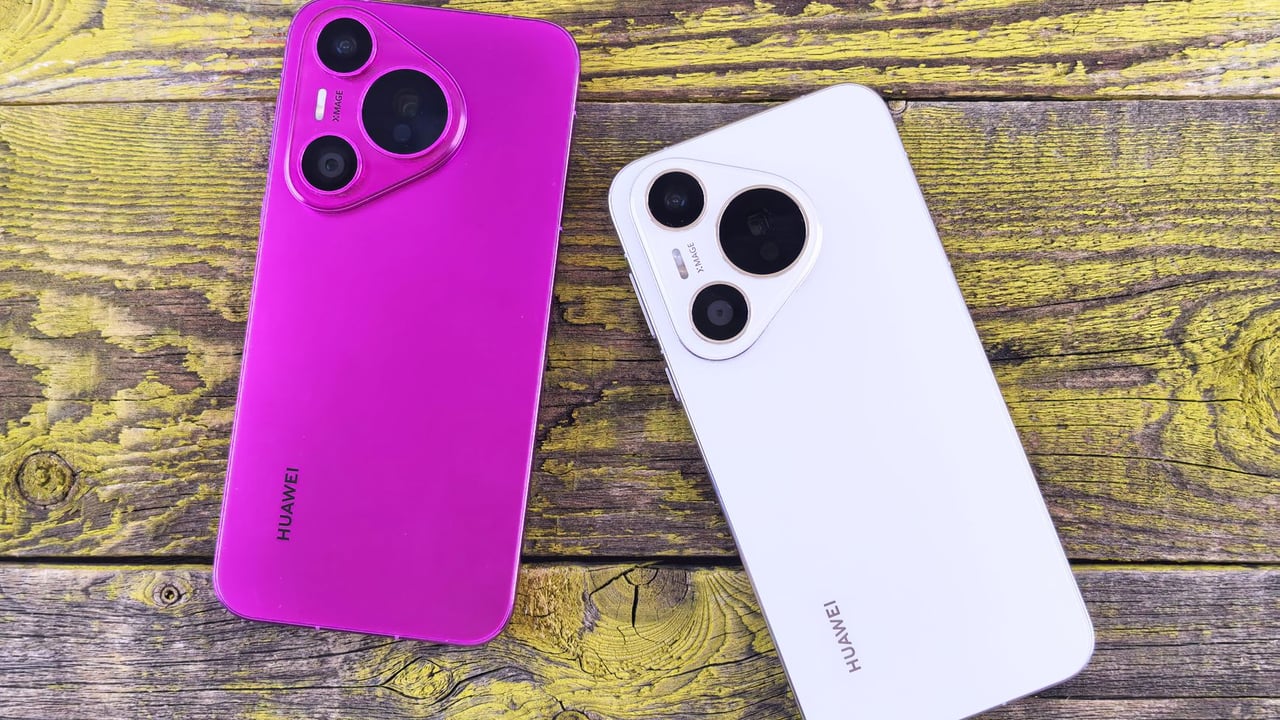
Photo by Andrey Matveev on Pexels
The Brief
According to a report by People's Daily Online, Huawei is accelerating its personal computer business through a full-stack self-developed architecture called HarmonyOS PC. Zhu Dongdong, President of Huawei's Tablet and PC Product Line, stated that over the past year, native apps for HarmonyOS PC grew from around 1,000 to over 19,000, while daily average usage time reached parity with traditional x86 PCs. Featuring custom Kirin X-series processors and a microkernel operating system, Huawei aims to reposition PCs from traditional hardware upgrades to AI-driven Agent PCs.
Why it matters
Huawei's push into HarmonyOS PCs marks an effort by China's tech sector to shift PC development from application-layer modifications to underlying kernel and chip architectures. In the context of edge AI adoption, a full-stack self-developed base enables hardware-software synergy for native AI experiences and supports domestic supply chain independence across enterprise and government markets.
China context
Amid global trade friction and supply chain uncertainties, China is accelerating the construction of an independent computing ecosystem. The expansion of HarmonyOS PCs directly aligns with national strategies emphasizing information security, sovereign operating systems, and domestic silicon platforms, creating new opportunities for domestic software and peripheral makers.
Editor's View
EDITOR'S VIEW — Analysis and inference, not factual reporting.
Huawei's full-stack strategy highlights a fundamental divergence from traditional x86 and Windows-dominated personal computing architectures. By controlling everything from the Kirin silicon up to the HarmonyOS microkernel, graphics compiler, and AI agent framework, Huawei gains tight system integration similar to Apple's vertical model. However, long-term market viability will depend heavily on software developer retention, long-tail hardware peripheral compatibility, and seamless performance across complex enterprise workflows.
What to watch
- Commercial rollout and government-enterprise market adoption of HarmonyOS desktop units.
- Adaptation progress of native HarmonyOS applications in specialized industrial and design software.
- Competitive responses from traditional x86 PC vendors integrating edge AI agents.
Key Takeaways
- 1Huawei's HarmonyOS PC ecosystem now features over 19,000 native applications and thousands of adapted peripherals.
- 2Daily average usage time for HarmonyOS PCs has matched x86-based computers, according to People's Daily Online.
- 3The company employs a five-layer self-developed architecture spanning Kirin processors, microkernels, compilers, app stores, and security frameworks.
- 4Huawei positions HarmonyOS PCs as Agent PCs powered by the system-level Xiaoyi AI agent.
For decades, personal computing has followed an established paradigm dominated by general-purpose processors paired with mature desktop operating systems, keeping most innovation confined to incremental hardware upgrades. As artificial intelligence migrates from cloud servers to end-user devices, Huawei is promoting an alternative computing architecture centered on its full-stack self-developed HarmonyOS PC platform, according to People's Daily Online.
Reflecting on Huawei's ten-year history in personal computers, Zhu Dongdong, President of Huawei Terminal BG’s Tablet and PC Product Line, detailed the evolution from hardware innovations—such as full-screen laptops in 2017 and cross-device file sharing in 2018—to native system architecture. Huawei initiated prototype R&D for HarmonyOS PCs in late 2020 to build a foundation for multi-device collaboration and edge AI.
Over the past year, the HarmonyOS PC ecosystem expanded significantly. Independent native applications grew from roughly 1,000 at launch to over 19,000, supported by compatibility with more than 1,700 general peripherals and 1,600 specialized peripherals. Furthermore, daily average usage time on HarmonyOS PCs has reached parity with traditional x86 architecture systems, People's Daily Online reported.
To achieve this, Huawei opted to rewrite system code from the operating system kernel level upwards rather than developing application-layer overlays on existing platforms. The resulting five-layer architecture integrates proprietary Kirin X-series processors, a HarmonyOS microkernel, a distributed soft bus and Ark Graphics Compiler at the system layer, a native app store, and an enterprise security suite featuring a TEE microkernel and dual-space isolation.
Moving beyond standard AI PC definitions, Huawei is framing its strategy around Agent PCs. Utilizing the Xiaoyi assistant as a system-level intelligent agent, the OS aims to execute multi-app and multi-device workflows based on natural language commands. At the 2026 World Artificial Intelligence Conference, Huawei's MateBook Pro received a national L3 artificial intelligence certification for terminal devices. Meanwhile, the newly launched MateBook Pro S features an ultra-light 798-gram chassis powered by a Kirin XE90 processor, boosting single-core CPU performance by 23 percent and NPU computing capacity by 40 percent.
Sources
- 华为朱懂东:夯实全链路自研底座 鸿蒙电脑加速全形态产业布局--经济·科技--人民网 — People's Daily · 8/2/2026