
Business & IndustryAnalysis
China Opens Four High-Speed Rail Lines as Wuhan-Chongqing Transit Time Drops
New railway openings expand regional connectivity across central and western corridors ahead of holiday travel.
Share
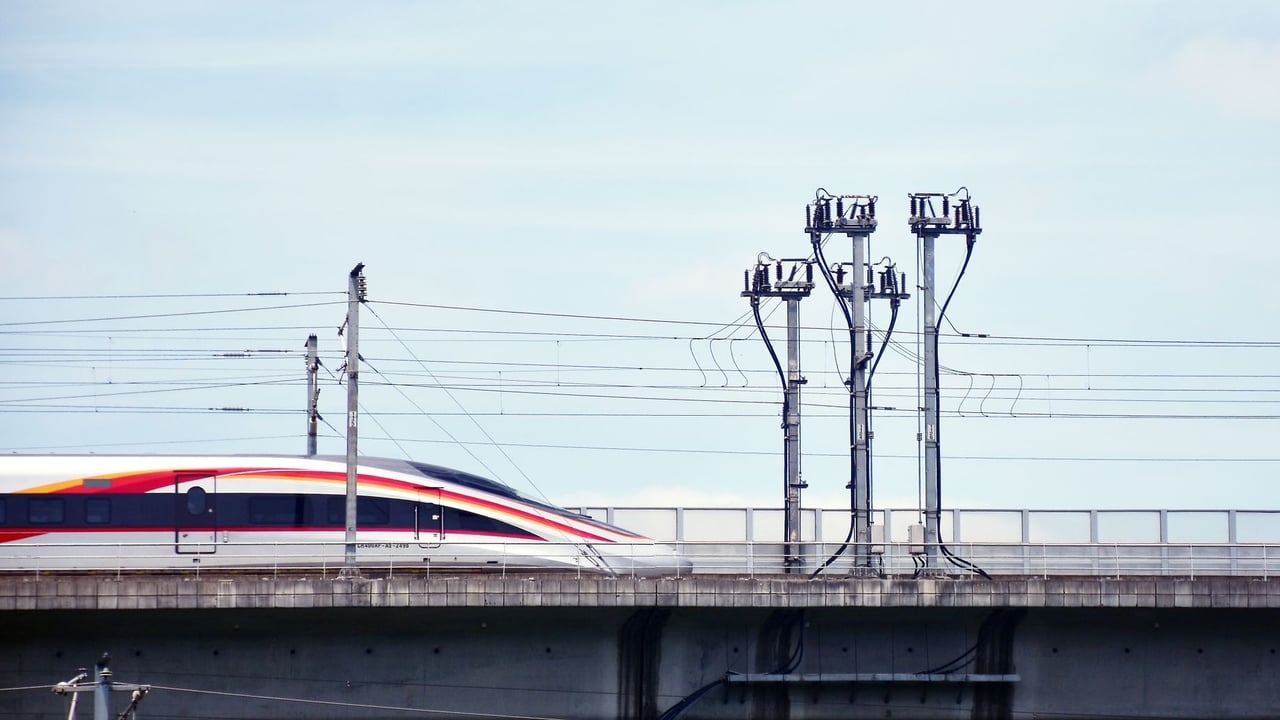
Photo by Raven Zhou on Pexels
The Brief
China launched operations on four new high-speed rail lines on September 28, marking another synchronized expansion of the country's passenger rail network. Among the newly operational corridors is the Yixing High-Speed Railway, which substantially compresses travel time between the central hub of Wuhan and the southwestern metropolis of Chongqing to approximately four hours. The simultaneous openings aim to alleviate transport pressure ahead of peak holiday travel while accelerating economic integration among central and western urban clusters.
Why it matters
The coordinated launch of multiple railway segments right before the national holiday rush strengthens intercity links across China's interior. In particular, reducing transit times along critical corridors like Wuhan-Chongqing enhances labor mobility, logistics efficiency, and tourism exchanges among major regional engines that have historically faced longer overland travel times.
China context
China's railway development continues to flesh out its national 'eight vertical and eight horizontal' high-speed rail grid. Rather than focusing purely on coastal trunk lines, recent infrastructure investments emphasize regional intercity connectors and cross-regional corridors that link central powerhouses like Wuhan with western growth hubs such as Chengdu, Chongqing, and Xi'an.
Editor's View
EDITOR'S VIEW — Analysis and inference, not factual reporting.
The simultaneous commissioning of four lines reflects Beijing's established pattern of timing major infrastructure completions ahead of national holiday demand. Beyond holiday capacity management, the strategic impact lies in bridging the geographic divide between the Yangtze River Middle Reaches and the Chengdu-Chongqing economic circle. By lowering transit times between these economic cores, policymakers are working to foster a more unified internal market across central and western China.
What to watch
- Holiday passenger volumes and seat occupancy rates across the newly commissioned routes during the upcoming travel surge.
- Progress on complementary connectivity projects linking Wuhan, Xi'an, and the Chengdu-Chongqing metropolitan areas.
- Municipal initiatives to expand feeder transit and local tourism services around newly opened railway stations.
Key Takeaways
- 1China officially opened four new high-speed rail lines to passenger traffic on September 28.
- 2The Yixing High-Speed Railway commenced operations, reducing transit time between Wuhan and Chongqing to about four hours.
- 3The synchronized openings provide crucial passenger capacity ahead of the upcoming National Day holiday rush.
- 4The new infrastructure strengthens transit connectivity between central and western urban agglomerations, particularly the Wuhan, Xi'an, and Chengdu-Chongqing regions.
China brought four new high-speed rail lines into commercial operation on September 28, marking a coordinated expansion of the national rail network ahead of the autumn travel season, according to reports from state media and domestic financial press.
The simultaneous rollouts represent an ongoing push to enhance high-speed passenger capacity across strategic regional corridors. Among the newly inaugurated lines is the Yixing High-Speed Railway, an essential connector whose entry into service shortens the rail journey between Wuhan in Hubei province and the southwestern municipality of Chongqing to approximately four hours, as reported by Yicai.
The reduction in travel time between Wuhan and Chongqing removes a longstanding overland transit bottleneck between the middle reaches of the Yangtze River and the southwestern interior. Historically, rail travel between the two major industrial and commercial hubs required longer journeys through winding corridors. The upgraded link facilitates faster movement of business travelers, tourists, and seasonal workers across central and southwestern China.
Chinese state media outlet China News Service, relaying reports from CCTV News, highlighted that the four routes entered service concurrently on Saturday morning. The coordinated opening reflects a long-standing infrastructure planning practice in China, where transport authorities align project completions with the onset of peak travel periods such as the weeklong National Day holiday.
The launch of these lines also advances a broader strategic initiative to establish closer connections between three key inland urban centers: Wuhan, Xi'an, and the Chengdu-Chongqing economic zone. Chinese business coverage has increasingly framed these interconnected hubs as a regional 'western triangle' capable of balancing eastern coastal economic primacy. As high-speed lines connecting these regions reach completion, regional governments anticipate enhanced cross-provincial collaboration in tourism, consumer spending, and industrial supply chains.
While specific operational timetables and technical metrics for each of the four newly opened segments continue to roll out, initial schedules are designed to rapidly absorb holiday passenger flows before establishing permanent, regularized intercity service patterns.
Sources
- 高铁集中上新!四条新线今日开通 — China News Service · 9/27/2026
- 宜兴高铁今日开通,武汉至重庆缩短到4小时 — Yicai · 9/28/2026