
Business & IndustryAnalysis
Multinationals Deepen R&D Ties Ahead of 9th China Import Expo
Global firms expand localized innovation as Shanghai prepares for the 9th CIIE alongside targeted market access for developing nations.
Share
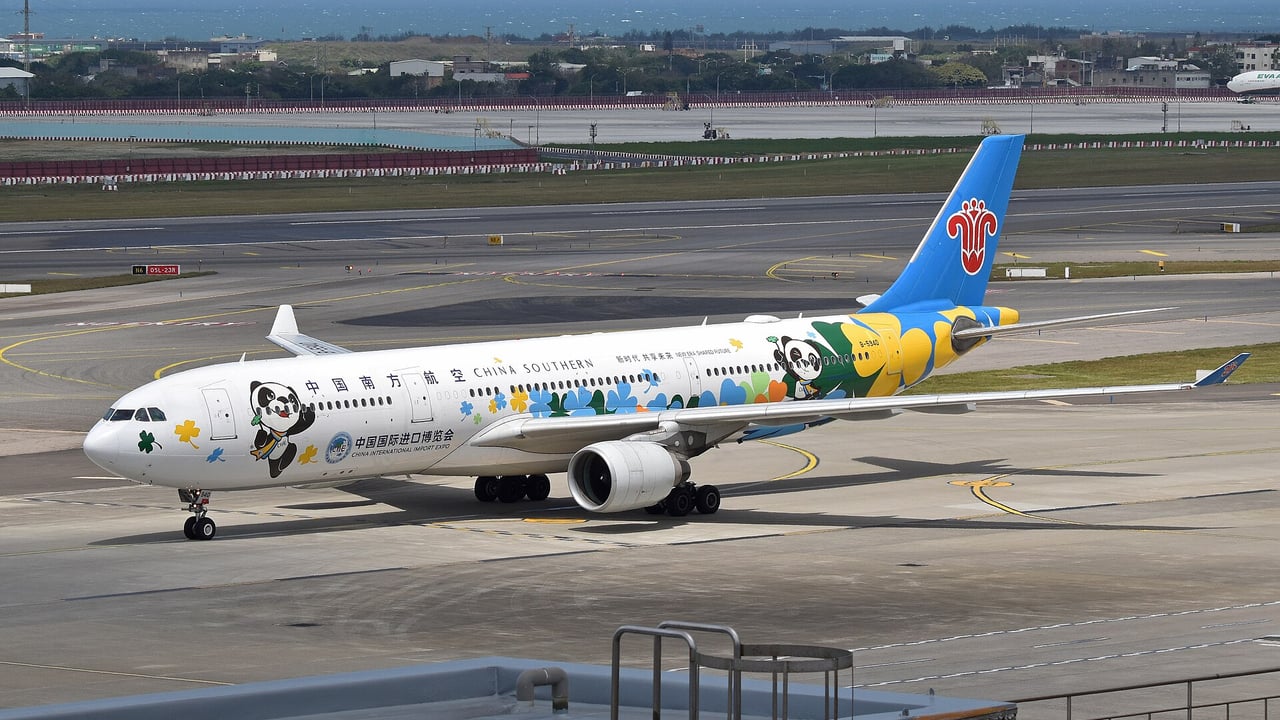
Alan Wilson via Wikimedia Commons, CC BY-SA 4.0
The Brief
The ninth China International Import Expo (CIIE) is scheduled to take place in Shanghai from November 5 to 10, bringing together international exhibitors across consumer goods, industrial automation, and healthcare. Organizers report that returning exhibitors account for approximately 80 percent of the total exhibition area, with 169 companies having attended every edition. Alongside planned product debuts from multinational firms including Louis Dreyfus, Rockwell Automation, and Henkel, this year's expo expands dedicated trade zones and zero-tariff facilitation for least developed countries and Southeast Asian commercial networks.
Why it matters
The steady presence of multinational corporations at CIIE highlights a continued shift from using China merely as an export destination to integrating it as a core research and development hub. Furthermore, the expo's institutional accommodations for African and Southeast Asian enterprises reflect Beijing's strategic effort to strengthen trade channels across the Global South through unilateral tariff concessions.
China context
China has continued to expand trade-opening mechanisms, unilateral visa exemptions, and targeted tariff reductions to support economic growth and stabilize foreign direct investment. As the world's first national-level import-themed exhibition, CIIE serves as a high-profile barometer for foreign business sentiment in China, while advancing policy objectives tied to consumer market upgrades and South-South commercial ties.
Editor's View
EDITOR'S VIEW — Analysis and inference, not factual reporting.
The operational integration highlighted ahead of the ninth CIIE shows that foreign multinationals are increasingly embedding their innovation chains inside China rather than relying solely on cross-border shipments. Initiatives such as Henkel's domestic battery center and Boehringer Ingelheim's Shanghai research facility demonstrate that localized R&D has become a defensive necessity to remain competitive in domestic industrial cycles. Concurrently, Beijing is utilizing institutional trade benefits—such as zero-tariff arrangements for African agricultural goods—to position the expo as a gateway for broader bilateral trade diplomacy.
What to watch
- Commercial releases and product demonstrations from Louis Dreyfus, Kao, and Rockwell Automation during the November 5–10 exhibition window.
- The operational launch of the Cross-Border Entrepreneurs Club by the China-ASEAN Mercantile Exchange.
- Order conversion rates and transaction volume for agricultural exporters in the upgraded Asia-Africa exhibition zone.
Key Takeaways
- 1The 9th CIIE takes place November 5–10 in Shanghai, with returning vendors occupying roughly 80 percent of the floor space.
- 2Previous eight editions drew 27,000 corporate participations from over 180 countries and regions, securing over $580 billion in intended deals.
- 3169 companies and 30 overseas exhibition organizations have maintained continuous attendance across all nine editions.
- 4Multinationals like Boehringer Ingelheim, Louis Dreyfus, and Henkel are leveraging localized China R&D facilities for product rollouts.
- 5The expo provides upgraded trade zones and zero-tariff support for African and ASEAN exporters.
The ninth China International Import Expo (CIIE) will be held from November 5 to 10 at the National Exhibition and Convention Center in Shanghai, according to reports published by People's Daily and the Securities Times. Across its previous eight sessions, the import-focused trade fair registered cumulative attendance from more than 27,000 corporate participants representing over 180 countries and regions, yielding intended commercial transactions exceeding $580 billion.
Organizers note that returning exhibitors make up approximately 50 percent of participating vendors at the ninth edition, collectively accounting for around 80 percent of the total exhibition space. A total of 169 enterprises and 30 overseas exhibition-organizing bodies have participated in every edition of the event since its inception.
Several multinational corporations are using the expo to showcase domestically developed technologies and announce localized investments. Agricultural merchant Louis Dreyfus plans to display specialty animal nutrition products developed at its Shanghai global research and development center. Rockwell Automation is slated to debut a high-performance control platform globally, while consumer goods manufacturer Kao will present sustainable lifestyle lines. Stéphane de La Faverie, President and Chief Executive Officer of the Estée Lauder Companies, is scheduled to attend in person for the first time.
Industrial and pharmaceutical firms have similarly expanded their footprint ahead of the November opening. German pharmaceutical company Boehringer Ingelheim, attending for an eighth consecutive year, announced an upgraded China strategy in August that includes a new research facility in Shanghai's Zhangjiang hub. Henkel, returning for its eighth exhibition under a dedicated development theme, recently opened its first Asian Sassoon salon and academy in Shanghai and commissioned a joint battery innovation center with CALB in Changzhou, Jiangsu.
In addition to established industrial multinationals, the upcoming expo features expanded support for smaller enterprises and developing economies. Organizers have maintained provisions for complimentary exhibition booths for least developed countries while upgrading dedicated Asia-Africa product pavilions to assist partner nations in utilizing preferential zero-tariff import policies. The Côte d'Ivoire Export Promotion Agency confirmed an SME delegation bringing coffee, cocoa, cashews, and dried fruit, while the China-ASEAN Mercantile Exchange will formally inaugurate a Cross-Border Entrepreneurs Club to assist regional corporate integration.
Sources
- 扩大开放、连接全球、赋能产业、惠及民生的重要窗口(进博会观察) — Securities Times · 10/7/2026
- 扩大开放、连接全球、赋能产业、惠及民生的重要窗口(进博会观察) --经济·科技--人民网 — People's Daily · 10/7/2026