
Defense & StrategyAnalysis
PLA Army Command College Reshapes Officer Training for Unmanned and Intelligent Warfare
Curriculum updates at China's intermediate Army academy emphasize human-machine teaming and simulated combat against major adversaries.
Share
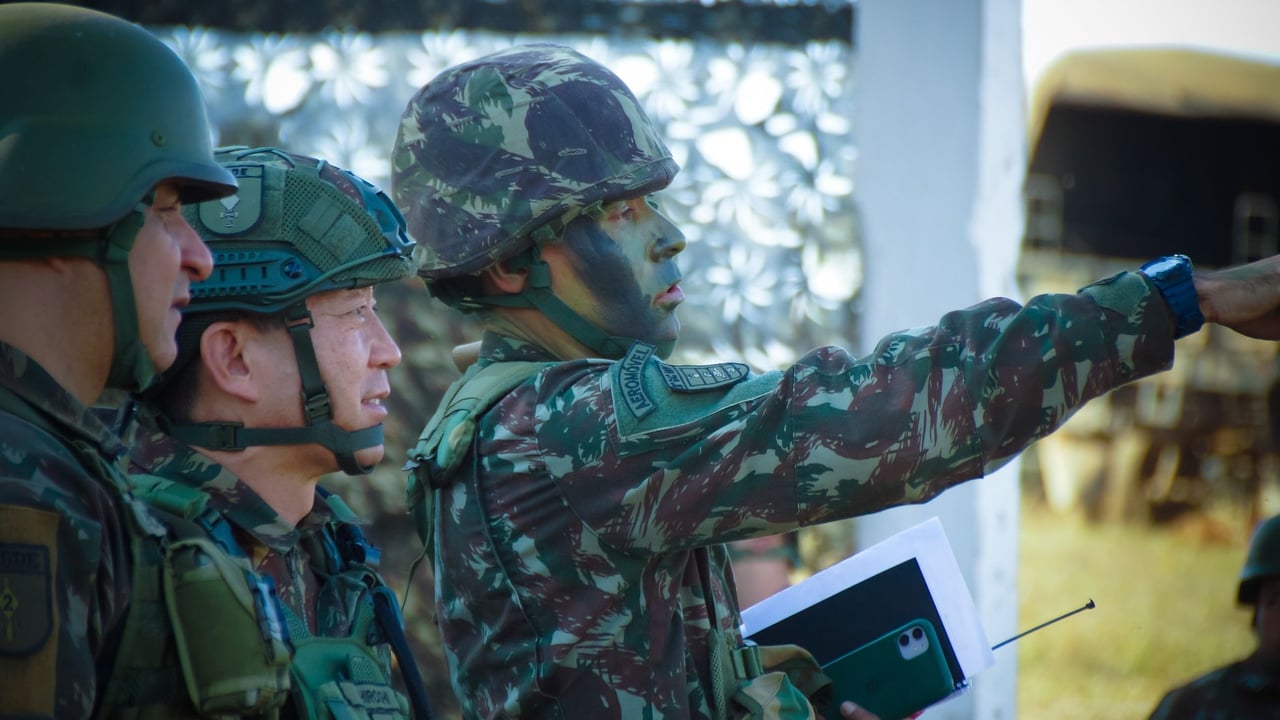
Photo by Imprensa Agruban on Pexels
The Brief
The People's Liberation Army (PLA) Army Command College has updated its intermediate command training curriculum to integrate unmanned systems and intelligent warfare. According to reports from China Military Online and People's Daily, the academy incorporates unmanned equipment employment, intelligent command coordination, and advanced simulation platforms into its core coursework. Grounded in Xi Jinping's directives on developing integrated strategic capabilities in emerging domains, the pedagogical overhaul aims to connect theoretical research directly to field operations, focusing on human-machine teaming and joint battlefield requirements against technologically advanced adversaries.
Why it matters
The reform illustrates how the PLA is operationalizing its doctrine of intelligentized warfare within professional military education. By training mid-level officers in human-machine collaboration and data-enabled command before they return to operational units, the PLA is attempting to accelerate the adoption of autonomous and uncrewed systems from experimental doctrine into standard ground force tactics.
China context
The initiative aligns with Beijing's ongoing military modernization drive to generate 'new-quality combat capabilities' (新质战斗力) and enforce 'education for war' (为战育人). It explicitly links tactical instruction to Xi Jinping's military thought and the PLA's strategic focus on preparing for high-intensity conflicts against 'strong adversaries'—standard PLA parlance for the United States and its allies.
Editor's View
EDITOR'S VIEW — Analysis and inference, not factual reporting.
The emphasis on intermediate command courses is telling: mid-level commanders are the operational bridge between strategic leadership and front-line tactical execution. If the PLA intends to field integrated drone swarms and algorithmic decision-support tools at scale, institutionalizing these concepts in mid-career officer education is essential. However, official reports highlight individual training successes rather than systemic operational readiness, leaving open how effectively diverse ground force formations can assimilate these uncrewed coordination doctrines.
What to watch
- Whether other PLA service academies—such as those for the Navy, Air Force, and Rocket Force—announce similar standardized intelligent warfare curriculum overhauls.
- Evidence from PLA combined-arms exercises indicating wider adoption of small-group human-machine teaming tactics developed at the academy.
Key Takeaways
- 1The PLA Army Command College integrated unmanned equipment employment and intelligent command coordination into its intermediate officer training programs.
- 2Instruction uses intelligent simulation platforms to connect theoretical coursework with realistic tactical training.
- 3Curriculum updates focus on three central themes: deepening joint operations, targeting strong adversaries, and integrating intelligent capabilities.
- 4State media reported that academy graduates have applied human-machine integration and small-group uncrewed tactics during group army field exercises.
The People's Liberation Army (PLA) Army Command College has restructured its intermediate command curriculum to focus on unmanned systems, artificial intelligence, and human-machine integration, according to reports published by China Military Online and People's Daily.
During recent training sessions for mid-level commanders, coursework centered on debates over the evolving role of uncrewed platforms in future combat and the division of responsibility between human decision-makers and algorithmic systems. Instructors guided these discussions using strategic directives from official ideological texts, specifically focusing on expanding integrated strategic capabilities in emerging domains.
According to academy leadership, the institution has made studying and implementing Xi Jinping's military thought a long-term strategic task, utilizing it to guide instructional reform. The college has focused its research and teaching on key operational challenges summarized as 'deepening joint operations, targeting strong adversaries, and integrating intelligence.'
To adapt to technological shifts reshaping warfare, the academy incorporated advanced combat doctrines and high-tech weaponry directly into its primary courses. The revised syllabus integrates uncrewed equipment employment and intelligent command coordination into operational exercises. Cadets conduct immersive training using intelligent simulation platforms, designed to link classroom instruction with field training and projected battlefield conditions.
State media highlighted practical applications of this training in operational units. Following graduation, one academy alumnus reportedly developed an integrated training method during a group army uncrewed force demonstration. The approach emphasized small-group coordination, realistic force-on-force confrontation, network-information system architecture, and data-intelligence support to facilitate human-machine integration.
Academy leadership indicated that the institution plans to continually adjust its curricula to match operational requirements from active-duty units, citing the need to closely track changes in technology, warfare, and potential adversaries.
Sources
- 陆军指挥学院结合教学实践深入学习贯彻习近平强军思想 - 中国军网 — China Military Online · 8/24/2026
- 紧盯战场前沿 聚力为战育才--军事--人民网 — People's Daily · 8/24/2026