
Defense & StrategyAnalysis
PLA Joint Logistics Force Marks Decade of Reorganization and Tech Upgrades
A decennial review highlights automated warehousing, high-speed rail transit, and cross-service coordination.
Share
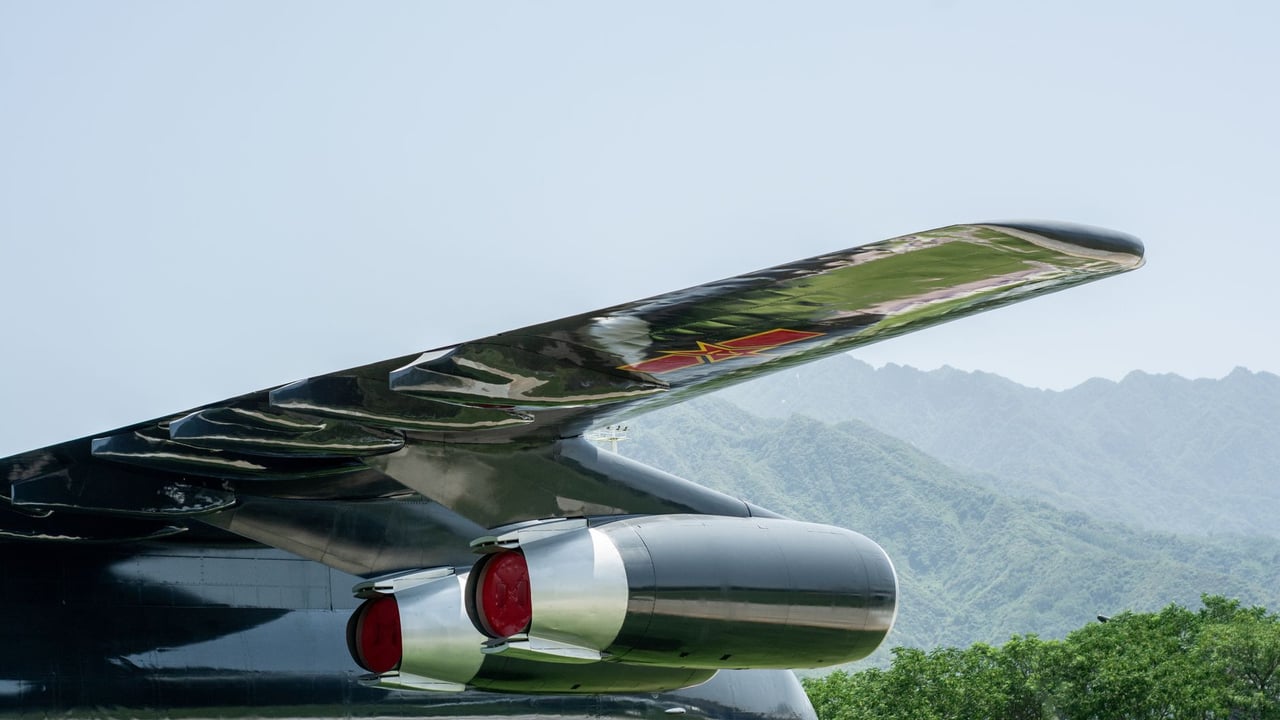
Photo by Zifeng Xiong on Pexels
The Brief
Marking ten years since its founding in September 2016, the People's Liberation Army Joint Logistics Support Force has overhauled its support apparatus from regional silos into a centralised, tech-enabled network. According to reports in the PLA Daily and People's Daily, the force has expanded its operational footprint across service branches—supporting Air Force, Navy, and Rocket Force operations over extensive distances. Key advancements include a three-tier telemedicine system, widespread adoption of high-speed rail for personnel transfers, data-driven mission scheduling, automated stereoscopic warehouses, and the experimental use of unmanned vehicles and robotic quadruped units in field exercises.
Why it matters
Logistics capabilities determine the reach, operational tempo, and endurance of modern militaries during high-intensity conflict. By institutionalising unified transport and procurement, the PLA aims to resolve long-standing bottlenecks in joint expeditionary logistics. The integration of domestic commercial infrastructure—such as high-speed rail networks—alongside automated inventory management indicates a deliberate transition toward data-driven, rapid-response warfighting support.
China context
Established during the sweeping 2015–2016 military reforms under Xi Jinping, the Joint Logistics Support Force stripped logistics responsibilities away from traditional regional military commands and placed them directly under the Central Military Commission. Operating through a primary base in Wuhan and five regional centres in Wuxi, Guilin, Xining, Shenyang, and Zhengzhou, the command is structured to support joint combat commands without inter-service administrative interference.
Editor's View
EDITOR'S VIEW — Analysis and inference, not factual reporting.
The self-assessment published by state and military outlets provides valuable insight into where PLA logistics planners see tangible progress and where integration remains a work in progress. While the deployment of automated warehouses, group procurement, and commercial rail links addresses peacetime efficiency, cross-theatre joint projection under contested conditions presents far steeper hurdles. Observers should watch whether real-time data integration across service branches can operate reliably during simulated electronic warfare and degraded communications.
What to watch
- Further institutionalisation of joint logistics exercises directly coordinating simultaneous operations across naval, air, and rocket forces.
- Operational field trials and standardisation of robotic quadrupeds, automated ground vehicles, and pipeline drones in austere environments such as plateau and maritime island outposts.
- Software and command updates to the military-wide transportation and combat-readiness data-sharing system during large-scale mobilisation exercises.
Key Takeaways
- 1The PLA Joint Logistics Support Force marked a decade of operations, noting a shift from localized regional support to unified military-wide logistics.
- 2Over 80 percent of new recruits now transit to bases via high-speed rail within 24 hours across more than 400 synchronized rail hubs.
- 3A three-tier telemedicine network connects remote outposts with top Beijing specialists over 4,000 kilometres away within tens of minutes.
- 4Cross-branch missions featured 10,000-kilometre heavy transport for Air Force units and custom rapid-loading techniques for out-of-gauge Rocket Force equipment.
- 5Technological integration includes automated stereoscopic warehousing, centralised data sharing for mission planning, and trials with robotic quadrupeds and unmanned vehicles.
Ten years after its establishment under sweeping structural military reforms, the People's Liberation Army Joint Logistics Support Force has transitioned from a fragmented, regionally bound apparatus into an integrated, data-driven network, according to official accounts published by the PLA Daily and People's Daily.
Formally inaugurated on September 13, 2016, when Central Military Commission Chairman Xi Jinping conferred military flags upon the central Wuhan Joint Logistics Support Base and five regional support centres in Wuxi, Guilin, Xining, Shenyang, and Zhengzhou, the force was tasked with ending the service-specific, localized supply networks inherited from the former military regions.
According to the official review, recent operations have tested the command's cross-service projection capabilities. In one cited exercise, a heavy transport regiment carried out end-to-end transport for Air Force units over nearly 10,000 kilometres. In another instance, joint logistics personnel coordinated with the Navy and Air Force on multimodal rail and maritime loading drills, while developing tailored tie-down and loading protocols to expedite the movement of oversized Rocket Force hardware during unit-level deployments.
The military reports that civil infrastructure integration has become central to rapid mobilisations. Coordinating across more than 400 high-speed railway passenger hubs nationwide, the force reported that over 80 percent of newly inducted conscripts now reach their assigned installations within 24 hours via high-speed rail.
Technological modernization is also extending into medical and field sustainment. A three-tier telemedicine architecture linking grassroots military units, base hospitals, and the PLA General Hospital in Beijing is now operational across the armed forces, allowing remote specialist triage for frontier personnel within tens of minutes across distances exceeding 4,000 kilometres.
In field sustainment and inventory control, the military reports that automated stereoscopic warehouses now provide visualised tracking of supplies, supported by military-wide combat readiness data-sharing platforms that shorten planning times for large deployments. On training grounds and supply routes, autonomous logistics vehicles, pipeline inspection drones, and robotic quadrupeds have increasingly been incorporated into routine exercises. In addition, centralized regional procurement models have pooled supply tenders across branches to lower equipment acquisition overhead.
Sources
- 我军联勤保障力量构建全域通达精准高效新格局--军事--人民网 — People's Daily · 9/20/2026
- 我军联勤保障力量构建全域通达精准高效新格局 - 中国军网 — China Military Online · 9/20/2026