
Business & IndustryAnalysis
WorldSkills Closes as Chinese Equipment and Training Gain Ground
The 48th WorldSkills Competition highlights China's expanding role in vocational training systems and industrial hardware.
Share
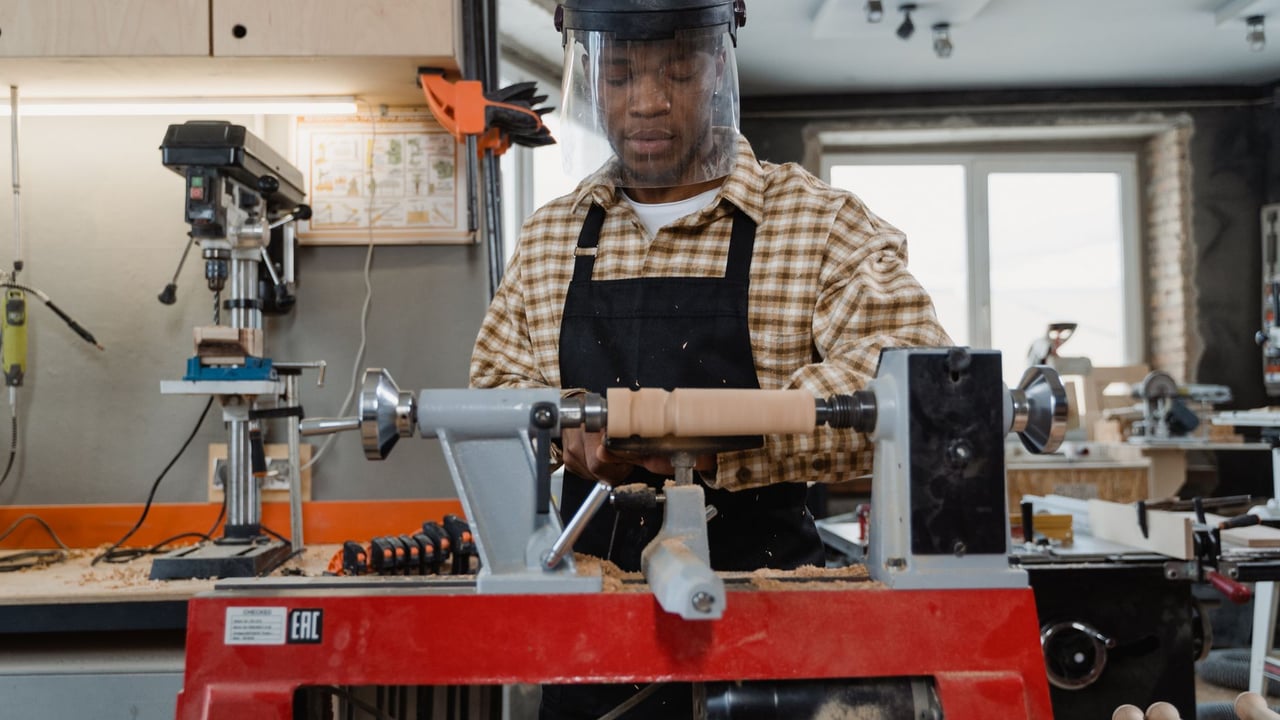
Photo by Tima Miroshnichenko on Pexels
The Brief
The 48th WorldSkills Competition has concluded, spotlighting China's evolution from an early participant to host nation and industrial supplier. Domestic equipment was deployed across disciplines such as rail transit, aircraft maintenance, and commercial baking, reflecting expanding manufacturing capabilities. International vocational officials attributed the performance of Chinese competitors to sustained public funding, systemic vocational curriculum alignment with global technical standards, and institutional support. The event underscores Beijing's broader campaign to elevate technical careers alongside traditional academic paths.
Why it matters
The WorldSkills Competition serves as an international benchmark for vocational excellence and technical workforce standards. China's growing footprint—not only through medal contention but also via the supply of competitive hardware like rail and aviation maintenance gear—reflects a deliberate industrial strategy. By aligning domestic vocational standards with international rubrics, China aims to accelerate its transition from a low-cost labor market into a high-skill manufacturing powerhouse, providing a blueprint for vocational integration across advanced manufacturing supply chains.
China context
Policymakers in Beijing have sought to alter long-standing cultural preferences that favor university diplomas over vocational training. Faced with structural youth unemployment alongside persistent shortages of skilled industrial technicians, authorities have poured fiscal resources into vocational colleges and modernized national training curricula. Embedding international competition benchmarks into local educational pipelines forms part of an effort to convert China's traditional demographic dividend into a skill dividend capable of sustaining high-end manufacturing.
Editor's View
EDITOR'S VIEW — Analysis and inference, not factual reporting.
The prominent presence of Chinese hardware and competitors at WorldSkills marks a quiet shift in how technical standards are negotiated internationally. While global vocational frameworks were historically dominated by European apprenticeship models, Chinese industrial suppliers and training colleges are now actively embedding their own equipment into premier international contests. If Chinese equipment and testing criteria gain lasting acceptance across global competition circuits, domestic manufacturing brands will secure a durable advantage in exporting both machinery and technical operational standards abroad.
What to watch
- Whether domestic equipment deployed during the competition is formally integrated into future standard WorldSkills toolsets abroad
- Detailed medal breakdowns and policy incentives awarded to winning Chinese competitors and their affiliated institutions
- Subsequent policy announcements regarding vocational education funding and corporate apprenticeship subsidies in China
Key Takeaways
- 1The 48th WorldSkills Competition has officially concluded after showcasing global vocational talents across numerous technical categories.
- 2Chinese-made equipment was deployed across multiple competition sectors, including rail transit, aircraft maintenance, and baking.
- 3WorldSkills and OECD officials attributed China's vocational progress to heavy government investment and the deep integration of competition benchmarks into training systems.
The 48th WorldSkills Competition has officially drawn to a close, marking a milestone in China's decades-long effort to expand its standing in global vocational training and industrial craftsmanship.
According to coverage by China News Service and Yicai, the international tournament demonstrated how Chinese technology and vocational infrastructure have expanded beyond domestic classrooms into frontline competitive arenas. Across multiple event categories—ranging from rail transit and aircraft maintenance to baking—contests utilized Chinese-manufactured machinery and equipment. Domestic industry observers noted that the rising profile of Chinese equipment at the tournament reflects broader manufacturing maturation and corporate globalization, which in turn creates room to elevate domestic benchmarks into international competition standards.
International vocational leaders noted the systemic foundations underpinning these developments. WorldSkills officials pointed out that China has evolved rapidly from an initial learner on the competition stage to host nation, an arc closely intertwined with its broader economic and industrial expansion. WorldSkills leadership emphasized that pursuing a technical craft or skilled trade represents an equally viable career path compared to traditional academic degrees. Officials underscored that extensive state support, substantial fiscal investment in vocational colleges, and the systematic incorporation of WorldSkills technical criteria into national curricula have served as primary drivers for the sustained technical proficiency of Chinese participants.
International education observers echoed that view. In interviews cited by Yicai, Andreas Schleicher, Director for Education and Skills at the Organisation for Economic Co-operation and Development, observed that China's rapid vocational gains did not stem from arbitrary fortune. Rather, Schleicher emphasized that modern vocational education operates not merely to transmit isolated technical tasks, but to foster precision, aesthetic understanding, and physical creation through rigorous discipline.
As the competition concludes, the integration between industrial equipment vendors and vocational academies highlights Beijing's continued push to reshape public attitudes toward manual and technical labor, positioning high-skill trades at the core of its industrial upgrading drive.
Sources
- 中国元素无处不在!第48届世界技能大赛“金牌中的金牌”揭晓,世赛冠军们怎么说 — Yicai · 9/27/2026
- 和新晋世赛冠军聊了聊,上海“最香赛场”是如何炼成的 — Yicai · 9/27/2026
- 以技能之桥联通世界 第48届世界技能大赛闭幕 — China News Service · 9/27/2026