
Business & IndustryAnalysis
48th WorldSkills Competition Opens in Shanghai with 1,385 Competitors
The vocational skills event features 64 disciplines across six industry sectors as artificial intelligence reshapes technical labor.
Share
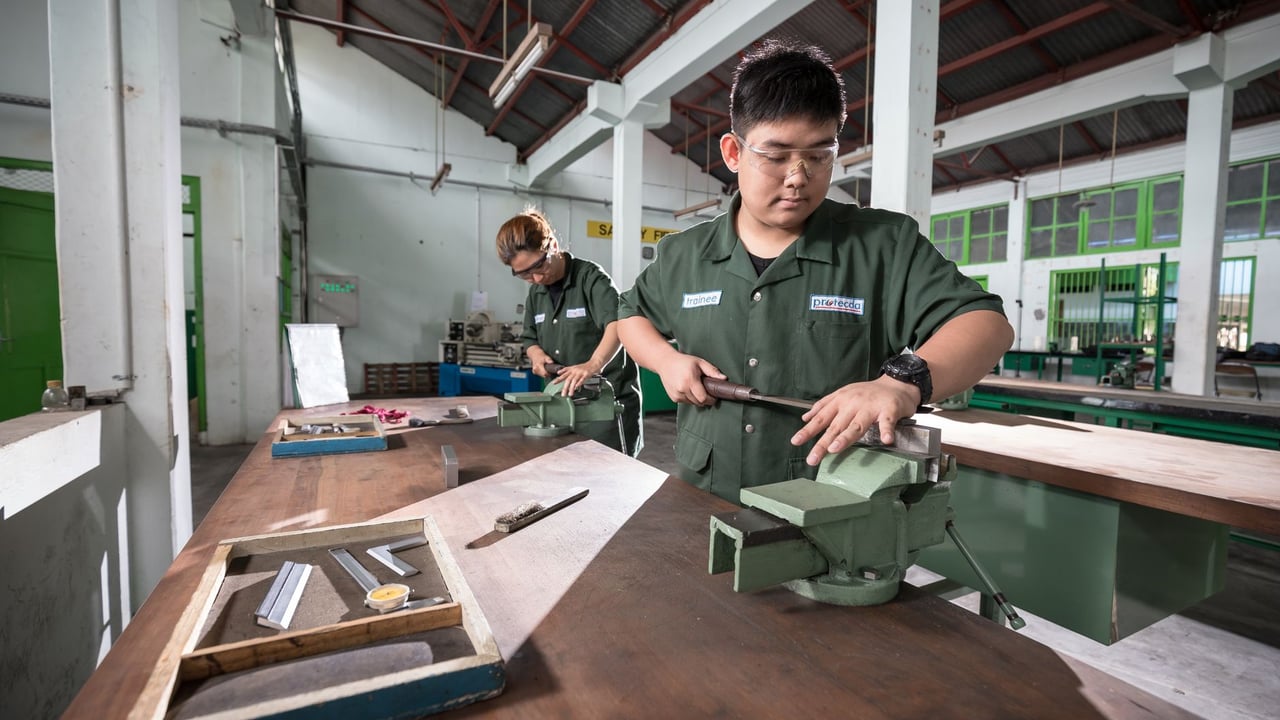
Photo by Rizky Rafael on Pexels
The Brief
The 48th WorldSkills Competition opened in Shanghai on September 22, convening 1,385 young competitors from 68 countries and regions across 64 vocational events. Running through September 27, the biennial tournament spans six core industrial domains, including manufacturing, construction, information technology, and logistics. China fielded 71 participants, contesting every discipline on the roster. Parallel events include an international skills conference and an industrial expo, held against the backdrop of broader labor market changes driven by automation and artificial intelligence.
Why it matters
As global supply chains navigate digital transformation, the WorldSkills tournament offers an operational benchmark for baseline technical competencies across major manufacturing and services sectors. The inclusion of modern computing disciplines alongside foundational crafts highlights how technological diffusion is recalibrating vocational curricula and workforce readiness standards internationally.
China context
Hosting the event in Shanghai aligns with Beijing's ongoing campaign to elevate the status of technical labor and address skilled worker deficits in high-end manufacturing. By contesting all 64 events, Chinese authorities are utilizing the WorldSkills standard to recalibrate domestic vocational education frameworks and accelerate alignment between trade schools and industrial policy priorities.
Editor's View
EDITOR'S VIEW — Analysis and inference, not factual reporting.
The 48th WorldSkills Competition arrives at a critical juncture for industrial planning. While political leaders routinely emphasize vocational dignity, labor markets across industrialized economies continue to face structural shortages in advanced machining, electrical engineering, and precision maintenance. The prominence of artificial intelligence in discussions surrounding the Shanghai events underscores an emerging dual reality: routine procedural tasks are increasingly automated, raising the technical baseline required of manual technicians, while uncomputable troubleshooting and physical dexterity remain difficult to replace. How national training systems incorporate these shifting requirements will determine long-term manufacturing competitiveness far more than aggregate medal counts.
What to watch
- Competitive outcomes across technical and engineering categories through the closing ceremony on September 27.
- Policy and industry takeaways emerging from the concurrent WorldSkills Conference regarding artificial intelligence integration into technical curricula.
- Subsequent vocational training standard updates issued by participating national ministries based on tournament performance criteria.
Key Takeaways
- 1The 48th WorldSkills Competition opened in Shanghai on September 22, featuring 1,385 contestants from 68 countries and regions.
- 2Contestants are competing across 64 events categorized into six major industrial and service domains.
- 3China entered 71 participants, contesting every official discipline on the tournament schedule.
- 4Parallel international events include the WorldSkills Conference and WorldSkills Expo, running through September 27.
- 5The tournament occurs amid broader international policy debates over how artificial intelligence is altering vocational skill requirements.
The 48th WorldSkills Competition officially commenced in Shanghai on the evening of September 22, bringing together 1,385 technical and trade specialists from 68 countries and regions, according to state media reports.
The tournament, held under the theme "Where There's a Will, There's a Way," spans 64 competitive events across six broad sectors: Manufacturing and Engineering Technology, Information and Communication Technology, Construction and Building Technology, Transportation and Logistics, Creative Arts and Fashion, and Social and Personal Services, People's Daily reported. Competitors, whose average age is approximately 21 years old according to event organizers cited by Yicai, will compete through September 27.
China fielded 71 competitors, marking comprehensive representation across every official discipline on the competition roster. Alongside the competitive tracks, Shanghai is hosting the WorldSkills Conference and the WorldSkills Expo, providing forums for government officials, industry representatives, and educational institutions to examine technical labor policies and vocational schooling models.
Chinese state media reported that President Xi Jinping addressed a congratulatory letter to the event, framing the tournament as an exchange platform aligned with industrial demand. Premier Li Qiang met separately with WorldSkills leadership, including the organization's president and Chief Executive Officer David Hoey, emphasizing international cooperation in human capital development.
The 90-minute opening ceremony, staged at the Shanghai Expo Culture Center, incorporated large-scale mechanical elements alongside digital stagecraft. Hou Jie, the ceremony's chief director, told Yicai that key visual components included a 200-tonne mechanical installation designed around traditional Chinese mortise-and-tenon interlocking woodwork—a nod to historical craft heritage—paired with performances illustrating human-machine collaboration in an era increasingly defined by robotics and automated systems.
Discussions surrounding the competition reflect mounting structural shifts across the global labor landscape. Editorial and analytical coverage around the opening highlighted the growing impact of artificial intelligence and advanced manufacturing tools on trade professions, observing that algorithmic automation is eliminating formulaic mechanical steps while elevating the value of uncomputable technical problem-solving and manual adaptability on the factory floor.
Sources
- 第48届世界技能大赛在上海开幕--经济·科技--人民网 — People's Daily · 9/22/2026
- 第48届世界技能大赛在上海开幕,推动技能生态更好服务全球经济 — Yicai · 9/22/2026
- 世赛开闭幕式如何“致广大”“尽精微”,总导演侯捷解码 — Yicai · 9/22/2026
- 一财社论:人类始终在用双手创造未来——写在第48届世界技能大赛开幕之际 — Yicai · 9/22/2026