# NDRC
Latest news and articles about NDRC
Total: 32 articles found

China’s Fuel Market Finds Brief Reprieve as NDRC Triggers First Price Cut of 2026
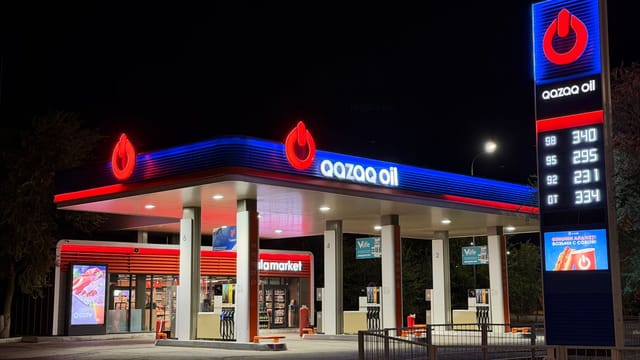
The NDRC has implemented the first domestic fuel price cut of 2026, lowering gasoline and diesel retail rates by over 500 yuan per ton. This adjustment, driven by international market fluctuations, provides immediate relief to consumers and the logistics sector after a series of price hikes earlier this year.

Beijing’s Balancing Act: China Signals First Fuel Price Cut of 2026 Amid Global Crude Volatility
China is poised to implement its first domestic fuel price reduction of 2026, marking a break from a cycle of continuous hikes. The move follows strategic state interventions to cap energy costs and reflects a temporary softening in global crude oil prices.

Beijing Woos Private Giants as Economic Planners Anchor 15th Five-Year Plan
NDRC Director Zheng Shanjie met with top private sector executives to align corporate strategies with the goals of the 15th Five-Year Plan. The symposium focused on mitigating external economic uncertainties and accelerating growth in emerging sectors like AI and the low-altitude economy.

Beijing Signals Strategic Shift with 2030 Domestic Demand Roadmap
China's NDRC has unveiled plans for a 2026–2030 domestic demand strategy, focusing on consumption, 'AI+' industrial integration, and social security enhancements. The initiative aims to transition the economy toward a more resilient, technology-driven growth model for the 15th Five-Year Plan period.

Beijing’s New Blueprint: Securing the Future Through High-Tech Sovereignty and Domestic Demand
The NDRC has outlined a strategic framework for China's 15th Five-Year Plan, focusing on self-reliance in energy and food, the advancement of AI-driven 'new quality productive forces,' and structural reforms to boost domestic consumption and household income.

Stability and Subvention: Beijing’s Economic Balancing Act Amidst Market Volatility
China is balancing state-led price controls with corporate labor experiments to maintain social and economic equilibrium. While the government buffers energy costs and the central bank continues a record gold-buying spree, the private sector is testing radical flexibility measures like 45-day leave policies to adapt to a maturing workforce.

Shock at the Socket: China’s EV Charging Market Ends the Era of Artificial Cheapness
China has transitioned its public EV charging infrastructure to a market-based dynamic pricing model, ending the era of fixed rates and low-cost price wars. While peak-hour costs have surged, the move is designed to ensure the long-term commercial viability of the world's largest charging network.

Clear for Takeoff: China Revamps Satellite Fee Structure to Accelerate Megaconstellation Ambitions
China has overhauled its radio frequency fee structure to favor large-scale satellite constellations by switching to bandwidth-based pricing and offering discounts for high-frequency spectrum. The policy specifically targets megaconstellations with over 200 satellites, aiming to lower the financial barriers for China's answer to Starlink.

Ghost Tracks: The Fading Promise of China’s High-Speed Rail New Cities
China is grappling with the legacy of 'High-Speed Rail New Cities' that have resulted in dozens of abandoned stations and billions in wasted investment. In response, central authorities have implemented strict new utilization requirements and design standards to curb local government debt and speculative infrastructure projects.

Former NDRC Deputy Director Xu Xianping Prosecuted on Major Bribery Charges
China has indicted former NDRC deputy director Xu Xianping on charges of taking especially large bribes. The case, investigated by the National Supervisory Commission, was handed to prosecutors and filed with the Chifeng Intermediate People’s Court, underscoring Beijing's sustained anti-corruption drive and its sensitivity around officials who oversaw economic planning.

Beijing Backs Hydrogen with Billions in Prizes as Industry Hunts Cheaper Green Fuel
Beijing has launched a performance‑based pilot scheme that offers up to Rmb1.6 billion per city cluster to scale hydrogen use, with national aims to cut hydrogen prices to Rmb25/kg on average by 2030 and to grow fuel-cell vehicle numbers to 100,000. Industry sees the policy as welcome but says cutting electricity costs and validating new electrolyser technologies are essential to make green hydrogen competitive.

China Bets Big on Beidou: From Phone Maps to Driverless Cars and a Trillion‑Yuan Industry
China’s NDRC has announced a major push to expand Beidou satellite navigation into consumer and industrial applications, targeting more than 1 trillion yuan in industry scale within five years after estimating 620 billion yuan by 2025. The programme prioritises autonomous driving, the low‑altitude aerial economy and intelligent robotics as arenas where Beidou will provide high‑precision positioning, emergency communications and multi‑agent coordination.