
Technology & AI News
Latest technology & ai news and updates

China Plans Fivefold Surge in Intelligent Computing Power by 2030
A new five-year industry blueprint forecasts 4 trillion yuan in computing network investment as national integration expands.
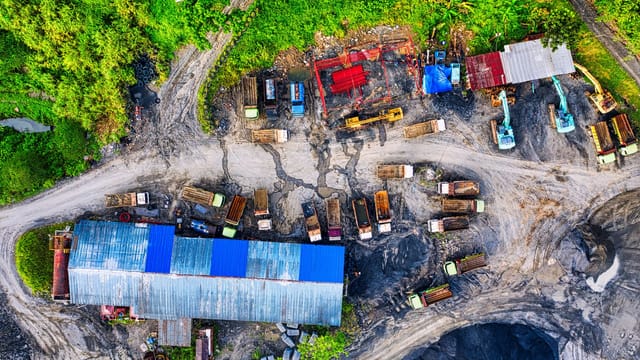
China Unveils AI Geological Prospecting and Mapping Systems in Tianjin
Natural resources authorities debut proprietary software platforms designed to compress mineral exploration timelines from months to days.

China Telecom Lab Transmits HD Drone Video via Narrowband Satellite
TeleAI's generative transmission system enables 1080p video uplink at under 100 kbps, cutting reliance on heavy terminals.
Shenzhen's Huaqiangbei Sees Surge in Foreign Buyers Driven by AI Gadgets
Visa-free travel and cross-provincial tax refund reforms boost international foot traffic in China's premier electronics hub.
China Consumers Association Warns Against Risks in AI Consumer Services
The consumer watchdog cautions against relying on AI outputs and bars merchants from blaming automated systems to escape liability.

China Rejects US Allegations of 'Industrial-Scale' AI Model Distillation
Beijing defends model distillation as standard industry practice and warns of countermeasures following a joint advisory from US security agencies.

China's FAST Radio Telescope Maps Record Neutral Hydrogen Galaxy Catalog
The FASHI DR2 release catalogs 156,000 galaxies across half the sky, raising local neutral hydrogen density measurement precision to 0.6 percent.
Shenzhen-Hong Kong-Guangzhou Leads WIPO Global Innovation Clusters
China accounts for 25 of the world's top 100 science and technology clusters for the fourth consecutive year.
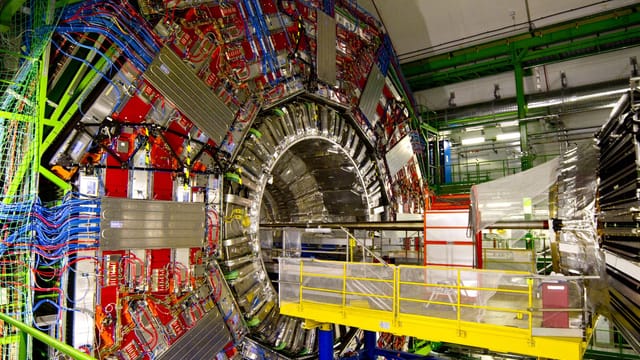
China Advances Controlled Nuclear Fusion Program Toward Burning Plasma Phase
State laboratories and private entrants advance tokamak and compact reactor facilities, targeting burning plasma experiments by 2027.

Beijing Unveils 16 Benchmark Cases in Push for AI-Driven Scientific Research
The capital showcases autonomous chemistry labs, domestic foundation models, and a dedicated AI4S cluster in Haidian.
China Recovers First Orbit-Class Rocket on Land with Zhuque-3 Mission
LandSpace lands its Zhuque-3 first stage in Gansu, advancing commercial reuse goals alongside state-led maritime recovery efforts.

China Explores Commodity Trading Models for Artificial Intelligence Tokens
Trading venues are treating language model tokens as standardized commodities to bridge data processing and computing demand.