
Technology & AIAnalysis
China Advances Controlled Nuclear Fusion Program Toward Burning Plasma Phase
State laboratories and private entrants advance tokamak and compact reactor facilities, targeting burning plasma experiments by 2027.
Share
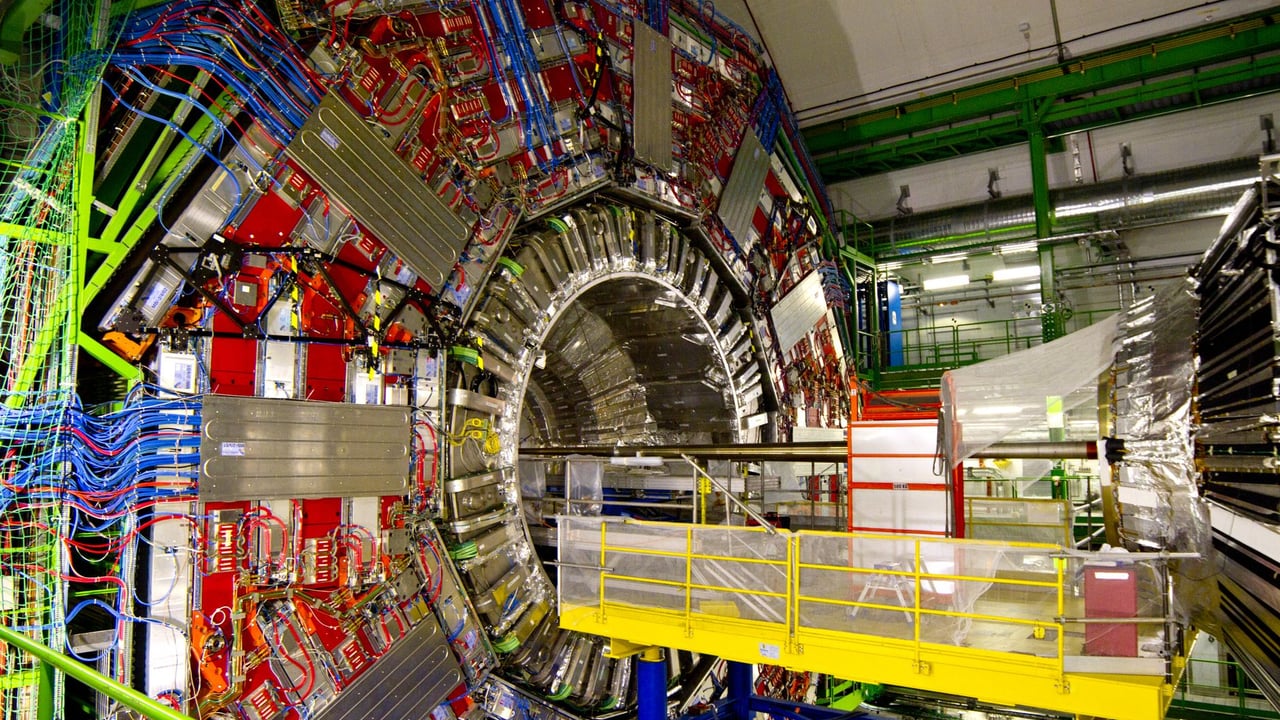
Photo by Ramaz Bluashvili on Pexels
The Brief
China is accelerating research and infrastructure development across its controlled nuclear fusion installations as researchers push toward the burning plasma phase. With key magnetic confinement facilities operating in Chengdu and Hefei, state institutes report crossing prolonged high-temperature operational thresholds. Scientists target 2027 for burning plasma experiments on the Huanliu-3 tokamak, positioning fusion as a zero-carbon, meltdown-safe baseload power solution while construction begins on next-generation compact experimental facilities.
Why it matters
Commercial nuclear fusion promises an abundant, carbon-free energy source relying on widely available isotopes like deuterium. Successful deployment would provide high-output baseload power without long-lived high-level radioactive waste or catastrophic meltdown hazards, fundamentally altering global industrial energy structures and decoupling economic growth from fossil fuels.
China context
China has centered its magnetic confinement fusion research around state-backed platforms, led by the Southwestern Institute of Physics under China National Nuclear Corporation (CNNC) and the Institute of Plasma Physics under the Chinese Academy of Sciences. While major experimental tokamaks like EAST and Huanliu-3 continue setting operational records, domestic universities and private capital are entering the field to explore parallel technical approaches such as stellarators and magnetized target fusion.
Editor's View
EDITOR'S VIEW — Analysis and inference, not factual reporting.
China's fusion strategy follows a state-guided, incremental progression across six defined development stages, bridging basic laboratory physics with high-output engineering. By setting explicit mid-term targets—such as the 2027 burning plasma experimental milestone—state institutions are creating procurement pull for cryogenic, superconducting, and vacuum manufacturing sectors. However, the path from burning plasma to a net-electricity demonstration reactor remains long, fraught with unresolved materials-degradation challenges and high-density plasma control hurdles.
What to watch
- Progress of the Huanliu-3 installation toward scheduled 2027 burning plasma tests in Chengdu.
- System integration and construction milestones at the compact fusion energy experimental facility in Hefei.
- Private-sector technical trials and funding rounds focusing on alternative confinement routes such as stellarators and magnetized target fusion.
Key Takeaways
- 1China National Nuclear Corporation researchers frame fusion as an inherently safe energy source, noting fuel abundance where deuterium from one liter of seawater equals 300 liters of gasoline.
- 2The Huanliu-3 tokamak in Chengdu is scheduled to carry out burning plasma experimental research by 2027 following its dual-hundred-million-degree plasma milestones.
- 3The EAST facility in Hefei demonstrated a 1,000-second steady-state run at 100 million degrees Celsius as construction continues on a compact experimental fusion device.
- 4SWIP researchers delineate six developmental stages for commercial fusion, assessing that China is currently executing the third stage: burning experiments.
China is accelerating the construction and testing of controlled nuclear fusion facilities as part of a national push to develop clean, baseload energy capabilities. State scientific institutions are progressing through the primary phases required to transition laboratory plasma experiments toward engineering demonstration reactors, according to a report by People's Daily.
Nuclear fusion, which replicates the physical processes powering the sun by fusing light atomic nuclei under extreme temperature and pressure, offers significant safety and fuel-supply advantages over conventional energy sources. Duan Xuru, chief fusion scientist at China National Nuclear Corporation (CNNC), noted that deuterium extracted from one liter of seawater can generate fusion energy equivalent to burning 300 liters of gasoline. Unlike traditional fission systems, fusion reactors present no risk of runaway meltdowns because plasma reactions automatically cease when confinement parameters are disrupted, producing no greenhouse gas emissions and leaving no long-lived radioactive waste.
Domestic research is currently anchored by two primary state-run magnetic confinement tokamak platforms. In Chengdu, Sichuan Province, the Huanliu-3 tokamak developed by the Southwestern Institute of Physics (SWIP) achieved sustained dual-temperature milestones exceeding 100 million degrees Celsius, with researchers planning to initiate burning plasma experiments by 2027. Meanwhile, in Hefei, Anhui Province, the Experimental Advanced Superconducting Tokamak (EAST) operated by the Chinese Academy of Sciences reached a 100-million-degree steady-state run lasting over 1,000 seconds, as construction proceeds on a compact fusion energy experimental facility.
According to Xiao Guoliang, head of an experimental research division at SWIP, commercial fusion requires six developmental stages: principle exploration, scale experiment, burning experiment, experimental reactor, demonstration reactor, and commercial reactor. Xiao stated that China has entered the burning experiment phase, possessing the required plasma density and hardware conditions to conduct testing. While tokamak confinement remains the leading track, Chinese research institutes, universities, and private-sector entrants are also exploring alternative configurations, including stellarators and magnetized target fusion.
Sources
- 让“人造太阳”照进现实(深度观察·未来产业里的向“新”力) --经济·科技--人民网 — People's Daily · 8/24/2026