
Technology & AIAnalysis
Beijing Robotics Industry Reaches 51.8 Billion Yuan as Delivery Volumes Surge
Targeted tax relief and embodied AI demand accelerate commercial scale for Chinese humanoid systems and dexterous components.
Share
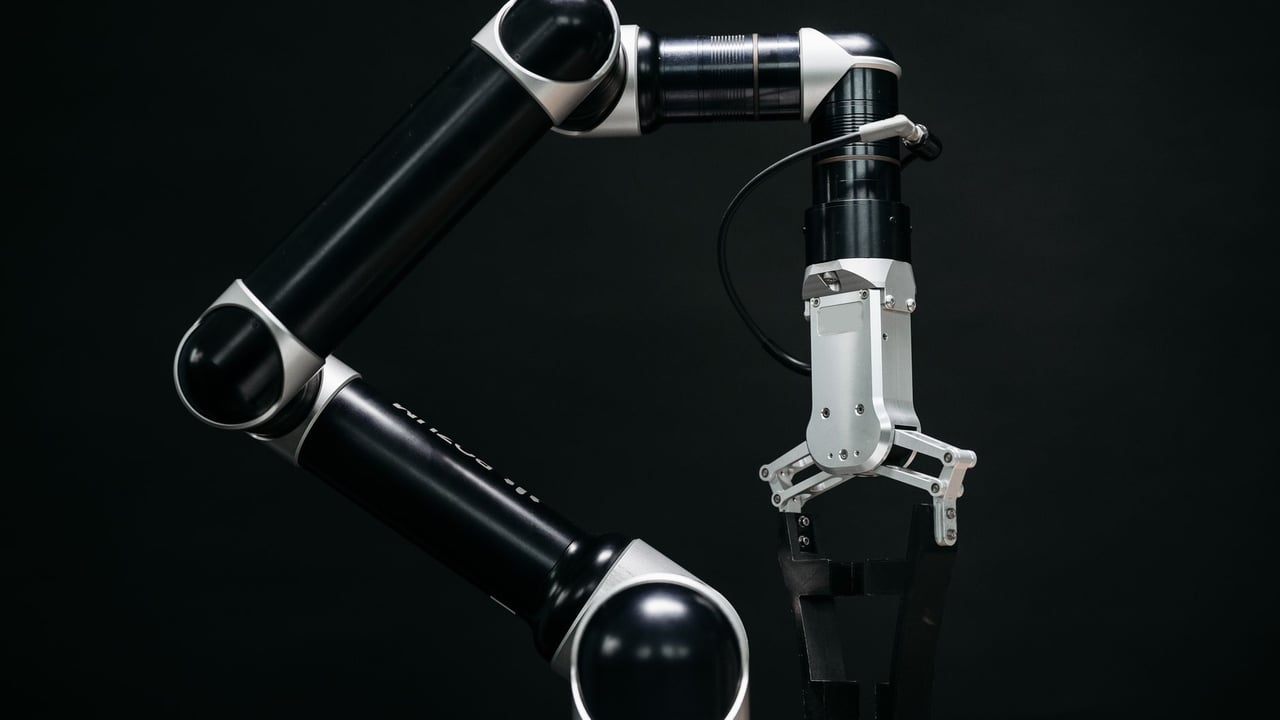
Photo by Pavel Danilyuk on Pexels
The Brief
Beijing's robotics industry saw revenues surge from 15 billion yuan in 2023 to 51.8 billion yuan in 2025, driven by rapid commercialization across both specialized components and full-system humanoid platforms. According to Ministry of Industry and Information Technology data reported by People's Daily, revenue across major Chinese robotics enterprises rose 26.9% year-on-year to exceed 90 billion yuan in the first five months of 2026. Domestic firms are ramping up global shipments to academic and industrial clients, bolstered by municipal tax incentives and specialized research and development compliance support.
Why it matters
The transition of Chinese humanoid robotics from laboratory demonstrations to volume manufacturing indicates that core electromechanical components, such as multi-fingered dexterous hands, are achieving commercial maturity. Expanding international research deployments also positions Chinese hardware suppliers deeper within global embodied AI supply chains.
China context
Beijing currently hosts over 30 full-system robotics manufacturers, representing more than 20% of the national total. Under municipal initiatives to establish an international science and technology innovation center, local tax authorities in districts such as Haidian and Shijingshan have implemented targeted lifecycle compliance and R&D super-deductions to prepare emerging hardware makers for capital market listings and overseas expansion.
Editor's View
EDITOR'S VIEW — Analysis and inference, not factual reporting.
The commercial traction reported by Chinese robotics manufacturers reflects an effective combination of rapid domestic hardware iteration and integration with advanced computing platforms, such as Nvidia's Thor processor. While volume deliveries to universities and research institutions provide immediate revenue, the long-term sustainability of the sector will depend on scaling deployment into high-value industrial and service environments.
What to watch
- Commercial adoption rates for dexterous manipulation hardware in manufacturing and logistics settings
- Product launches and cross-border partnership announcements at the 2026 World Robot Conference
- Expansion of export volume and compliance management among Chinese humanoid hardware startups
Key Takeaways
- 1Beijing's robotics revenue reached 51.8 billion yuan in 2025, up from 15 billion yuan in 2023 at an 85% compound annual growth rate.
- 2China's major robotics enterprises generated over 90 billion yuan in revenue from January to May 2026, up 26.9% year-on-year.
- 3Inspire-Robots delivered over 10,000 dexterous robotic hands in 2025, while Booster Robotics completed deliveries of over 1,000 humanoid robots across 20 countries.
- 4Local tax bureaus are providing stage-specific compliance and deduction support to prepare hardware startups for overseas expansion and capital market access.
China's robotics sector is accelerating its shift from experimental testing to commercial deployment, propelled by expanding industrial demand and government policy support. According to figures from the Ministry of Industry and Information Technology reported by People's Daily, operating revenue for Chinese robotics enterprises above designated size surpassed 90 billion yuan ($12.5 billion) in the first five months of 2026, marking a 26.9% increase year-on-year.
Beijing has emerged as a central hub in this expansion. Liu Weiliang, deputy director of the Beijing Municipal Bureau of Economy and Information Technology, stated that the city's robotics revenue expanded from 15 billion yuan in 2023 to 51.8 billion yuan in 2025, reflecting a compound annual growth rate above 85%. The capital now hosts more than 30 complete-system robotics manufacturers, accounting for over a fifth of the nationwide total.
This growth is visible across both component specialists and humanoid platform makers. Beijing-based Inspire-Robots delivered over 10,000 units of its five-fingered dexterous robotic hand in 2025, setting a new commercial milestone for the product category. The component is designed to handle delicate manipulation tasks across varied materials, bridging precision assembly requirements in advanced manufacturing.
Simultaneously, full-system humanoid developers are broadening their international footprint. By the end of 2025, Booster Robotics had delivered more than 1,000 humanoid units across academic and research institutions in over 20 countries. The company's athletic models, such as the Booster T2 powered by Nvidia's Thor chip, have demonstrated high-speed dynamic control during multi-agent athletic demonstrations.
Municipal tax authorities have played an active role in facilitating this commercial transition. Local tax offices in Beijing's Haidian and Shijingshan districts have deployed targeted advisory programs covering research and development expense deductions, preferential 15% corporate income tax rates for high-tech enterprises, and export tax rebates. Company executives noted that structured tax compliance across research, procurement, and production systems has become essential for securing institutional financing, executing corporate restructuring, and preparing for initial public offerings.
Sources
- “政策+市场”驱动 机器人“加速跑”--经济·科技--人民网 — People's Daily · 8/18/2026