
Policy & RegulationAnalysis
China Tailors Field Strategies Across Grain Hubs Ahead of Autumn Harvest
With less than a month before harvest, major agricultural regions deploy yield technologies and disaster relief to secure seasonal output.
Share
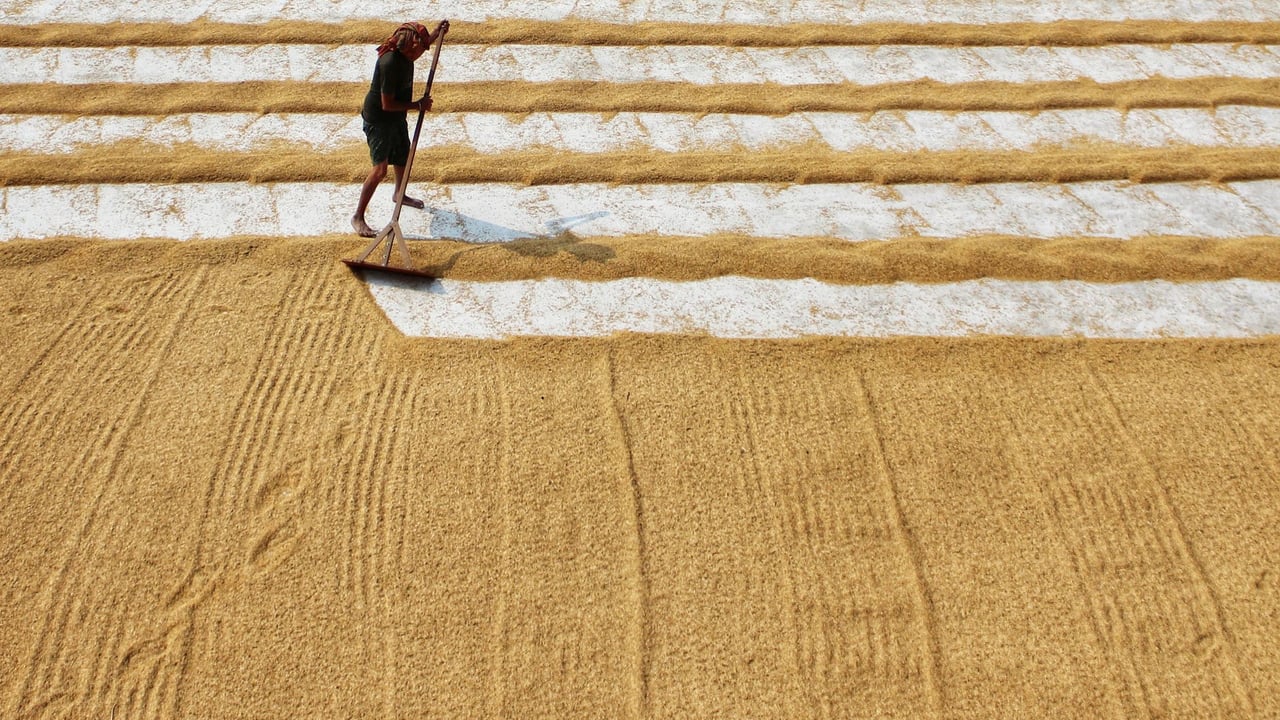
Photo by Dibakar Roy on Pexels
The Brief
China's major grain-producing regions are tailoring field management strategies to secure autumn crop yields as most crops enter the grain-filling stage, according to People's Daily citing agricultural authorities. Autumn grain acreage is projected to remain steady with a slight increase, and crop growth remains generally favorable outside localized disaster zones. In response to recent flooding and typhoon-related pest risks, local authorities across key provinces are combining water-fertilizer integration, high-ridge planting, disaster relief funds, and drone inspections to protect crop health ahead of the nationwide harvest.
Why it matters
Autumn grain accounts for the bulk of China's annual grain output, making the final pre-harvest month critical for national food security. By demonstrating localized technical support and financial relief in weather-hit areas, authorities aim to stabilize production expectations and mitigate supply risks.
China context
Beijing has prioritized large-scale yield improvements for staple grain and oil crops alongside rapid fiscal disaster relief. When heavy rainfall or extreme weather strikes, the coordination between central disaster relief funds, agronomic task forces, and precision machinery forms a cornerstone of China's agricultural risk mitigation framework.
Editor's View
EDITOR'S VIEW — Analysis and inference, not factual reporting.
The operational response across Shandong, Heilongjiang, and Henan illustrates Beijing's dual focus on technological intensification and reactive disaster control. While agronomic innovations like expanded water-fertilizer integration and wider ridge spacing demonstrate long-term efficiency gains, the immediate harvest outlook still hinges on mitigating late-season pest pressures and extreme weather events across the southern rice belts and the Huang-Huai-Hai plain.
What to watch
- The actual impact of late-season typhoons and elevated pest activity in southern rice regions and the Huang-Huai-Hai plain.
- Progress on post-disaster crop recovery and replanting assessments in central Henan and other flood-impacted farmland.
- Official final yield forecasts and preliminary autumn harvest figures from the Ministry of Agriculture and Rural Affairs.
Key Takeaways
- 1National autumn grain acreage is projected to remain steady with a slight increase, with most crops currently in the grain-filling stage.
- 2Integrated water-fertilizer technology reached 9.3 million mu in Shandong and continues expanding nationwide beyond last year's 88 million mu.
- 3Central Henan deployed six expert groups and 91.9 million yuan in central disaster relief funds to rehabilitate flood-damaged fields using agricultural drones.
- 4Typhoons and high humidity have increased disease and pest risks across the southern rice belt and the Huang-Huai-Hai region, prompting targeted foliar spray campaigns.
China's major grain-producing provinces have entered the final stretch before the autumn harvest, deploying targeted field management to counter recent adverse weather and secure grain yields, according to a report by People's Daily citing data from the Ministry of Agriculture and Rural Affairs.
Most of the nation's autumn crops are currently in the grain-filling stage. Agricultural monitoring indicates that autumn grain acreage is expected to remain steady with a slight expansion this year, and overall crop growth remains largely positive outside localized disaster-affected regions.
With less than a month remaining before large-scale harvesting begins, regional governments are implementing differentiated agronomic techniques to raise yields per unit area. In Shandong, integrated water-and-fertilizer irrigation systems have been rolled out across 9.3 million mu (about 620,000 hectares), driving visible yield improvement trends. Nationwide, the adoption of integrated water and fertilizer technology has continued to expand after reaching 88 million mu in the previous year.
Structural field adjustments are also being tested in northeastern hubs. In Baoqing County, Heilongjiang Province, farmers widened standard 65-centimeter cultivation ridges to 110-centimeter broad ridges. Local assessments indicate that this modification allows denser and more even plant distribution while improving the utilization of sunlight, heat, water, and fertilizer compared to neighboring plots.
Simultaneously, disaster recovery operations are underway in regions impacted by heavy rainfall. In central Henan, where flooding damaged fields, local authorities deployed six expert working groups and leveraged 91.9 million yuan ($12.9 million) in central agricultural disaster relief funds to restore production. In Luohe, multispectral imaging drones conducted field inspections over damaged plots to detect plant stress, followed by agricultural drone spraying to curb the emergence and spread of pests and diseases.
Agricultural authorities noted that elevated risks of pests and crop diseases persist across southern rice-producing hubs and the Huang-Huai-Hai plain due to frequent typhoons and sustained hot, humid conditions. In response, the Ministry of Agriculture and Rural Affairs is directing regional teams to execute pest prevention measures and apply foliar sprays, aiming to safeguard crop maturity before harvest operations commence.
Sources
- 秋粮主产区分类施策 全力夺取丰收--经济·科技--人民网 — People's Daily · 9/3/2026