
Policy & RegulationAnalysis
China Issues Guidelines to Upgrade Traditional Craft and Heritage Sectors
Six state agencies aim to build 10-billion-yuan enterprises and modern industrial clusters across tea, porcelain, and silk.
Share
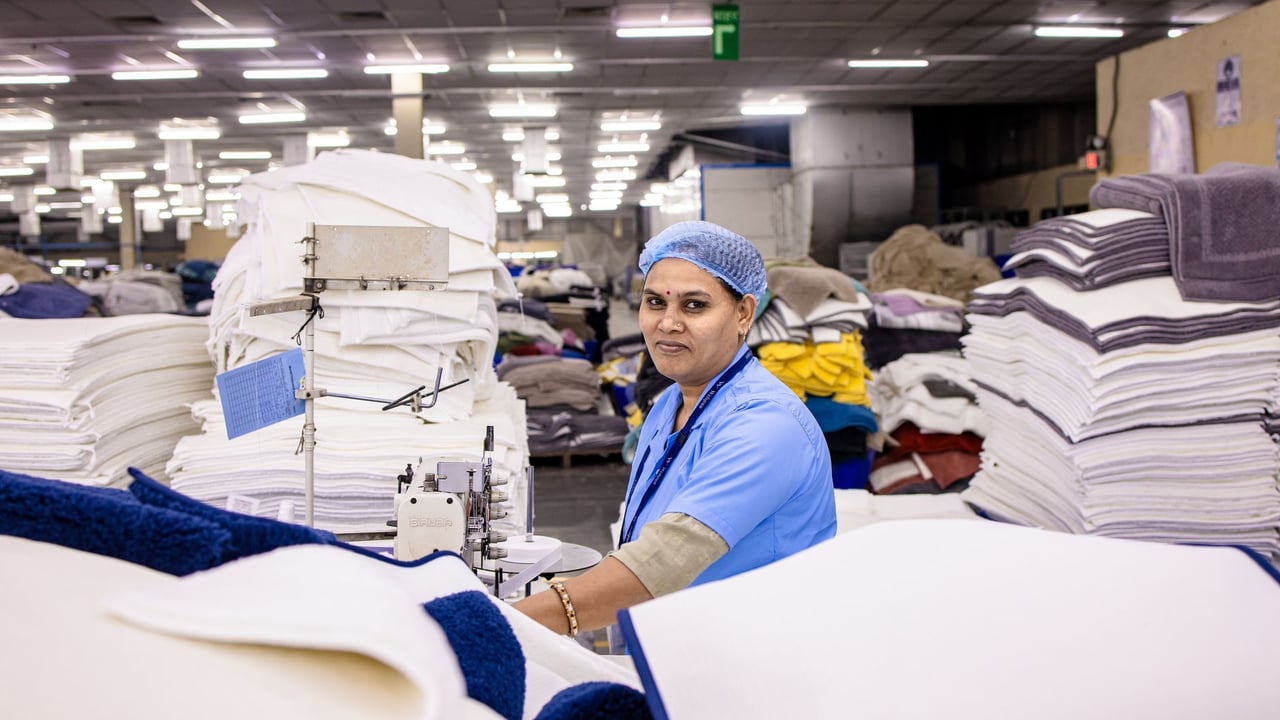
Photo by EqualStock IN on Pexels
The Brief
Six Chinese government ministries have issued a joint policy guideline to modernize the country's historical and classic industries, spanning silk, tea, porcelain, traditional Chinese medicine, and brewing. According to official media, the designated sectors generate approximately 8 trillion yuan annually across 25,000 major enterprises. The initiative establishes concrete benchmarks: by 2028, authorities plan to cultivate 50 leading firms with annual revenues exceeding 10 billion yuan each, establish 100 well-known consumer brands, and build several 100-billion-yuan clusters. By 2030, the policy seeks to advance these domestic sectors toward the higher end of global value chains through technological adaptation and cluster-based planning.
Why it matters
China's historical and heritage industries encompass critical traditional manufacturing fields that support regional economies, rural revitalization, and nearly 3.5 million jobs. Historically constrained by fragmented production, homogeneous competition, and brand underdevelopment, these sectors are now being steered into coordinated national industrial policy. Upgrading them with digital manufacturing and brand protections aims to transform cultural assets into higher-value consumer engines domestically and internationally.
China context
The policy aligns with broader state agendas combining domestic consumption expansion, rural economic vitality, and cultural confidence. Historical industries such as ceramic craft and traditional medicine have frequently received individual political attention, but this cross-agency directive integrates production, employment, agriculture, and market oversight under a unified modernization framework to eliminate regional overlaps and stimulate advanced manufacturing practices.
Editor's View
EDITOR'S VIEW — Analysis and inference, not factual reporting.
The joint release by the Ministry of Industry and Information Technology, the Ministry of Commerce, the Ministry of Culture and Tourism, and three other bodies signals an intent to manage traditional crafts as strategic industrial assets rather than mere museum pieces. The dual focus on adopting digital tools like 'digital workshops' alongside geographical-origin protections shows that policymakers want to scale traditional manufacturing while preserving brand distinctiveness. However, bridging modern industrial standardization with artisanal heritage presents inherent execution hurdles, particularly in keeping regional governments from over-investing in competing, duplicative clusters.
What to watch
- Follow-up operational guidelines and specific sector-by-sector support catalogs released by the Ministry of Industry and Information Technology.
- Official lists announcing the selection of first-batch leading enterprises and designated hundred-billion-yuan cluster demonstrations.
- The progress of regional industrial corridors connecting silk, tea, and ceramic manufacturing hubs.
Key Takeaways
- 1Six Chinese ministries released a State Council-approved guideline to develop traditional heritage industries, covering silk, porcelain, tea, Chinese medicine, and brewing.
- 2Targeted sectors currently generate around 8 trillion yuan in annual revenue across roughly 25,000 enterprises above designated size, employing nearly 3.5 million people.
- 3By 2028, the policy targets the creation of 50 firms with 10-billion-yuan revenue, 100 top consumer brands, and several 100-billion-yuan clusters.
- 4By 2030, the guideline aims to position Chinese heritage brands in the mid-to-high end of global value chains.
- 5The plan outlines 20 tasks across five pillars, focusing on digital workshops, green transition, regional coordination, and global market expansion.
Six Chinese central government departments have released a comprehensive policy guideline aimed at modernizing and scaling the nation's traditional heritage industries, according to state media reports. The document, approved by the State Council, outlines targets to upgrade sectors including silk, tea, ceramics, traditional Chinese medicine, brewing, arts and crafts, and stationery.
According to an official policy interpretation published by Xinhua, the historical classic industries encompass approximately 25,000 enterprises above designated size, employ nearly 3.5 million workers, and generate an aggregate annual operating revenue of roughly 8 trillion yuan. Despite their economic footprint, policymakers noted that these sectors face structural challenges, including inadequate top-level planning, lagging brand equity, shallow cross-sector integration, and talent shortages.
To address these gaps, the directive establishes a two-phase roadmap. By 2028, authorities aim to nurture 50 anchor enterprises with annual revenues surpassing 10 billion yuan, develop 100 recognized Chinese consumer brands, and foster several regional industrial clusters valued at 100 billion yuan or more. By 2030, the initiative aims to guide these industries toward the mid-to-high end of global value chains by establishing world-class brands and internationally competitive enterprises.
The framework sets out 20 tasks organized into five broader categories. These include strengthening systematic planning, accelerating digital and intelligent transformation, deepening green manufacturing, cultivating supportive industry ecosystems, and expanding international market presence. Specific operational measures encourage regions to avoid duplicative construction and homogeneous competition by constructing coordinated 'industrial corridors' for silk, tea, and porcelain, alongside the adoption of 'studio plus digital workshop' production models.
The document was jointly issued by the Ministry of Industry and Information Technology, the Ministry of Human Resources and Social Security, the Ministry of Agriculture and Rural Affairs, the Ministry of Commerce, the Ministry of Culture and Tourism, and the State Administration for Market Regulation.
Sources
- 六部门发文推动历史经典产业高质量发展--经济·科技--人民网 — People's Daily · 9/7/2026
- 推动历史经典产业高质量发展 六部门联合印发意见 — China News Service · 9/7/2026
- 工信部等六部门联合印发《关于推动历史经典产业高质量发展的意见》 — Xinhua News Agency · 9/7/2026
- 五问+一图,读懂《关于推动历史经典产业高质量发展的意见》 — Xinhua News Agency · 9/7/2026