
Business & IndustryAnalysis
China's Electricity Market Trading Up 24.2% in First Half of 2026 as Green Power and Daily Spot Trading Expand
Market trading reached 3.68 trillion kWh in H1 2026, supported by continuous daily market openings across 19 provinces and record cross-regional peak transmission.
Share
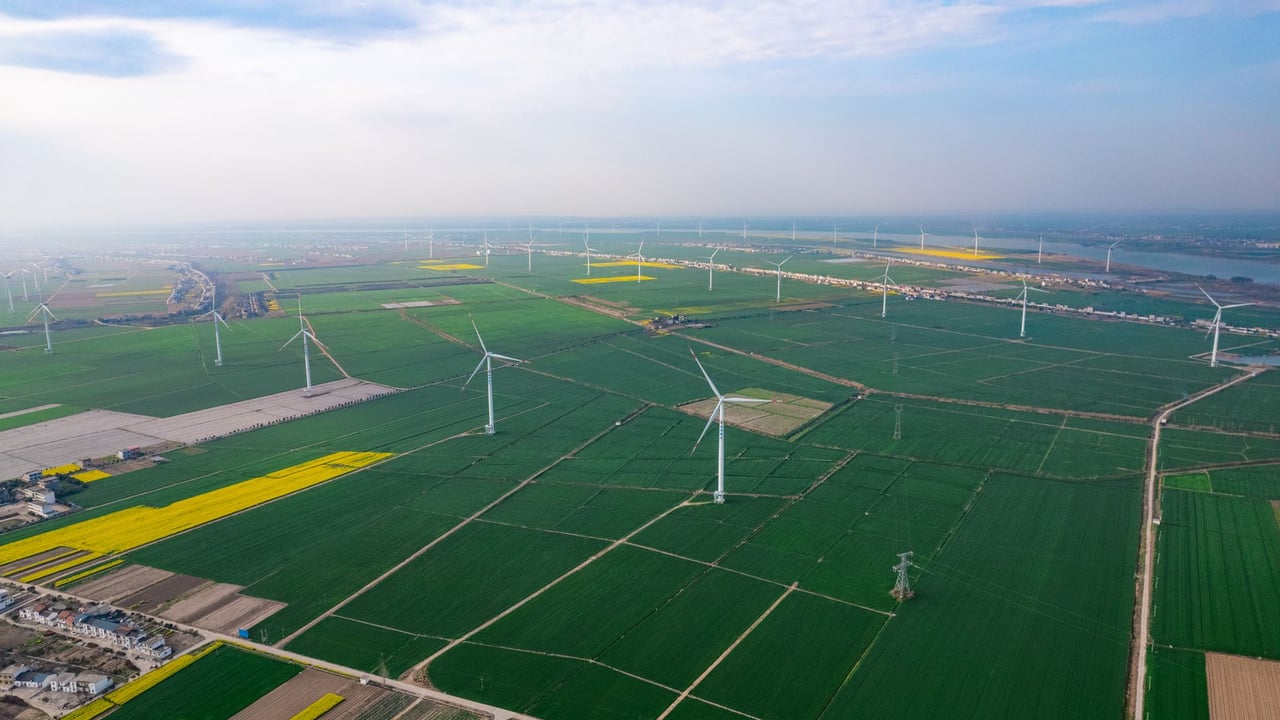
Photo by jason hu on Pexels
The Brief
China's national electricity market trading volume reached 3,684.8 billion kilowatt-hours in the first half of 2026, a 24.2% year-on-year increase, according to the National Energy Administration. Intra-provincial transactions grew 27.9% as renewable energy fully entered market operations, while cross-provincial trading expanded 12.1%. Medium- and long-term contracts accounted for 88.4% of total market volume, alongside growing spot and green power trading. Crucially, 19 provinces have instituted year-round daily market openings, allowing finer adjustments during summer peak demand.
Why it matters
The transition toward continuous, natural-day market openings and granular time-block trading significantly reduces imbalance risks caused by rapid weather and load shifts. By improving price discovery and operational flexibility, these market mechanisms bolster grid reliability during extreme summer demand spikes while accelerating renewable energy integration and advancing China's unified national power market.
China context
Under China's dual-carbon strategy and ongoing power sector reforms, regulators are blending medium- and long-term market anchors with real-time spot pricing mechanisms. Expanding cross-provincial power transfers allows energy-rich western and inland regions to supply industrial and urban centers, balancing localized supply deficits while absorbing expanding volumes of wind and solar capacity.
Editor's View
EDITOR'S VIEW — Analysis and inference, not factual reporting.
The expansion of daily trading windows across 19 provincial markets represents an important structural evolution in China's power market design. Transitioning medium- and long-term contracts from rigid monthly cycles to daily, time-block transactions narrows the operational gap between term contracts and spot markets. The key test moving forward will be harmonizing green power certificate trading with spot market price signals to ensure stable revenue models for renewable generators.
What to watch
- Grid performance and cross-regional transmission capacity during the remainder of the summer peak load season.
- The rollout speed of continuous 365-day daily market opening models to remaining provinces.
- Policy developments aligning green electricity and certificate trading with spot market dynamic pricing.
Key Takeaways
- 1Total electricity market trading in China reached 3,684.8 billion kWh in H1 2026, up 24.2% year-on-year.
- 2Intra-provincial trading rose 27.9% to 2,913.5 billion kWh, while cross-provincial/cross-regional trading increased 12.1% to 771.3 billion kWh.
- 3Medium- and long-term trading accounted for 88.4% of total market volume (3,256.8 billion kWh), while spot trading reached 428 billion kWh.
- 4Green power trading grew 6.6% year-on-year to reach 164.1 billion kWh.
- 5Nineteen provinces now operate 365-day continuous daily trading, facilitating record cross-regional transmission of up to 158 million kW during peak summer loads.
China's total electricity market trading volume reached 3,684.8 billion kilowatt-hours (kWh) in the first half of 2026, representing a year-on-year increase of 24.2%, according to National Energy Administration (NEA) official Zhang Xing at a press conference reported by People's Daily. Intra-provincial market transactions totaled 2,913.5 billion kWh—up 27.9% compared to the prior year—driven by the comprehensive market entry of renewable energy sources. Cross-provincial and cross-regional market trading reached 771.3 billion kWh, growing 12.1% year-on-year.
By transaction type, medium- and long-term (MLT) contracts continued to serve as the market anchor, accounting for 3,256.8 billion kWh or 88.4% of total market trading volume. Spot market transactions reached 428 billion kWh, providing real-time price discovery and supply-demand balancing mechanisms. Meanwhile, green electricity trading expanded to 164.1 billion kWh, up 6.6% year-on-year, reflecting growing demand for renewable power consumption among industrial and commercial users.
To support power security during peak demand periods, energy authorities have implemented continuous natural-day market operations. Nineteen provincial markets—including Shanxi, Shandong, and Zhejiang—alongside inter-provincial spot and regional mutual-aid mechanisms, now operate 365 days a year with daily openings. Previously, MLT trading occurred primarily on business days, leaving market players with limited flexibility to adjust contracts during sudden weekend weather or load changes.
Daily trading enables market participants to adjust positions closer to delivery, extending transactions from annual and monthly schedules into daily and time-block increments that integrate with spot markets. This operational flexibility proved vital during record national peak power loads on July 14 and July 16, when maximum cross-regional transmitted power hit record highs of 152 million kW and 158 million kW, respectively.
Sources
- 国家能源局答人民网记者问:上半年电力交易规模增长 绿电交易稳步提升--经济·科技--人民网 — People's Daily · 7/30/2026