
Technology & AIAnalysis
China's Humanoid Robotics Sector Speeds Up Supply Chain Integration
As annual manufacturing capacity targets reach tens of thousands of units, embodied AI shifts from laboratory concepts toward industrial mass production and ecosystem coordination.
Share
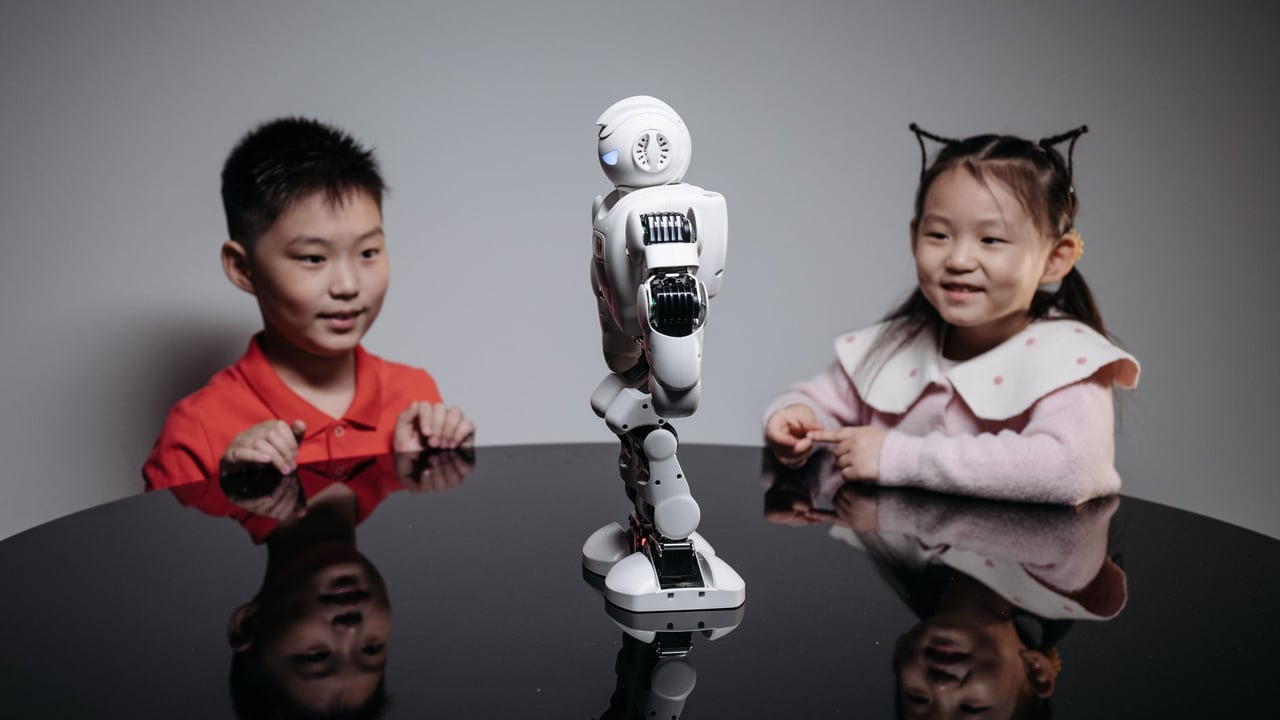
Photo by Pavel Danilyuk on Pexels
The Brief
China's humanoid robotics sector is accelerating its transition from experimental prototypes to mass industrial production. Driven by annual production capacity goals reaching the 10,000-unit scale, leading enterprises and local governments are strengthening supply chain synergies across upstream components and downstream applications. Key sectors including precision reducers, specialized motors, advanced materials, and embodied AI software are being integrated into regional industrial clusters, aiming to enhance localization rates and industrial standardization.
Why it matters
Humanoid robotics reaching an annual production capacity scale of 10,000 units marks a critical transition for embodied AI from research labs into commercial manufacturing. This shift establishes supply chain coordination as a core driver for scaling advanced technology.
China context
Amid national policy pushes for high-level technological self-reliance and advanced manufacturing, Chinese municipal authorities and industry leaders are establishing specialized industrial hubs. These efforts aim to lift traditional component suppliers—such as makers of precision reducers and motors—alongside emerging embodied software developers.
Editor's View
EDITOR'S VIEW — Analysis and inference, not factual reporting.
The transition toward mass production of humanoid robots highlights China's strategic attempt to leverage its existing hardware manufacturing base for next-generation artificial intelligence. While reaching target production capacities demonstrates engineering progress, the ultimate success of these industrial clusters will depend on real-world market adoption, component standardization, and cost efficiency across industrial applications.
What to watch
- Production capacity ramp-up schedules and actual order delivery rates at newly established facilities.
- Localization rates and performance benchmarks for core components like precision reducers and specialized motors.
- Progress on industrial standardization and unified testing frameworks for humanoid robotics deployment.
Key Takeaways
- 1Humanoid robot manufacturing facilities are targeting annual production capacities of 10,000 units.
- 2Local governments and enterprises are building integrated industrial clusters connecting upstream component makers with software developers.
- 3Key supply chain components include precision reducers, high-torque motors, advanced materials, and embodied AI software.
- 4Scalability will depend on reducing component costs, establishing industry standards, and securing commercial deployment orders.
China's humanoid robotics industry is accelerating its commercial expansion by fostering deeper integration across its upstream component suppliers and downstream enterprise users. As newly established manufacturing facilities target annual capacity scales reaching 10,000 units, the sector is rapidly transitioning beyond initial laboratory validation into a crucial phase of industrial scaling and ecosystem coordination.
Central to this acceleration is the structured alignment of local hardware and software supply chains. The manufacturing of humanoid platforms demands precise orchestration between sophisticated embodied artificial intelligence algorithms and high-precision mechanical components. To meet these technical requirements, leading robotics developers and regional municipal authorities are constructing specialized industrial clusters. These hubs aim to tightly link core component makers—including suppliers of precision reducers, specialized high-torque motors, sensor systems, and advanced composite materials—with software teams and downstream system integrators.
This collaborative industrial model directly addresses historical friction points that previously slowed commercial deployment. By establishing geographic proximity between component manufacturers and software engineers, iteration cycles for hardware modifications are significantly compressed, and tailored adaptations for specific industrial environments become more feasible. Furthermore, cultivating robust regional supplier networks aligns with broader domestic policy priorities regarding high-level technological self-reliance and modern industrial modernization.
Despite this operational momentum, transitioning from small-batch prototypes to mass production at a scale of 10,000 units introduces notable engineering and supply chain hurdles. Industry participants must ensure high component reliability, lower cumulative manufacturing costs, and adopt unified quality standards across disparate suppliers. Observers note that production capacity expansion must ultimately be validated by sustained commercial demand across practical applications such as factory automation, warehouse logistics, and specialized field operations.
As regional manufacturing clusters continue building out their supply chain networks, close coordination between component vendors and assembly leaders will serve as a major test of market readiness. The coming years will reveal whether these integrated supplier ecosystems can convert ambitious production targets into long-term commercial viability.
Sources
- 带着上下游,人形机器人加速跑起来 — China News Service · 7/28/2026