
Business & IndustryAnalysis
China July Home Prices Show Divergence as Top-Tier Resales Stabilize
NBS data indicates resale prices in first-tier cities rose for a fifth month, while smaller cities faced ongoing price declines.
Share
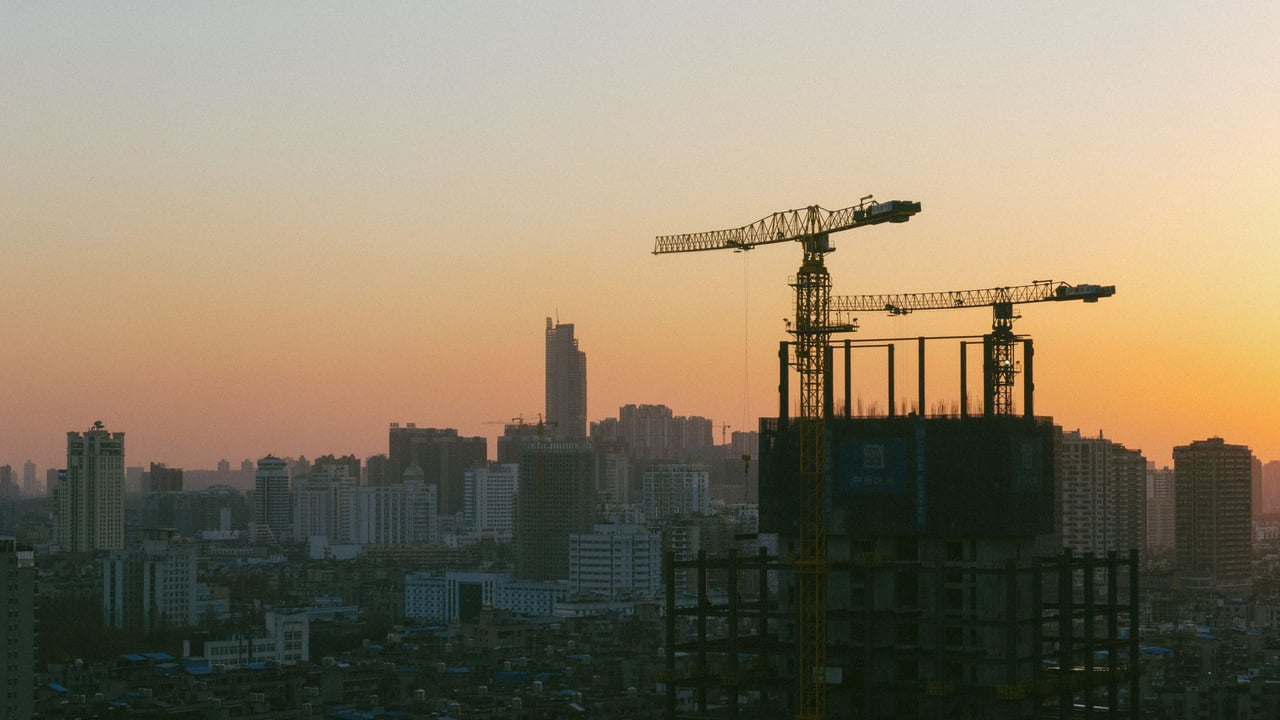
Photo by Leon Huang on Pexels
The Brief
Official data released by the National Bureau of Statistics showed mixed performance across China's property market in July, marked by a seasonal slowdown and widening divergence among city tiers. While new home prices across 70 tracked cities saw fewer gainers, first-tier resale housing registered its fifth consecutive month of month-on-month gains, rising 0.2%. Guangzhou and Shanghai led the resale upturn, whereas new and existing home prices in lower-tier cities continued to contract, underscoring uneven recovery dynamics.
Why it matters
The resilience of existing home prices in core first-tier cities provides an early indicator of bottoming sentiment in China's critical real estate sector. However, the widening gap between top metropolitan hubs and lower-tier cities highlights that national real estate stabilization remains fragile, with demand concentrated primarily in high-tier markets benefiting from upgrading buyers.
China context
China's property market remains in a structural transition aimed at inventory destocking and high-quality development. Although central and municipal authorities have rolled out support measures targeting rigid and upgrading housing demand, market momentum remains fragmented. Top-tier cities with resilient local economies and strong purchasing power are finding a floor, while third-tier and smaller cities face persistent inventory overhangs and slower demand absorption.
Editor's View
EDITOR'S VIEW — Analysis and inference, not factual reporting.
The July data reflects a market driven by selective demand rather than broad-based revival. The steady, five-month sequential rise in top-tier resale prices indicates that price adjustments in major metros have begun to clear transactions, especially among owner-occupiers seeking improved housing. Nevertheless, policymakers will need to monitor whether this core-city stabilization can spill over into broader second- and third-tier markets as developer liquidity and regional inventory pressures persist.
What to watch
- Whether the sequential price recovery in first-tier resale housing extends into core second-tier metropolitan areas in coming months.
- Property sales performance and launch volumes during the upcoming peak autumn buying season.
- Potential rollout of additional credit and purchase easing measures by regional governments to support upgrading housing demand.
Key Takeaways
- 1Resale home prices in first-tier cities rose 0.2% month-on-month in July, marking a fifth consecutive month of sequential price growth.
- 2New home prices in first-tier cities were flat on average month-on-month, as gains in Shanghai, Guangzhou, and Shenzhen balanced a decline in Beijing.
- 3The total number of cities reporting month-on-month new home price increases fell from 20 to 17, with Hangzhou recording the fastest pace at 0.3%.
- 4Year-on-year price contractions narrowed across both new and resale segments in first- and second-tier cities.
- 5Lower-tier markets continued to face headwinds, with third-tier new and resale prices contracting 0.3% and 0.4% month-on-month, respectively.
China's property market exhibited pronounced structural divergence in July, as home prices in top metropolitan centers stabilized while smaller cities continued to face downward pressure, according to data published by the National Bureau of Statistics (NBS) and reported by Securities Times.
The monthly survey of 70 large and medium-sized cities revealed that fewer municipalities registered month-on-month price increases in July, reflecting a typical mid-summer seasonal lull. In the new home segment, 17 cities recorded month-on-month price growth, down by three cities compared to the previous month. Hangzhou led all cities with a 0.3% sequential increase, followed by Changchun, Shanghai, Shenzhen, and Yangzhou, which each logged a 0.2% gain. Across first-tier cities—Beijing, Shanghai, Guangzhou, and Shenzhen—new home prices remained flat on average from June, with modest gains in Shanghai, Guangzhou, and Shenzhen offset by a 0.3% decline in Beijing. Second-tier new home prices slipped 0.1% month-on-month, while third-tier cities experienced a 0.3% decline.
On an annual basis, year-on-year declines in new home prices moderated in higher-tier markets. First-tier new home prices dropped 1.1% year-on-year, narrowing by 0.2 percentage points from June, driven by a 3.0% annual expansion in Shanghai. Second-tier new home prices fell 2.8% year-on-year, an improvement of 0.3 percentage points, while third-tier prices decreased by 4.2%.
The secondary market showed clearer signs of transactional stabilization in key hubs. Resale home prices in first-tier cities advanced 0.2% month-on-month, marking their fifth straight month of sequential increases. Guangzhou posted the highest resale gain at 0.4%, followed by Shanghai at 0.3%, and Shenzhen and Xuzhou at 0.2%, while Beijing was unchanged. Across the 70 cities, five posted month-on-month resale price gains, down by four cities from June. Second- and third-tier resale prices fell by 0.3% and 0.4% month-on-month, respectively.
Year-on-year resale declines also continued to contract in major cities. First-tier resale prices fell 3.7% compared to the prior year, narrowing the pace of decline by 1.2 percentage points, while second- and third-tier markets saw year-on-year drops of 5.1% and 5.8%, respectively. Market analysts cited in domestic reports noted that while tier differentiation remains entrenched, core urban centers are demonstrating firmer price support underpinned by local residential upgrading demand.
Sources
- var title1 = '2026年7月份70个大中城市商品住宅销售价格变动情况'; var title2 = ''; var title3 = ''; if (title1.length > 0 && title2.length > 0 && title3.length > 0) { document.write( '2026年7月份70个大中城市商品住宅销售价格变动情况</br></br>' ); } else if (title1.length > 0 && title2.length > 0) { document.write( '2026年7月份70个大中城市商品住宅销售价格变动情况</br>' ); } else { document.write('2026年7月份70个大中城市商品住宅销售价格变动情况'); } — National Bureau of Statistics · 8/17/2026
- 7月房价数据出炉!杭州新房价格环比涨幅第一,广州二手房价环比涨幅居前 — Securities Times · 8/17/2026