
Business & IndustryAnalysis
Airbus Forecasts China Will Require Over 8,800 New Passenger Jets by 2045
European planemaker projects China will account for more than a fifth of global commercial deliveries as regional demand expands.
Share
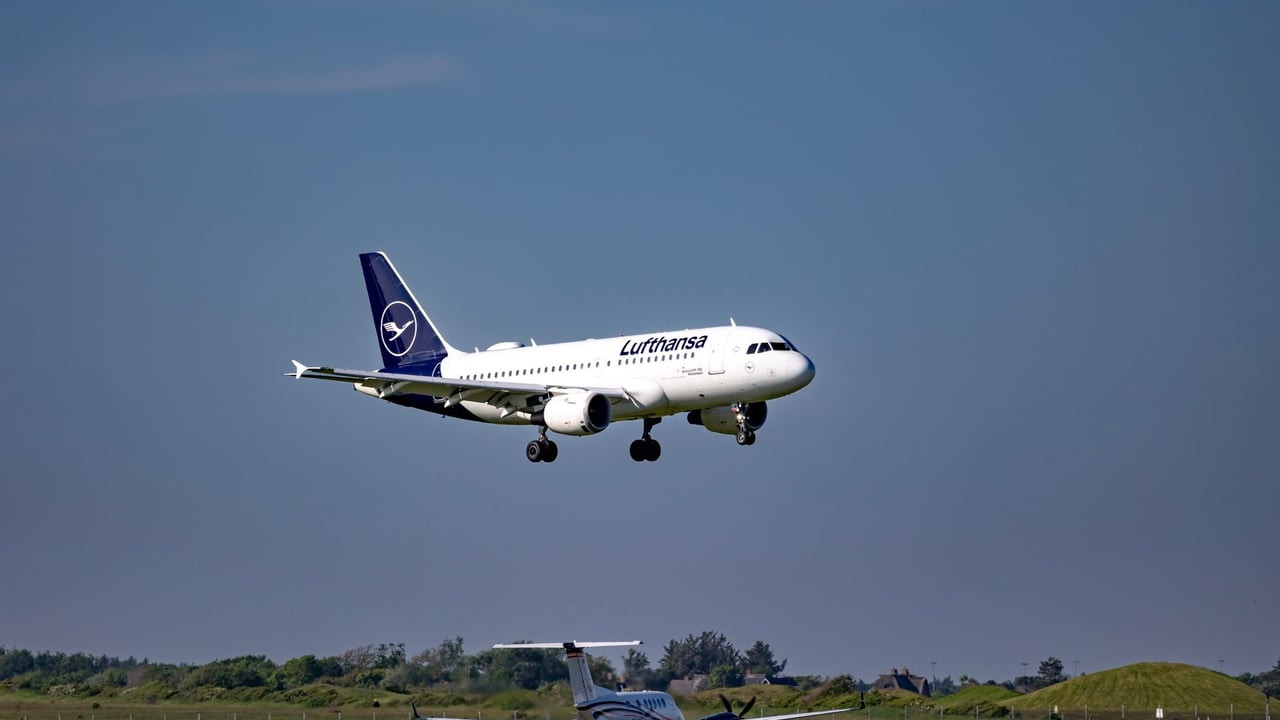
Photo by Joerg Mangelsen on Pexels
The Brief
China will require 8,830 new commercial passenger aircraft over the next two decades, representing more than 20 percent of total worldwide demand, according to an Airbus global market forecast reported by People's Daily. Driven by urbanization and a growing middle class, China's in-service commercial passenger fleet is projected to reach 9,860 aircraft by 2045. The forecast anticipates passenger turnover will increase at an average annual rate of 5.2 percent, accompanied by a major fleet modernization push to replace older models with fuel-efficient, new-generation jets.
Why it matters
China's sustained demand for commercial passenger aircraft makes it an essential anchor for international aerospace manufacturers and supply chains. With Airbus projecting that the country will represent over a fifth of all global aircraft deliveries through 2045, long-term procurement and delivery schedules in China will directly influence manufacturing backlogs, engine programs, and aftermarket service revenue worldwide.
China context
Aviation expansion in China is increasingly shifting beyond major hub cities into secondary and lower-tier regional markets. As domestic carriers build out regional flight corridors, flying is transitioning into routine transportation for a larger share of the population. Simultaneously, civil aviation regulators and airlines are aligning fleet renewals with national decarbonization targets, accelerating the phase-out of older aircraft.
Editor's View
EDITOR'S VIEW — Analysis and inference, not factual reporting.
The Airbus projections underscore a dual imperative driving Chinese airlines: expanding capacity to serve underconnected regional markets while aggressively retiring older jets to cut emissions and operating costs. While headline fleet growth figures are substantial, the forecast that over 35 percent of new deliveries will serve as replacements demonstrates that efficiency and emissions management, rather than unconstrained expansion, will govern airline balance sheets over the coming decade.
What to watch
- Carrier route additions and seat capacity deployment across secondary and tertiary regional airports.
- Airbus delivery rates and assembly activity at its Chinese manufacturing facilities.
- The pace at which Chinese airlines retire older airframes to reach the projected 70 percent new-generation fleet share by 2035.
Key Takeaways
- 1Airbus projects China will take delivery of 8,830 new passenger planes over the next 20 years, over 20 percent of the global total of 42,060.
- 2China's total in-service passenger fleet is forecast to reach 9,860 aircraft by 2045.
- 3Domestic revenue passenger kilometers are projected to grow at a 5.2 percent compound annual rate between 2025 and 2045.
- 4More than 35 percent of new deliveries—3,070 aircraft—will replace aging aircraft rather than add net capacity.
- 5The share of new-generation models in China's fleet is expected to jump from 30 percent in 2025 to roughly 70 percent by around 2035.
China's commercial aviation sector will require 8,830 new passenger aircraft over the next 20 years, accounting for more than 20 percent of global demand, according to a long-term forecast released by European planemaker Airbus and reported by People's Daily.
The manufacturer estimates that worldwide demand will reach 42,060 new passenger aircraft over the two-decade span. In China, passenger traffic measured in revenue passenger kilometers is projected to expand at a compound annual rate of 5.2 percent, rising from 1.7 trillion in 2025 to 4.6 trillion by 2045. Over the same horizon, annual per capita flights among Chinese travelers are expected to nearly triple, moving from 0.5 to 1.4.
To accommodate this volume, Airbus projects China's operational commercial passenger fleet will expand to 9,860 aircraft by 2045. Meeting that operational scale will require the delivery of 7,480 new single-aisle aircraft and 1,350 wide-body jets. Growth will not rely solely on net additions: while 4,960 single-aisle and 800 wide-body aircraft are slated for fleet expansion, approximately 3,070 planes—comprising 2,520 single-aisle and 550 wide-body aircraft—will replace older, less efficient airframes. Replacements represent over 35 percent of anticipated Chinese demand.
This fleet turnover aligns with broader efforts across the industry to curb fuel consumption and lower operational expenses. Airbus expects the proportion of new-generation aircraft in China's commercial fleet to rise from roughly 30 percent in 2025 to approximately 70 percent around 2035.
Domestic carriers are simultaneously restructuring their route networks. In addition to defending trunk routes between top-tier hubs, Chinese airlines have increasingly added regional routes linking lower-tier cities, broadening access to commercial aviation. According to People's Daily, nearly 30 mainstream domestic carriers maintained steady fleet expansion through late August 2026, with advanced aircraft models representing more than half of active passenger capacity.
Sources
- 我国民航业展现较强韧性 出行市场增长势能持续释放--经济·科技--人民网 — People's Daily · 9/9/2026