
Technology & AIAnalysis
China Launches 25th Group of Low-Earth Orbit Internet Satellites
A Long March 12 rocket deployed the payload from the Hainan commercial spaceport, continuing constellation assembly.
Share
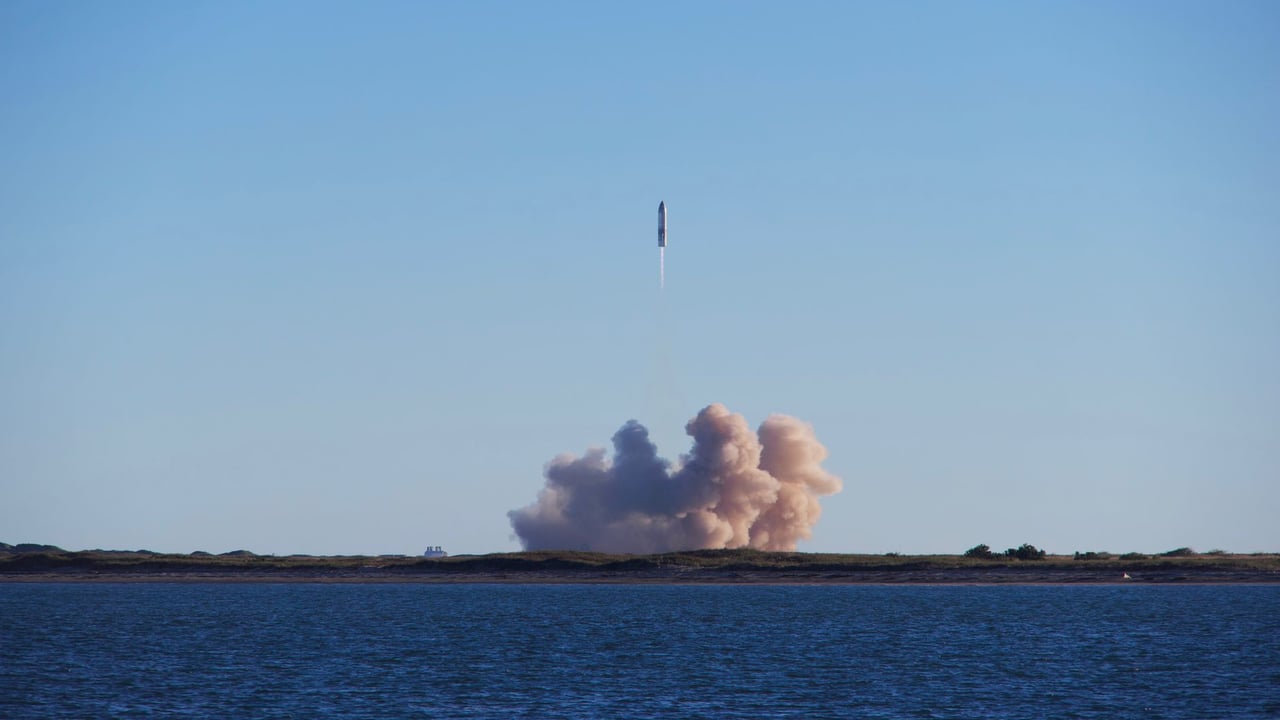
Photo by Forest Katsch on Pexels
The Brief
China successfully launched its 25th group of low-Earth orbit internet satellites on September 17, 2026, using a Long March 12 carrier rocket. Lift-off occurred at 8:32 a.m. Beijing time from the Hainan Commercial Aerospace Launch Site in Wenchang. According to Chinese state media, the satellites reached their predetermined orbits smoothly, marking another routine deployment mission as the country expands its satellite broadband infrastructure.
Why it matters
The mission demonstrates ongoing operational progress in assembling China's national low-Earth orbit broadband constellation. Relying on the Hainan Commercial Aerospace Launch Site alongside the Long March 12 medium-lift booster highlights Beijing's focus on developing flexible, commercialized launch capacity to sustain high-cadence constellation deployments.
China context
Satellite internet is designated as a key sector within China's national 'new infrastructure' strategy. Securing orbital slots and spectrum allocations registered with international regulators requires a rapid, reliable launch tempo, which has driven the development of dedicated commercial launch facilities and newer liquid-fueled launchers tailored for batch satellite deployment.
Editor's View
EDITOR'S VIEW — Analysis and inference, not factual reporting.
The deployment of Group 25 reflects an operational pivot toward regularized, logistics-style satellite launches. While official dispatches omitted detailed payload specifications and the precise spacecraft count within the group, utilizing Hainan's commercial spaceport underlines a concerted effort to shift high-volume broadband launches away from legacy military sites.
What to watch
- Telemetry updates and solar panel deployment verifications for the newly inserted satellites
- Subsequent launch scheduling and turnaround cadence for the Long March 12 at the Hainan facility
- Updates on commercial ground terminal readiness and user trials for the expanding constellation
Key Takeaways
- 1The 25th group of low-Earth orbit internet satellites launched at 8:32 a.m. Beijing time on September 17, 2026.
- 2The launch was conducted from the Hainan Commercial Aerospace Launch Site using a Long March 12 rocket.
- 3State media reported that the payload reached its designated orbit and declared the mission a success.
- 4Official reports did not reveal the exact satellite count or technical parameters of the payload.
China carried out the successful launch of its 25th group of low-Earth orbit internet satellites on the morning of September 17, 2026, state media outlets reported. The launch took place at 8:32 a.m. Beijing time from the Hainan Commercial Aerospace Launch Site, situated near Wenchang in Hainan province.
The mission utilized a Long March 12 carrier rocket to deliver the spacecraft into their designated orbits. Official reporting from Xinhua News Agency and China Central Television confirmed that the orbital insertion proceeded as planned and the mission was considered a complete success. Detailed payload data, including the exact number of spacecraft carried in this batch and their specific transmission specifications, were not disclosed in the official reports.
The deployment adds to China's sovereign low-Earth orbit megaconstellation efforts, which aim to establish widespread broadband communications coverage. The initiative is a core component of the country's technology policy, designed to expand digital connectivity and provide an alternative to Western commercial networks.
Conducting the mission from the Hainan Commercial Aerospace Launch Site reflects ongoing structural shifts within China's space program. The purpose-built commercial spaceport is intended to accommodate high-frequency launches for both state-backed and commercial operators, easing scheduling pressures on traditional national launch centers. Situated at a lower latitude, the coastal facility offers geographic advantages for orbital injection while providing drop zones over open waters.
The deployment of Group 25 indicates that flight operations with the Long March 12 are continuing on schedule, strengthening the baseline logistics required for the multi-thousand-satellite network envisioned by Chinese planners.
Sources
- 我国成功发射卫星互联网低轨25组卫星--经济·科技--人民网 — People's Daily · 9/17/2026
- 我国成功发射卫星互联网低轨25组卫星 — National Business Daily · 9/17/2026