
Policy & RegulationAnalysis
China Issues Carbon Quota Allocation Rules for Power and Heavy Industry
The Ministry of Ecology and Environment outlines allowance schemes for power generation, steel, cement, and aluminum smelting.
Share
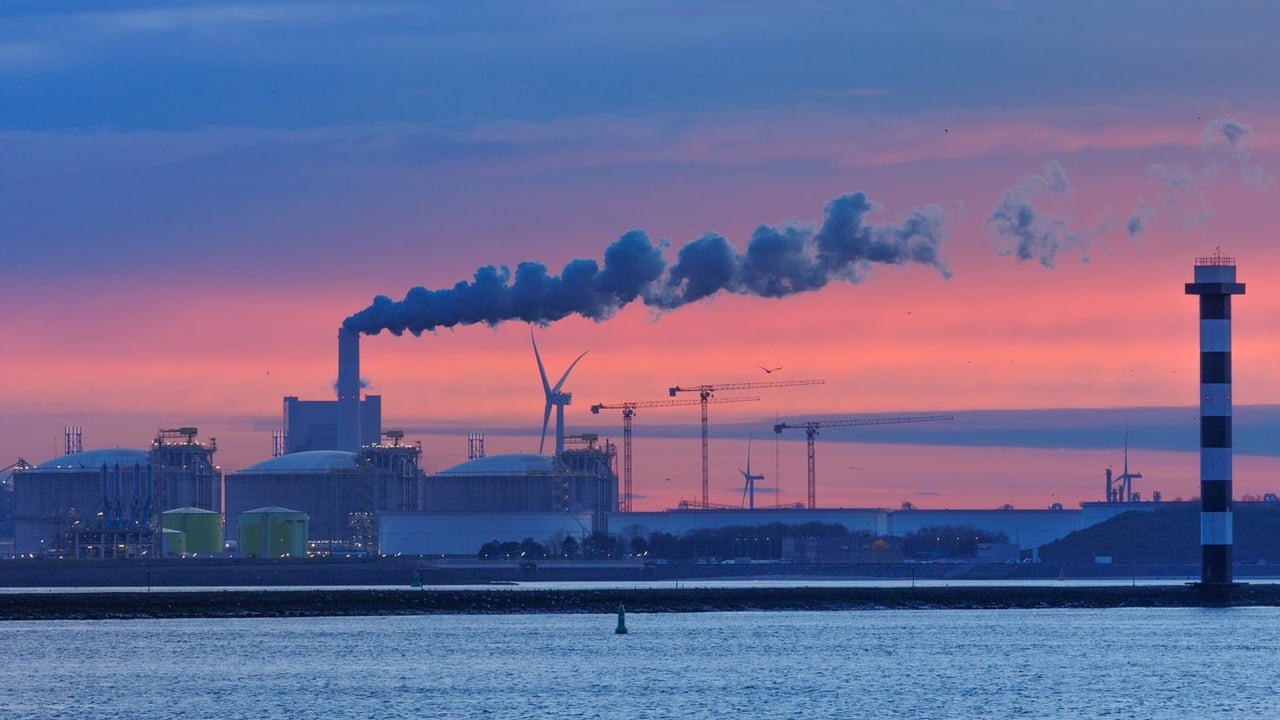
Photo by Igor Passchier on Pexels
The Brief
China's Ministry of Ecology and Environment has issued quota allocation plans for the national carbon emissions trading scheme, covering the power sector for 2025 and 2026, and extending to steel, cement, and aluminum smelting for 2026. The scheme continues free, carbon intensity-based allocations across all four covered industries while tightening oversight on captive power plants and outdated capacity. Regulators noted the measures maintain policy continuity during the market's industrial expansion phase while laying the technical groundwork for future paid quota auctions.
Why it matters
The plan marks the operational expansion of the world's largest emissions trading scheme from electricity generation into energy-intensive industrial manufacturing. By defining quota calculation methods and compliance requirements through 2026, regulators provide regulatory clarity for heavy emitters, reinforcing industrial decarbonization incentives and foreshadowing an eventual shift toward auction-based allowances.
China context
Under China's dual carbon targets—peaking emissions before 2030 and achieving carbon neutrality before 2060—the national carbon market relies on an intensity-based benchmark rather than an absolute emissions ceiling. This structure balances economic growth with emissions discipline. The new plan explicitly links carbon quotas with broader industrial policies, such as capacity replacement mandates, production controls, and crackdowns on non-compliant self-generation plants.
Editor's View
EDITOR'S VIEW — Analysis and inference, not factual reporting.
The Ministry of Ecology and Environment is prioritizing operational stability over rapid disruption. By keeping allocation methods unchanged for steel, cement, and aluminum during their onboarding phase, Beijing seeks to minimize sudden cost shocks for industrial producers while establishing baseline verification habits. However, the explicit reference to laying the groundwork for paid allowance mechanisms suggests that free compliance will gradually narrow as the market matures.
What to watch
- Publication of technical accounting guidelines and benchmark formulas for the steel, cement, and aluminum sectors
- Allowance liquidity and carbon price movements as heavy industry entities prepare for compliance cycles
- Regulatory timelines for pilot programs introducing paid allowance auctions alongside free allocations
Key Takeaways
- 1The Ministry of Ecology and Environment released carbon quota allocation plans for power (2025–2026) and steel, cement, and aluminum smelting (2026).
- 2All four covered sectors will continue receiving free quota allocations based on carbon emission intensity benchmarks.
- 3Methodologies for steel, cement, and aluminum remain steady during early onboarding, while power generation benchmarks face dynamic adjustments.
- 4The policy coordinates with capacity replacement mandates and targets non-compliant captive power plants, while preparing for future paid quota auctions.
China's Ministry of Ecology and Environment has released quota allocation and total cap guidelines for the national carbon emissions trading market, covering 2025 and 2026 for power generation and 2026 for the steel, cement, and electrolytic aluminum smelting sectors, according to a report by Xinhua published via People's Daily.
The document details the scope of allocation, calculation methodologies, quota issuance, and compliance surrender procedures for covered entities. Regulators formulated the measures around national greenhouse gas control targets and the dual carbon implementation pathway, weighing macroeconomic conditions, historical emissions baselines, market regulation needs, and carbon data infrastructure.
Under the framework, the carbon market will integrate more closely with national capacity replacement and output control policies. The scheme tightens emissions compliance standards on non-compliant, obsolete production capacity and corporate captive power stations to support orderly industrial decarbonization.
With the formal inclusion of steel, cement, and aluminum smelting alongside power generation, the national carbon trading scheme now encompasses four major sectors. Regulators affirmed that each sector will maintain the policy intensity established in previous years, utilizing free quota distribution based on carbon emission intensity.
For the newly incorporated steel, cement, and aluminum sectors, allocation methodologies will remain unchanged compared to 2025, reflecting their introductory expansion status. In contrast, the power generation sector will see dynamic adjustments to its quota benchmarks based on comprehensive assessments of market performance and industry operating conditions.
The ministry also highlighted that the current intensity-based framework is designed to refine allocation formulas and build an administrative foundation for gradually introducing a combination of free and paid quota allocations in subsequent years. Participating enterprises are urged to incorporate carbon management into corporate strategies, deploy energy-efficiency improvements, pursue raw material and fuel substitution, and adopt green manufacturing processes to reduce emissions at an affordable cost.
Sources
- 全国碳市场配额分配相关方案印发--经济·科技--人民网 — People's Daily · 9/3/2026