
Business & IndustryAnalysis
China's Holiday Spending Climbs as Trade-In Subsidies Drive Big-Ticket Retail
Commerce Ministry data reveals steady commercial street foot traffic and 19.6 billion yuan in trade-in sales over the first three days of the National Day holiday.
Share
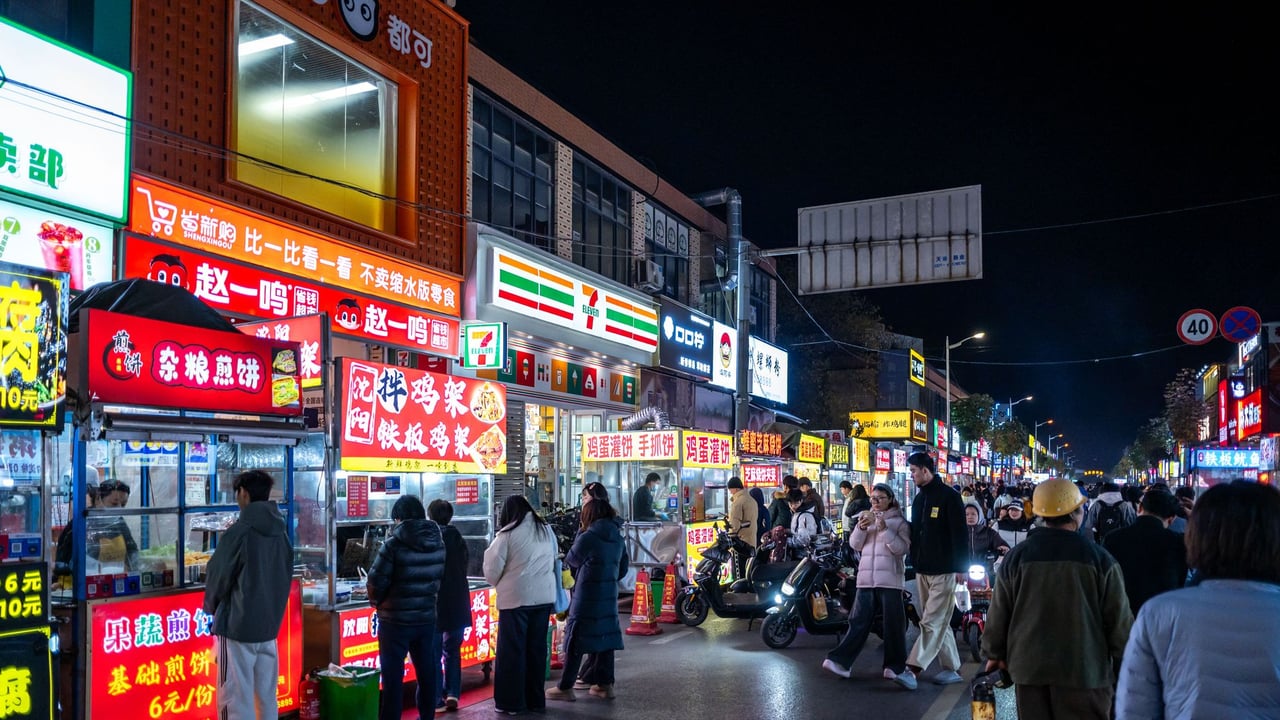
Photo by Bingqian Li on Pexels
The Brief
China's consumer market maintained stable growth during the first half of the National Day holiday, bolstered by targeted government subsidies for consumer trade-ins. According to data released by the Ministry of Commerce, foot traffic and sales at 78 key monitored commercial districts rose 3.4% and 5.3% year-on-year respectively from October 1 to 3. Trade-in programs for automobiles, home appliances, and digital devices generated 19.63 billion yuan in retail sales across nearly 3.5 million transactions, while wholesale food supplies remained ample and prices stayed steady.
Why it matters
The National Day Golden Week serves as a critical barometer for Chinese domestic demand and consumer sentiment. With persistent concerns over real estate drag and cautious household spending, the initial holiday data demonstrates that targeted trade-in incentives funded by government debt allocations are actively converting consumer interest into actual durable goods purchases at the retail level.
China context
To address sluggish domestic consumption, Chinese policymakers expanded equipment upgrades and consumer goods trade-in programs earlier this year, backing them with 300 billion yuan from ultra-long special treasury bonds. The holiday figures show that regional implementation of subsidies for new energy vehicles, high-efficiency appliances, and smart consumer electronics is providing a measurable lift during peak travel and retail periods.
Editor's View
EDITOR'S VIEW — Analysis and inference, not factual reporting.
While the headline growth figures in commercial districts and trade-in sales reflect a positive response to state incentives, the durability of this momentum beyond subsidized categories remains an open question. Strong demand for subsidized vehicles and appliances demonstrates policy responsiveness rather than an organic, broad-based consumer rebound. Observers should monitor whether sustained consumer confidence carries forward once temporary promotional windows and local subsidy quotas taper off.
What to watch
- Full-week aggregate consumption and tourism revenue figures released by the Ministry of Commerce and the Ministry of Culture and Tourism.
- Depletion rates of local consumer trade-in subsidies and the multiplier effect on durable goods manufacturing.
- Post-holiday retail foot traffic and durable goods demand after promotional discounts conclude.
Key Takeaways
- 1Foot traffic and revenue at 78 monitored commercial streets grew 3.4% and 5.3% year-on-year respectively between October 1 and 3.
- 2Consumer goods trade-in incentives spurred 19.63 billion yuan in sales across 3.483 million consumer transactions.
- 3Automotive trade-ins reached 46,000 units, generating 7.45 billion yuan in new vehicle purchases.
- 4Home appliances and smart electronics contributed 6.50 billion yuan and 4.90 billion yuan in sales respectively.
- 5Wholesale food and essential staple prices remained stable, with minor decreases recorded in vegetable, poultry, and egg prices.
China's retail and consumer markets recorded steady activity during the opening days of the week-long National Day holiday, with government-backed trade-in initiatives emerging as a primary catalyst for durable goods spending, according to official data released by the Ministry of Commerce.
Big data monitoring from the Ministry of Commerce showed that across 78 key commercial pedestrian streets and shopping districts nationwide, foot traffic increased by 3.4% year-on-year over the first three days of the holiday, spanning October 1 to October 3. Total commercial revenue across these monitored districts expanded by 5.3% compared to the same period last year, state media reported.
Policy-supported consumer trade-in programs served as a major engine of retail turnover. Across the three-day window, trade-in programs accounted for 19.63 billion yuan ($2.76 billion) in retail sales, benefiting approximately 3.48 million consumers. Demand was particularly pronounced in higher-value consumer segments, where central and regional authorities have rolled out cash-backed upgrade incentives funded partly by ultra-long special treasury bonds.
Automotive upgrades generated the largest share of value. The ministry reported that 46,000 vehicles were traded in, yielding 7.45 billion yuan in new car purchases. Home appliances also saw heavy volume, with 1.51 million units traded in to drive 6.50 billion yuan in sales. In consumer electronics, the purchase of 1.71 million digital and smart devices generated 4.90 billion yuan in sales.
Alongside durable goods retail, state monitoring indicated stable supply chains for daily necessities. Across 200 large agricultural and sideline product wholesale markets tracked by the commerce authority, inventories remained sufficient. Wholesale prices for staple food categories, including grain, edible oil, pork, beef, mutton, and fresh fruits, remained essentially unchanged compared to levels recorded on September 30.
Prices for certain fresh grocery items trended slightly downward as supplies entered the holiday market. Average wholesale prices for fresh vegetables and chicken each decreased by 0.5% compared to pre-holiday levels, while egg prices dropped by 1.1%. The pricing stability indicates that supply-side logistics and reserve mechanisms functioned effectively despite the surge in seasonal passenger movement and local consumption.
Sources
- 国庆假期过半消费市场平稳有序 — State Council of China · 10/4/2026
- 国庆假期过半消费市场平稳有序--经济·科技--人民网 — People's Daily · 10/4/2026
- 商务部:国庆假期前四天全国消费市场平稳有序 — China News Service · 10/4/2026