
Policy & RegulationAnalysis
China Unveils Logistics Network Plan to Cut Costs and Upgrade Rural Delivery
A joint plan by the NDRC and transport ministry targets lowering logistics costs to 13.1 percent of GDP by 2030 through arterial and last-mile infrastructure upgrades.
Share
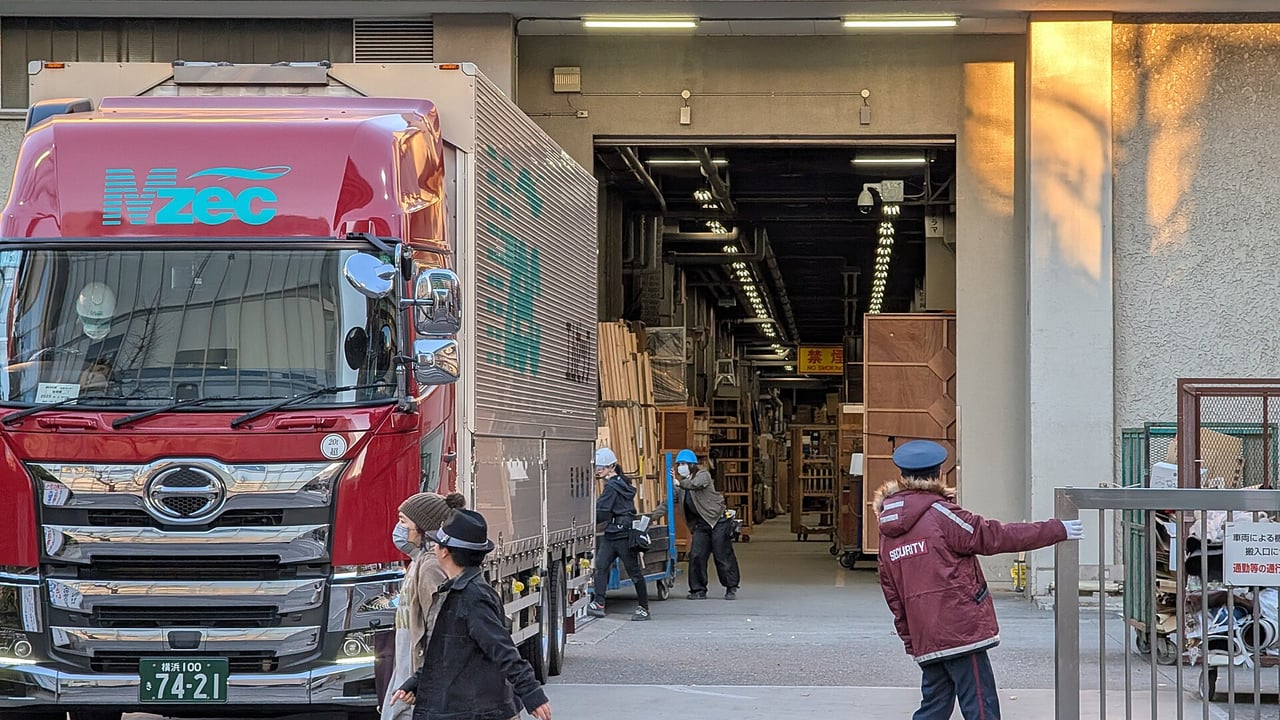
Syced via Wikimedia Commons, CC0
The Brief
China's National Development and Reform Commission and Ministry of Transport have jointly issued an implementation plan for building a national logistics network. The policy sets a target to reduce total social logistics costs to 13.1 percent of GDP by 2030—a 0.8 percentage point drop from the end of the 14th Five-Year Plan period. The plan outlines 17 key tasks across seven areas, focusing on expanding major freight corridors, upgrading rural three-tier delivery systems, advancing digital and green equipment, and channeling government and market financing into sector infrastructure.
Why it matters
Reducing total logistics expenses is a central pillar of Beijing's broader push to enhance industrial competitiveness and stimulate domestic circulation. By setting explicit cost-reduction benchmarks and prioritizing multi-modal transport and rural delivery nodes, the plan provides a multi-year roadmap for state and private capital deployment across physical and digital supply chain assets.
China context
As China shifts toward high-quality development, modernizing infrastructure networks—often categorized under national initiatives such as the 'six networks'—has become a policy focal point. Strengthening rural distribution networks addresses bottlenecks in sending manufactured goods to lower-tier markets while bringing agricultural produce to cities, bridging longstanding structural gaps between primary and terminal freight corridors.
Editor's View
EDITOR'S VIEW — Analysis and inference, not factual reporting.
The policy blueprint highlights a transition from isolated logistics hub construction to an integrated, interconnected network. Achieving the 13.1 percent cost-to-GDP target will depend heavily on resolving persistent multimodal bottlenecks—particularly the physical and standardisation gaps between rail, road, and water transport—and mobilizing private capital alongside state-directed funding.
What to watch
- Provincial and municipal rollouts of supporting measures and project lists aligned with the logistics network plan.
- Financial institutions introducing targeted credit products and market-oriented financing instruments for logistics assets.
- Construction progress on public delivery stations in rural areas and dedicated rail freight connections into ports and industrial parks.
Key Takeaways
- 1The NDRC and Ministry of Transport jointly released the Implementation Plan for Logistics Network Construction.
- 2The plan targets reducing the ratio of total social logistics costs to GDP to 13.1% by 2030, down 0.8 percentage points from the end of the 14th Five-Year Plan.
- 3The initiative covers 17 key tasks across seven areas, spanning hubs, transport corridors, rural networks, international links, green-digital technology, information sharing, and policy support.
- 4Rural logistics will be upgraded by building or repurposing public delivery stations to complete a three-tier county-township-village distribution network.
- 5Financing mechanisms will combine government investment guidance with market-based credit tools to crowd in private capital.
China's top economic planner and transport authorities have rolled out a comprehensive blueprint to modernize the country's freight and supply chain infrastructure, targeting a measurable reduction in economy-wide logistics overheads by the end of the decade.
The National Development and Reform Commission (NDRC) and the Ministry of Transport jointly issued the Implementation Plan for Logistics Network Construction, according to reports by the People's Daily and Daily Economic News. Speaking at an NDRC press conference, commission spokesperson Li Chao stated that the initiative aims to shift logistics infrastructure from fragmented point-and-line deployments into a fully integrated and interconnected network.
A central goal of the plan is to lower the ratio of total social logistics costs to gross domestic product (GDP) to 13.1 percent by 2030, which represents a reduction of 0.8 percentage points compared with levels projected for the end of the 14th Five-Year Plan period.
To achieve this, the document lays out 17 primary tasks organized around seven areas. These include strengthening major logistics hubs, improving corridor carrying capacity through multimodal transport, addressing urban-rural infrastructure imbalances, expanding international logistics links, accelerating green and digital equipment deployment, standardizing data sharing, and enhancing regulatory and policy support.
Addressing both trunk corridors and terminal distribution is central to the strategy. On major routes, authorities plan to advance rail freight network projects, expedite missing segments on national highways such as along the Yangtze River corridor, upgrade heavily congested highway stretches with smart infrastructure, and back air freight carriers in establishing bases at airport-type logistics hubs. At the grass-roots level, the policy calls for building new public delivery stations or retrofitting existing facilities to complete a three-tier delivery system across counties, townships, and villages, facilitating faster movement of agricultural produce into cities and consumer goods into rural households.
The plan also emphasizes funding reform, urging the coordination of government investment with market-based financial tools to attract private capital. Financial institutions are encouraged to provide loans with matching terms and reasonable costs to expand effective investment across the sector.
Sources
- 国家发改委:将新建或利用存量设施改建公共快递驿站,健全县乡村三级物流配送体系 — National Business Daily · 8/28/2026
- 两部门:统筹运用资金渠道支持物流网建设--经济·科技--人民网 — People's Daily · 8/29/2026