
Defense & StrategyAnalysis
China Revises National Defense Mobilization Law to Integrate New Technologies
The updated statute codifies data security, emerging-domain forces, and peacetime-wartime transitions into China's legal mobilization framework.
Share
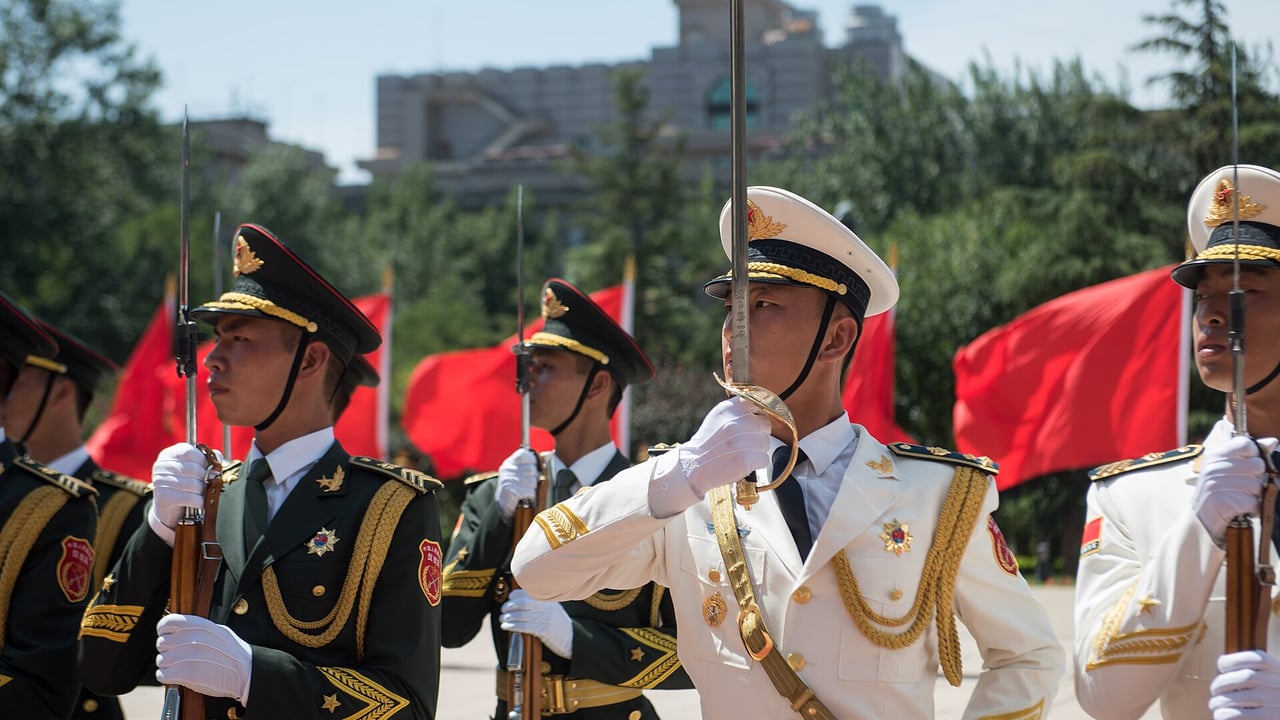
U.S. Secretary of Defense via Wikimedia Commons, CC BY 2.0
The Brief
China's top legislature has revised the National Defense Mobilization Law, updating the foundational 2010 framework to incorporate modern operational demands. Passed on August 28, 2026, by the Standing Committee of the 14th National People's Congress and scheduled to take effect on October 1, 2026, the amended law formally integrates data governance, advanced technology adoption, and emerging-domain forces into mobilization planning. It also establishes target-based accountability systems and formalizes budget-sharing obligations between central and local authorities to facilitate rapid transitions from peacetime to wartime.
Why it matters
The legal revision modernizes the statutory framework governing how China channels civilian economic, technological, and demographic assets into military utility during security crises. By explicitly codifying provisions on data protection, emerging-domain capabilities, and peacetime-wartime transition mechanisms, the law bridges civilian governance and military strategy, directly affecting inter-agency coordination, corporate compliance, and resource allocation across Chinese provinces.
China context
The revision aligns mobilization architecture with Beijing's holistic national security concept and its drive to build an integrated national strategic system and capability. The statutory changes institutionalize civil-military coordination and establish shared fiscal responsibilities, reflecting broader structural defense reforms aimed at modernizing command structures and standardizing legal authority during domestic emergencies and potential external conflict.
Editor's View
EDITOR'S VIEW — Analysis and inference, not factual reporting.
The revised mobilization statute reflects Beijing's ongoing push to legally institutionalize what has historically been an ad hoc administrative process of civil-military integration. By elevating data governance and technological capabilities to formal legal requirements, the law signals that modern mobilization planning is no longer focused solely on physical materiel and manpower quotas, but also on information dominance, digital networks, and high-tech civilian sectors. Observers should view the revision not as a sudden mobilization trigger, but as the completion of a long-planned legislative overhaul meant to clarify bureaucratic lines of responsibility between the Central Military Commission, civilian ministries, and provincial governments.
What to watch
- Issuance of supporting administrative regulations and sector-specific operational guidelines prior to the law taking effect on October 1, 2026.
- Provincial and municipal budgetary adjustments reflecting the codified division of mobilization expenditures between central and local authorities.
- Implementation rules regarding the collection and security management of corporate and technical data during mobilization evaluations.
Key Takeaways
- 1The 14th NPC Standing Committee adopted the revised National Defense Mobilization Law on August 28, 2026, with enforcement beginning October 1, 2026.
- 2The updated statute legally integrates advanced technologies, data security frameworks, and emerging-domain capabilities into defense mobilization.
- 3A target-based accountability system and regular capability assessments will monitor compliance across central ministries, local governments, and military bodies.
- 4Mobilization funding is formally structured across central and provincial fiscal budgets based on delineated administrative responsibilities.
- 5The constitutional mechanism for mobilization orders requires an NPC Standing Committee decision followed by a presidential decree.
China's top legislative body has passed a comprehensive revision of the National Defense Mobilization Law, modernizing the statutory architecture that governs how civilian resources, technology, and personnel transition into military readiness during times of crisis.
The revised law was adopted on August 28, 2026, during the 24th session of the Standing Committee of the 14th National People's Congress, replacing the original version passed in February 2010, according to the official text published by People's Daily. The updated statute is scheduled to come into force on October 1, 2026.
Under the amended law, national defense mobilization is defined as the lawful process of taking necessary measures to counter threats to state sovereignty, national unity, territorial integrity, security, and development interests. The text emphasizes rapid 전환 between peacetime posture and wartime operational readiness, formalizing the conversion of economic and social potential into defense capabilities.
Several additions modernize the statutory framework. The law mandates the deployment of advanced technologies in mobilization activities and explicitly calls for expanding mobilization forces in emerging operational domains. It also establishes a formal data service guarantee system, allowing authorities to lawfully collect and utilize defense-relevant data while imposing strict safeguards to preserve data security and prevent the unauthorized disclosure of state secrets, commercial information, and personal privacy.
To ensure institutional execution, the revised framework introduces a target-responsibility mechanism that subjects central state agencies, local governments, and military organizations to systematic inspection and performance audits. It also establishes an evaluation system to continuously test mobilization capabilities.
On the financial front, the statute formalizes the fiscal division between central and regional administrations, requiring defense mobilization expenditures to be separately accounted for in central and local government budgets based on administrative jurisdiction and spending responsibility.
The constitutional protocol for declaring mobilization remains anchored at the highest level of state power. The Standing Committee of the National People's Congress holds the authority to decide on nationwide general mobilization or partial mobilization, after which the President of the People's Republic of China issues the formal mobilization decree.
Sources
- 中华人民共和国国防动员法 --时政--人民网 — People's Daily · 9/3/2026