
Business & IndustryAnalysis
China-SCO Trade Reaches $523.5 Billion as Regional Economic Ties Deepen
Trade with member states now accounts for 8% of China's total foreign trade, supported by rising exports in clean technology and infrastructure investments.
Share
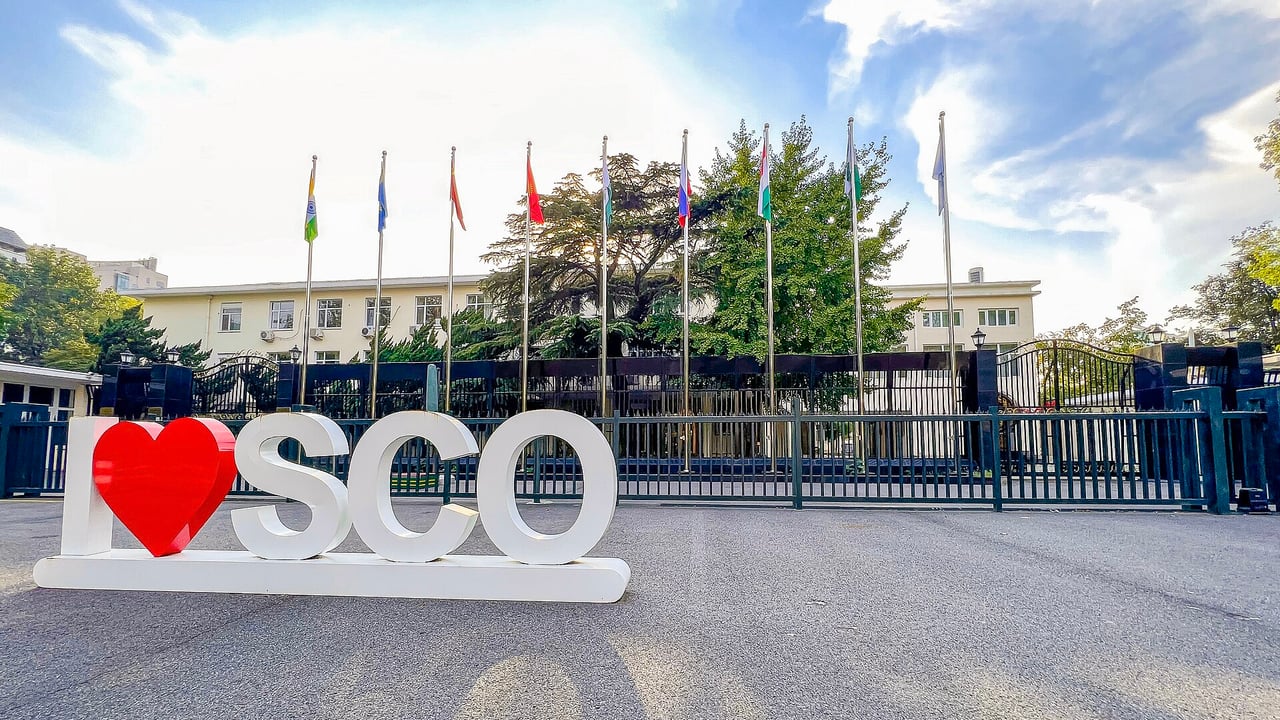
N509FZ via Wikimedia Commons, CC BY-SA 4.0
The Brief
Trade between China and other member states of the Shanghai Cooperation Organisation (SCO) reached $523.5 billion in 2025, up from $12.1 billion in 2001, according to China's Ministry of Commerce. Addressing a regular briefing, spokesperson Huang Ling stated that SCO trade now represents 8% of China's total foreign trade volume. The expansion has been fueled by surging exports in green technology and cross-border e-commerce, as well as over $3.3 billion in direct investment across member states in 2025 alone.
Why it matters
The milestone underscores the SCO's evolving role from a regional security grouping into a major economic and supply chain corridor for China. As Beijing faces trade barriers and tariff pressures in Western markets, deepening economic ties with Central Asian and Eurasian neighbors provides an expanding outlet for high-value manufacturing—particularly electric vehicles, lithium-ion batteries, and photovoltaic products—while securing long-term energy and mineral supplies.
China context
Marking the 25th anniversary of the SCO's establishment, Beijing is accelerating regional integration through industrial coordination and investment facilitation. Bilateral ties with key Central Asian hubs, such as Kyrgyzstan—where bilateral trade reached $11.7 billion in the first seven months of the year and cumulative Chinese direct investment exceeded $2 billion—illustrate China's targeted push to anchor its cross-border infrastructure, energy, and digital trade networks within the broader Eurasian landmass.
Editor's View
EDITOR'S VIEW — Analysis and inference, not factual reporting.
The expansion of China's trade with SCO partners from just $12.1 billion in 2001 to more than half a trillion dollars reflects a structural shift in regional trade flows. Beyond traditional energy and minerals, China's export composition to the region is pivoting toward advanced manufactured goods and renewable technology. As Beijing deploys action plans for higher-standard trade facilitation, the region is becoming an integrated testing ground for cross-border digital commerce and joint industrial development.
What to watch
- Implementation details of the high-quality trade and investment action plan covering SCO member states, observers, and dialogue partners.
- Progress on cross-border logistics and large-scale infrastructure projects across Central Asia, including transport links with Kyrgyzstan.
- The growth rate and regulatory developments surrounding cross-border e-commerce and local currency settlement mechanisms across the bloc.
Key Takeaways
- 1China's trade with other SCO member states reached $523.5 billion in 2025, up from $12.1 billion in 2001, making up 8% of China's total foreign trade.
- 2China's direct investment in other SCO member states reached $3.3 billion in 2025, covering oil and gas, minerals, infrastructure, renewables, and autos, with over 30 overseas industrial cooperation z
- 3In the first seven months of the year, trade between China and Kyrgyzstan totaled $11.7 billion, with cumulative Chinese direct investment in the country surpassing $2 billion.
Trade between China and other member countries of the Shanghai Cooperation Organisation (SCO) reached $523.5 billion in 2025, accounting for 8% of China's total foreign trade, according to China's Ministry of Commerce.
Speaking at a regular press conference marking the 25th anniversary of the organization's founding, Ministry of Commerce spokesperson Huang Ling highlighted that bilateral trade across the bloc has expanded substantially from $12.1 billion in 2001. Huang attributed the recent momentum to rapid growth in cross-border e-commerce and exports of the "new three" tech-intensive green products: electric vehicles, lithium-ion batteries, and photovoltaic cells.
Chinese outbound direct investment into other SCO member countries reached $3.3 billion across all industries in 2025. Investment projects spanned sectors including oil and gas, mineral resources, transportation infrastructure, clean energy, automotive manufacturing, and chemicals. In addition, Chinese enterprises have invested in the construction of more than 30 economic and trade cooperation zones across member states to bolster local industrial capacity.
Huang noted that China intends to continue implementing an action plan for high-quality economic and trade cooperation directed at SCO member states, observer nations, and dialogue partners. Key priorities include advancing trade and investment liberalization, expanding services and digital commerce, and strengthening supply chain resilience across the region.
Bilateral ties with individual SCO members have mirrored this broader trajectory. Official figures show that China remains Kyrgyzstan's largest trading partner and leading source of foreign investment. Bilateral trade between China and Kyrgyzstan reached $11.7 billion in the first seven months of the year, driven by robust exports of electromechanical goods and green technology products alongside expanding cooperation in cross-border e-commerce.
By the end of July, China's cumulative direct investment in Kyrgyzstan exceeded $2 billion, with capital concentrated in major infrastructure, energy networks, mining, agriculture, and green development initiatives. Huang reaffirmed Beijing's intent to work with regional partners to advance trade facilitation under both the SCO and China-Central Asia cooperation frameworks.
Sources
- 中国与上合组织其他成员国贸易额占我外贸总额8% — State Council of China · 8/28/2026
- 中国长期保持吉尔吉斯斯坦第一大贸易伙伴地位 — State Council of China · 8/28/2026