
Policy & RegulationAnalysis
China Moves to Clear Corporate Arrears and Build Next-Gen Networks
Premier Li Qiang chairs a State Council meeting deploying targeted financial tools for corporate debt clearance and approving key administrative drafts.
Share
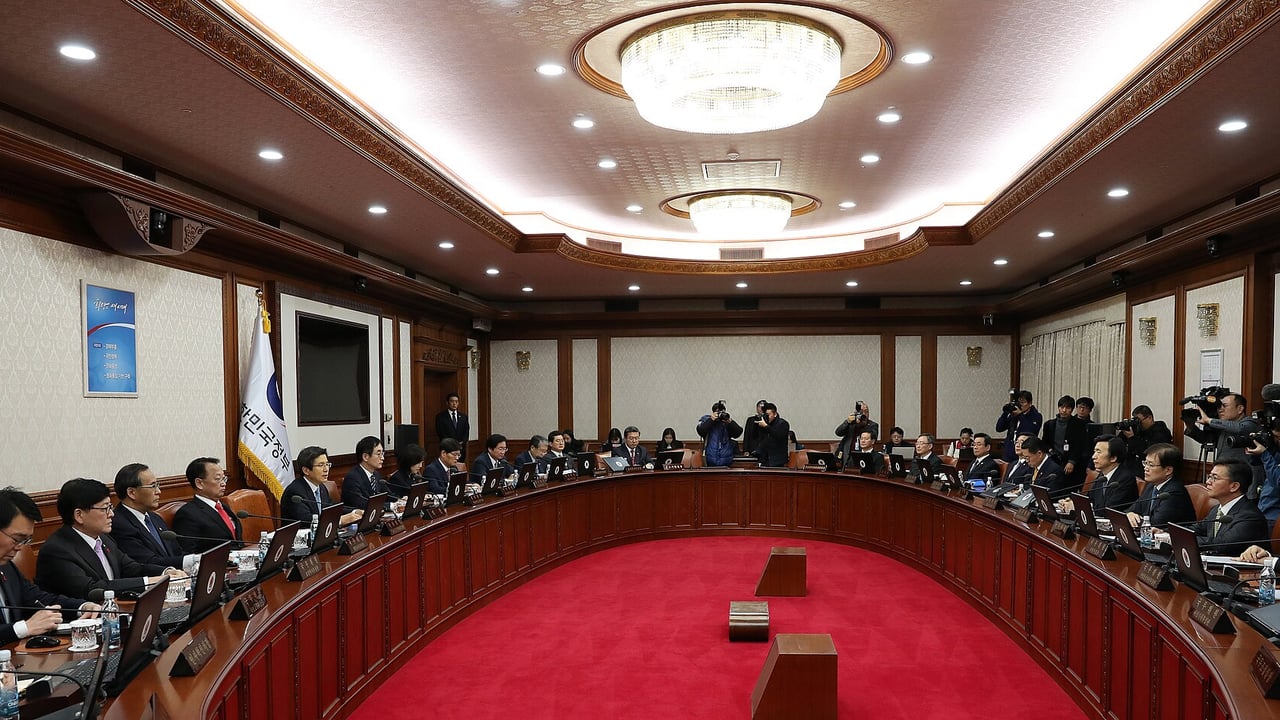
Republic of Korea from Seoul, Republic of Korea via Wikimedia Commons, CC BY-SA 2.0
The Brief
Chinese Premier Li Qiang chaired a State Council executive meeting to deploy accelerated measures for clearing overdue payments owed to enterprises and advance next-generation communications network infrastructure, according to state media reports. The cabinet urged local authorities to utilize special-purpose bonds and relending facilities to unblock multi-party debt chains, while tightening oversight on large enterprises delaying payments to small and medium-sized businesses. The meeting also addressed air quality improvement and approved draft regulations concerning power safety emergency responses and grassroots market supervision offices.
Why it matters
Tackling payment arrears is vital for restoring liquidity and operational confidence among private firms and SMEs in China. By deploying fiscal tools like special-purpose bonds alongside relending facilities, Beijing aims to resolve systemic inter-enterprise debt bottlenecks. Simultaneously, advancing advanced communication infrastructure and tightening power and market oversight rules provides institutional and technological support for steady industrial expansion.
China context
Clearing corporate arrears has become a central priority in China's broader effort to stabilize economic expectations and improve the domestic business climate. Local government debt restructuring mechanisms are increasingly being directed to resolve commercial debts owed to private contractors and suppliers. Tightening disclosure requirements and standardizing payment terms for large state-owned and private conglomerates directly addresses chronic cash-flow pressure across downstream supply chains.
Editor's View
EDITOR'S VIEW — Analysis and inference, not factual reporting.
Beijing's explicit direction to connect local special-purpose bonds and specialized relending mechanisms directly to corporate arrears clearance signals an integrated fiscal and monetary push to unfreeze private-sector balance sheets. Crucially, the leadership is pairing financial liquidity with administrative discipline—standardizing sector-specific payment cycles and penalizing non-cash payment evasions. If enforced effectively across local authorities and state-backed majors, these measures could provide meaningful operational relief to upstream suppliers without resorting to indiscriminate stimulus.
What to watch
- Detailed operational guidelines from the Ministry of Finance and the People's Bank of China on special bonds and relending quotas allocated to clearing corporate arrears.
- Sector-specific payment term standards and credit penalty rules for large corporate buyers issued by industry regulators.
- Formal promulgation and full-text release of the revised regulations on power safety incident handling and market supervision station administration.
Key Takeaways
- 1State Council orders an accelerated campaign to clear corporate arrears, directing local authorities to deploy special-purpose bonds and relending facilities.
- 2Cabinet targets payment delays by large firms to SMEs, demanding sector-specific payment terms, stricter disclosures, and tighter regulation of non-cash payment tools.
- 3Leadership calls for coordinated construction of next-generation telecom networks spanning basic, space, and international architectures with guaranteed power and spectrum resources.
- 4Meeting approves draft revisions to power safety emergency response regulations and draft rules governing grassroots market supervision stations.
Chinese Premier Li Qiang chaired a State Council executive meeting on August 21 to hear reports on next-generation communications network development, deploy accelerated measures to clear overdue payments owed to enterprises, review air quality initiatives, and approve two draft administrative regulations, state media reported.
According to Xinhua, the State Council stressed the need to seize opportunities in next-generation communications networks by adopting an application-driven and moderately proactive approach. The cabinet called for coordinated development across basic, space, international, and integrated network architectures. Officials highlighted the importance of popularizing intelligent terminals, fostering high-value industrial scenarios such as smart cities and intelligent manufacturing, and safeguarding critical network infrastructure and data security. The government also pledged to guarantee essential resources, including land, power, and radio spectrum allocations, through a collaborative model combining government guidance and enterprise participation.
On addressing enterprise liquidity, the meeting mandated an intensified campaign to clean up overdue payments owed to businesses. Local governments were instructed to shoulder direct responsibility and effectively utilize policy tools—specifically special-purpose bonds and targeted relending facilities—to dismantle systemic chain arrears, improve clearance quality, and strictly prevent the emergence of new overdue accounts.
The cabinet specifically targeted payment delays by large corporations to small and medium-sized enterprises (SMEs). It ordered the establishment of industry-specific payment rules, clear definitions for reasonable payment cycles and settlement terms, and refined criteria for identifying untrustworthy defaults. Regulators were tasked with strengthening oversight over large enterprise payment conduct, stepping up anti-unfair competition enforcement, enforcing stringent payment disclosure standards, and regulating the use of non-cash payment instruments.
In addition, the State Council called for sustained efforts in the country's clean air campaign through coordinated regional controls, structural adjustments in industry, energy, and transportation, and supportive fiscal and pricing policies. The meeting also reviewed and approved in principle draft revisions to regulations governing power safety accident emergency response and investigation, as well as draft regulations for grassroots market supervision offices, emphasizing source-level risk management and fair market order.
Sources
- 李强主持召开国务院常务会议--时政--人民网 — People's Daily · 8/21/2026
- 李强主持召开国务院常务会议 — Securities Times · 8/21/2026
- 李强主持召开国务院常务会议 听取新一代通信网建设情况汇报等 — State Council of China · 8/21/2026