
Business & IndustryAnalysis
China Reaches Record Summer Grain Output Amid Modernization Push
National summer grain production exceeded 300 billion jin for the first time, driven by technology integration and emergency disaster response.
Share
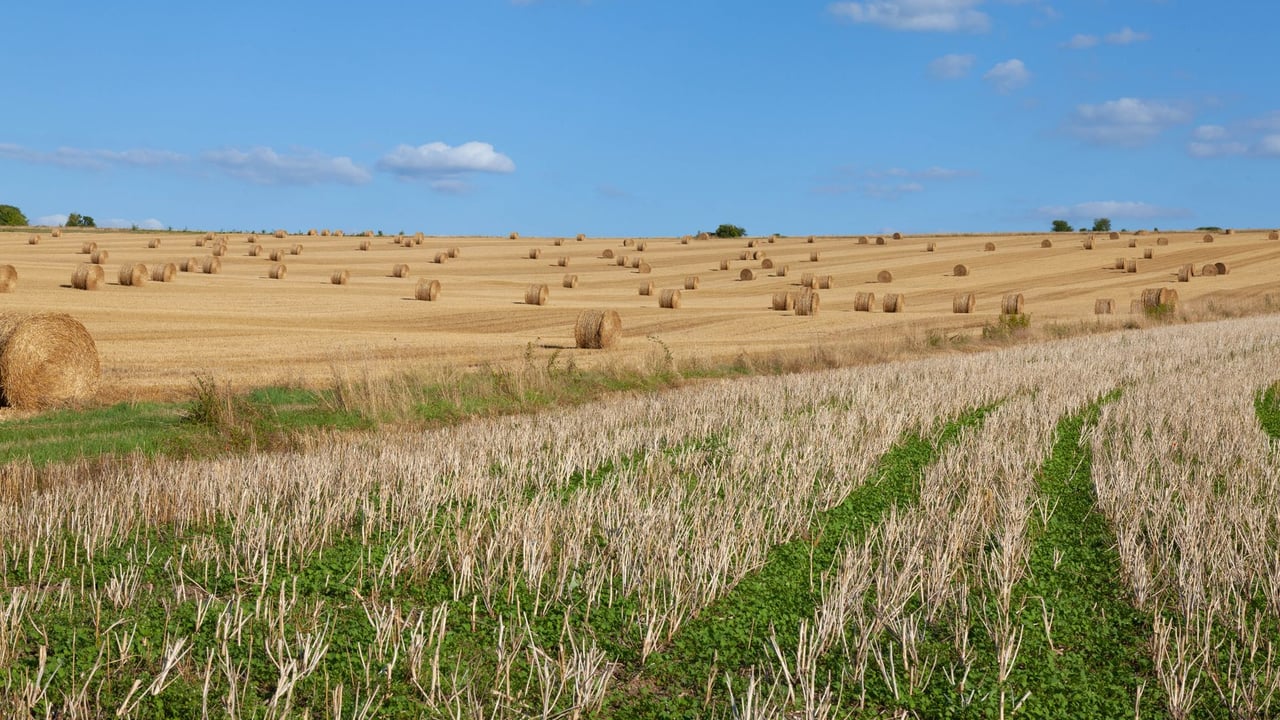
Photo by PHILIPPE SERRAND on Pexels
The Brief
China recorded a milestone summer grain output of 301.49 billion jin, marking a 0.7 percent year-on-year increase and exceeding the 300 billion jin threshold for the first time, according to People's Daily. The growth was achieved despite severe autumn weather delays in winter wheat zones, supported by emergency central finance subsidies, mechanized harvesting, and seed technology. As autumn crops enter a critical flood season under threat from El Niño, agricultural authorities are executing a 100-day management action plan while accelerating structural shifts toward high-quality and functional grain production.
Why it matters
Maintaining strong grain yields and diversifying crop output helps safeguard domestic price stability, shield China against international commodity shocks, and meet evolving consumer demands for higher nutritional standards.
China context
Under top leadership priorities regarding food security, domestic policy emphasizes keeping national grain production firmly in domestic hands through seed self-reliance, high-standard farmland construction, and deep processing value chains.
Editor's View
EDITOR'S VIEW — Analysis and inference, not factual reporting.
China's record summer grain harvest highlights the effectiveness of state-backed agricultural resilience mechanisms, particularly through rapid emergency intervention and technological integration. By combining targeted fiscal subsidies with structural upgrades—such as constructing high-standard farmland and expanding independently bred seed strains—Beijing is steadily bolstering its resistance to global market shocks and severe weather events. However, the true test for annual production targets lies in navigating flood season risks driven by El Niño while expanding value-added processing to match shifting consumer trends.
What to watch
- Impact of main flood season weather patterns and El Niño development on major autumn grain-producing provinces.
- Implementation progress of local grain branding initiatives and high-standard farmland targets.
Key Takeaways
- 1National summer grain yield reached 301.49 billion jin, rising 0.7 percent year-on-year to hit a record high.
- 2Central emergency funding and over 800,000 harvesters mitigated planting delays and harvest rainfall in major wheat regions.
- 3Autumn grain planting area remains stable to slightly higher, but faces weather uncertainty from developing El Niño conditions during the main flood season.
- 4High-standard farmland has surpassed 1 billion mu, with domestic seed varieties covering over 95 percent of crop area.
- 5Agricultural production is increasingly shifting toward high-quality, high-oil, and functional grain varieties.
China’s summer grain production reached 301.49 billion jin this year, exceeding the 300 billion jin threshold for the first time with a 0.7 percent year-on-year increase of 2.0 billion jin, according to a report by People's Daily. The milestone harvest provides a solid foundation for annual agricultural output amid ongoing global supply uncertainty.
The record yield was achieved despite severe initial weather setbacks. Persistent autumn rainfall delayed winter wheat planting by 15 to 20 days across the Huang-Huai-Hai region, weakening early crop growth. In response, central fiscal authorities allocated special funds for late-sowing adaptation techniques and preventative pest control. During harvest, over 800,000 combine harvesters operated continuously to minimize the impact of widespread rainfall.
Autumn grain, which accounts for approximately three-quarters of China's total annual grain output, is expected to maintain a stable to slightly increased planting area. However, official forecasts warn of extreme weather risks linked to a developing strong El Niño during the critical peak flood season. To mitigate potential heat waves, floods, and droughts, the Ministry of Agriculture and Rural Affairs has launched a 100-day emergency action plan focused on field management, per-unit yield enhancement, and disaster mitigation.
Underpinning these production gains is a systemic integration of high-standard farmland, seed self-reliance, smart machinery, and modern agronomic methods. China has constructed more than 1 billion mu of high-standard farmland. Independently bred crop varieties now account for over 95 percent of national planting area, with high-quality rice and water-saving, disease-resistant wheat reaching 55 percent and 44 percent of output, respectively. Zhang Xiabiao, a researcher at the Chinese Academy of Agricultural Sciences, noted that this technological combination systematically resolves long-standing yield bottlenecks.
Beyond volume, national agricultural policy is increasingly targeting supply optimization to satisfy changing consumer demands. Regions across China are expanding dedicated wheat, high-oil soybeans, and functional crops such as low-glycemic index rice and selenium-enriched wheat, while deepening processing capabilities to add value across the agricultural supply chain.
Sources
- 中国饭碗端得更稳成色更足--经济·科技--人民网 — People's Daily · 8/5/2026